



Pussy-grabbing: All the most beloved cats in film
The internet may run on cat videos, but cinema has long treated felines as scene stealers long before anyone hit upload. The 2016 release of Kedi reminded audiences how deeply we project onto our four-legged costars, and the years since have only expanded that obsession with fresh entries across franchises and animation pipelines. Here is a fresh pass through the cats who left the biggest paw prints on screen.
Fritz the Cat
Robert Crumb’s 1972 X-rated cartoon skipped the kiddie lane entirely. Cinemation sold it as ninety minutes of violence, excitement, and sex, and the film delivered on the promise with graphic animated encounters that still feel audacious. The result was less Saturday morning and more underground provocation, proving cats could headline adult satire without a single safety net.
Cat People
Jacques Tourneur’s 1942 Val Lewton production turned a pulp premise into something quietly unsettling. An ancient curse links orgasm with lethal transformation, and the restraint of the camera work makes the suggestion far more chilling than any later remake. Tourneur’s approach keeps the horror intimate, leaving viewers wary of shadows and sudden embraces long after the credits.
All the Catwomen in Batman
Michelle Pfeiffer’s unhinged Selina Kyle in Batman Returns gave the character a cracked, milk-obsessed edge that still defines the big-screen version. Eartha Kitt’s earlier television take brought a different kind of purr, sly and camp in equal measure, proving the role could shift tone without losing its core magnetism.
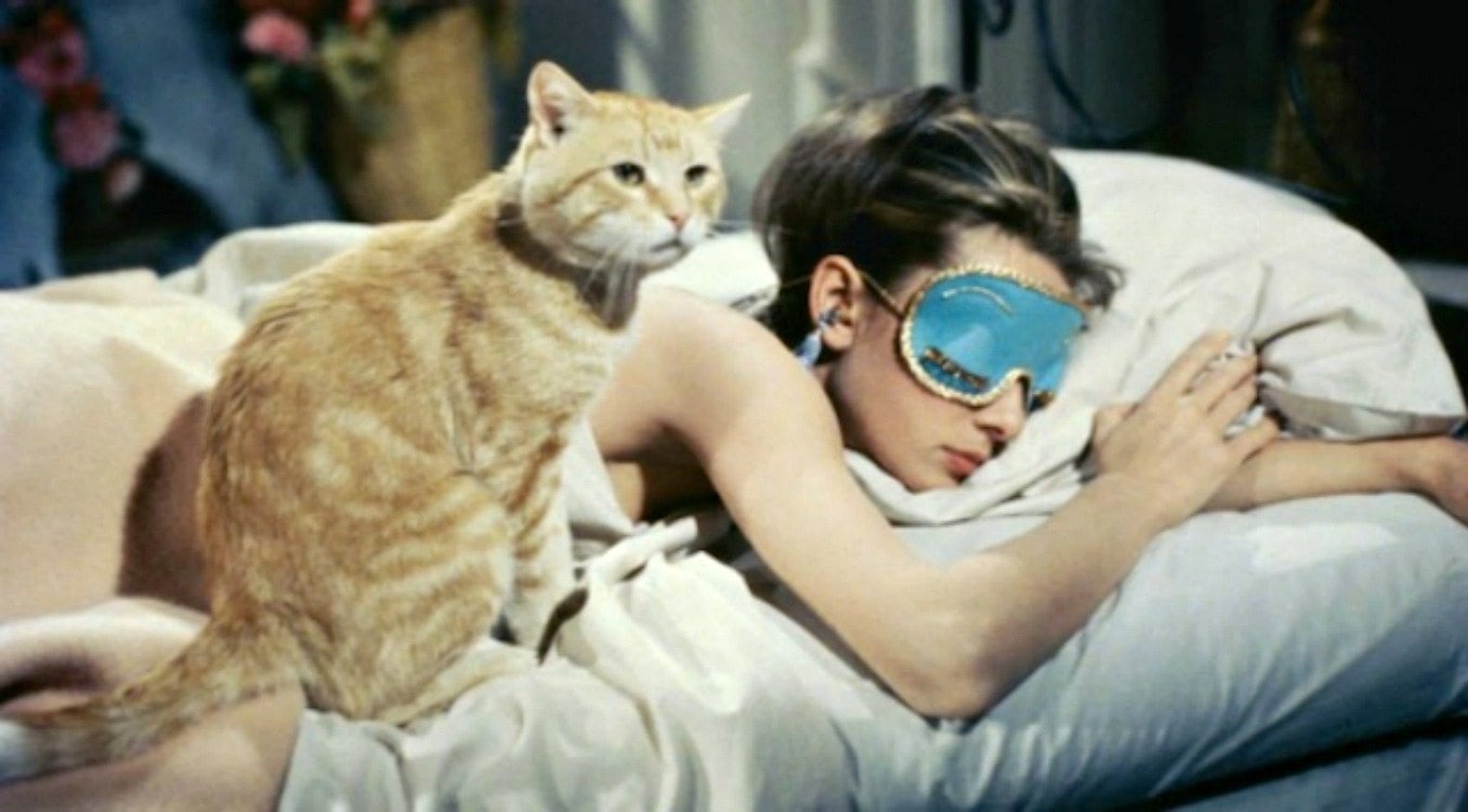
Breakfast at Tiffany’s
Orangey earned two PATSY Awards across his career, one for this film and another for Rhubarb, making him the only cat to claim the prize twice. Crew members recalled the tabby as temperamental on set, yet his timing with Audrey Hepburn produced the film’s most unguarded moments. Hepburn herself later admitted the rain-soaked taxi scene felt cruel, even while audiences still cheer when Holly reclaims her pet from the alley.
The Sick Kitten
George Albert Smith’s 1903 short is technically a remake of his own 1901 film The Little Doctor, trimmed and re-edited for tighter pacing. The experiment with alternating close-ups and wider shots helped codify basic editing grammar, but the real draw remains the small patient being nursed back to health by attentive children. Early audiences responded to the tenderness as much as the technique.
The Private Life of a Cat
Alexander Hammid’s 1946 experimental short, made with Maya Deren’s involvement, follows one mother cat through birth and early kittenhood without any human narration. The footage captures grooming sessions, nursing, and first clumsy steps with a level of access that still feels intimate. Top Documentary Films later praised its “refreshing absence of human beings,” a quality that keeps the focus squarely on the cats themselves.
Salem in Sabrina the Teenage Witch
The talking black cat began as a 500-year-old warlock sentenced to a century in feline form, a premise that carried from Archie comics through the nineties sitcom and later adaptations. Multiple cats and puppets handled the role across the run, yet the sardonic voice remained consistent. The arrangement never seemed like much of a punishment, at least from Salem’s perspective.
Data’s cat Spot in Star Trek: The Next Generation
Spot’s appearance and even gender reference shifted across episodes because production used several trained cats. Data still composed an ode to the pet and tested more than two hundred food formulas in pursuit of the perfect supplement. The android’s affection survived every continuity tweak, and Spot remained one of the few crew members who tolerated Lieutenant Barclay’s company.
Mr. Bigglesworth in Austin Powers
The hairless Sphynx played by SGC Belfry Ted Nude-Gent became the franchise’s most reliable silent partner. Cats magazine named the cat Cat of the Year in 1999, cementing his off-screen status. Every time Dr. Evil threatened retaliation, audiences knew the real power sat in those pale, hairless paws.
Keanu in Keanu (2016)
Key & Peele’s feature debut leaned into internet cat culture by casting an actual kitten in elaborate action sequences. Directors opted for practical footage instead of heavy CGI, allowing the cat to wear tiny costumes and execute slow-motion stunts that still read as charming rather than uncanny. The gamble paid off with audiences already primed by years of viral clips.

Goose in Captain Marvel (2019)
Marvel’s orange tabby turned out to be a Flerken capable of swallowing entire enemies and safeguarding the Tesseract. Goose’s deadpan reactions made the character an instant meme favorite, and the cat returned for brief cameos in later MCU entries. The reveal that the pet was never quite what it seemed added another layer to an already crowded superhero ensemble.
The Cat in the Hat (2026 animated film)
Warner Bros. is set to release a new animated take in November 2026, with Bill Hader voicing the title character and Quinta Brunson among the supporting cast. The updated plot introduces an Institute for the Institution of Imagination, giving the striped troublemaker fresh ground to disrupt. Early materials suggest the film aims to balance nostalgia with contemporary animation scale.
Pixar’s Gatto (upcoming)
Slated for 2027, Pixar’s original story follows a black cat named Nero who questions his remaining lives inside a stylized Venice populated by rival feline factions. Mark Ruffalo voices Nero while Laurence Fishburne lends his timbre to mob boss Rocco. The setting and premise promise a tonal shift for the studio, trading space epics for canal intrigue and existential cat philosophy.
From early editing experiments to MCU cameos and upcoming animated features, cats continue to claim screen time across every era and budget level. Their appeal never required explanation; audiences simply keep watching.
