



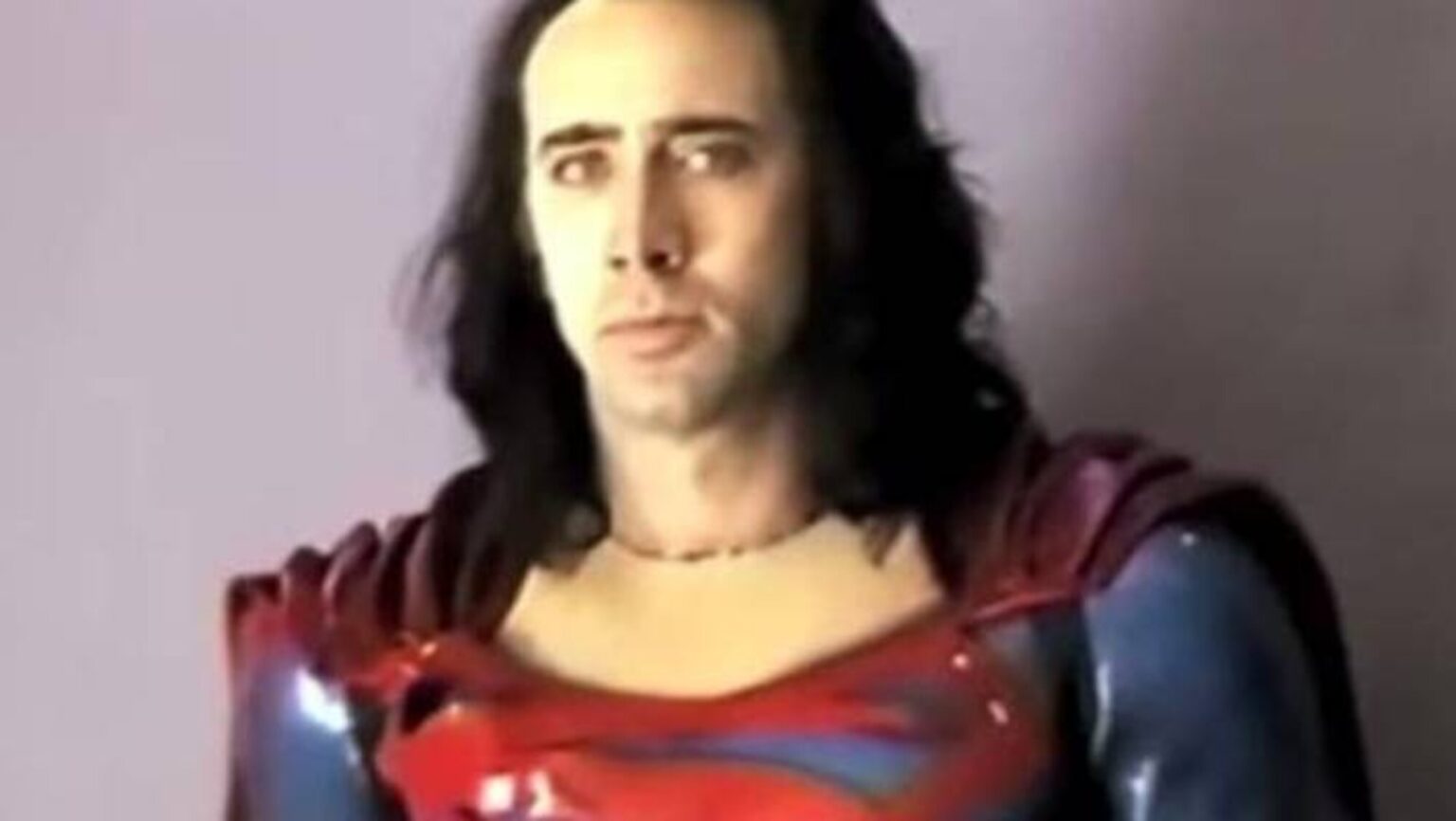
Was Nicolas Cage actually Superman? All the movies we wish happened
In a parallel universe, Nicolas Cage was Superman. Cage was slated to star as the Man of Steel in the flick Superman Lives, and unlike many other films trapped in development hell, this superhero picture looked like it was going places – it even started costuming! After this Superman production was nixed, images of Nicolas Cage dressed in full attire leaked online, and the results were mixed. The film would have dipped into The Death of Superman lore (eventually seen on the big screen thanks to Zack Snyder’s Batman vs Superman), and it would take viewers on a critical ride through the DC timeline. Here, Brainiac teams up with Lex Luthor to block out the sun and release Doomsday on Metropolis. As the name suggests, Superman dies, is resurrected, and triumphs, saving humanity in the process. Alas, the Con Air and Face/Off star, never soared on the big screen in blue tights and a matching cape & underwear getup. Let’s suit up and see why this apparent cheese-fest was never meant to be – and if there are any other Hollywood gems that should have happened but didn’t.
Nicolas Cage’s Man of Steel
Several screenplays were developed for Nicolas Cage to play Superman, but two were notably written by famed comic-book lover Kevin Smith (Clerks, Mallrats, Dogma, episodes of DC’s The Flash). Script rewritten at least four times including by Wesley Strick after Kevin Smith drafts. Cage had $20 million pay-or-play deal; filming targeted for early 1998 before cancellation. Long after Smith completed the drafts though, another pop culture figure landed on the Nicolas-Cage-as-Superman scene. And this one had experience. Tim Burton, director of Michael Keaton’s Batman and Batman Returns, was slated to return to direct, tying Nicolas Cage’s Superman Lives with his previous gothic iterations of DC superheroes. As an homage to Burton’s previous work, Jack Nicholson was named as Smith’s dream casting for the role of Lex Luthor, and Michael Keaton was also confirmed to appear – but ‘not exactly’ as Batman. In a strange touch of serendipity, Smith had singled out future Batman actor Ben Affleck for the role of Superman. Later, he would defend Zack Snyder’s choice to cast Affleck as the Caped Crusader, explaining you needed someone to play Bruce Wayne – any yokel in Hollywood could throw on the mask, but to develop Bats, you needed someone to play Wayne.
Nightmare before Superman
Nicolas Cage’s Superman Lives is far from the only project Tim Burton left in the dust, let alone from the DC universe. After all, Burton directed the first two Batman movies to critical acclaim. However, some of his creepier and more risque directing choices could’ve cost him the franchise. Following the overtly sexualized behaviour of Michelle Pfeiffer’s Catwoman, and the grim & ghastly nature of Danny Devito’s Penguin in Batman Returns, Warner Brothers were worried that a third installment of Tim Burton’s bleak noir inspired aesthetic might damage sponsorship opportunities. Namely, he enraged Ronald McDonald. Tim Burton told Yahoo!: “I think I upset McDonald’s. (They asked) ‘What’s that black stuff coming out of the Penguin’s mouth. We can’t sell Happy Meals with that!’” More moral outrage poured in when influential family groups such as the Dove Foundation expressed horror that Happy Meals, targeting kids under ten, were interlinked with Batman Returns – featuring characters who drooled black ooze, bit people’s noses off, wore S&M-inspired outfits, and regularly tried to violently murder anyone they came in contact with. Specific title 'Batman Continues' and full cast (e.g., Robin Williams as Riddler) are frequently described as rumor rather than confirmed production plans. Core issues with tone and sponsorship from Batman Returns are well-documented. There’s a silver lining though – several aspects of the abandoned sequel were later developed into Christopher Nolan’s influential reboot Batman Begins.
Stanley Kubrik’s Napoleon
Of course, not all movies that ended up in the dustbin are Superman flicks starring Nicolas Cage or R-rated comics with marketing targeted at kids. Let’s dive into Stankey Kubrick’s “greatest movie never made”. During the completion of his seminal sci-fi classic 2001: A Space Odyssey, Kubrick decided his next film would be a biopic of Napoleon Bonaparte. Kubrick’s dedication to the biopic surpassed anything he had previously attempted. He reportedly read 276 books on the French emperor, and he also sent researchers to scour Europe for information on Napoleon and The French Revolution. Kubrick compiled extensive notes including up to 25,000 index cards covering every aspect of Napoleon’s life. No detail was too small for Kubrick. From soil color to the shape of a nail in a horseshoe, Kubrick was determined to do justice to this massive undertaking. The screenplay stretched to 148 pages but would feature only a small era in Napoleon’s life. Kubrick’s aim was reportedly to “leave the viewer feeling as if they had watched (an albeit epic) current affairs program”. Production scale began to grow as preparations took hold. Kubrick planned to borrow 50,000 members of the Romanian military and use real locations across France, limiting his need to build film sets, and had yet to set an overall cost for the film from beginning to end. Alas, with a ballooning budget, fears from MGM Studios, and outside interference, Kubrick was refused permission to proceed filming of what he considered would be “the best movie ever made”. However, less than three years after his failure, he successfully filmed & released A Clockwork Orange, simultaneously considered one of the most controversial & lauded film adaptations in cinematic history. Spielberg/HBO miniseries based on the screenplay has been discussed in development as recently as 2023.
The Documentary Record
A dedicated documentary provides extensive concept art, costume tests, and interviews that go beyond the original article's mentions of leaked images, offering readers verifiable visual and oral history. The 2015 Jon Schnepp documentary features interviews with Burton, Kevin Smith, and crew plus extensive pre-production materials. Project reached pre-production with art department and costume work before cancellation. These materials show the full scope of the designs that never reached the screen, from Brainiac’s robotic army to the Eradicator armor Cage would have worn in the resurrection sequence. Crew members recount how the project survived multiple studio regime changes before a final budget review killed it. The film remains the most complete public archive of what Superman Lives actually looked like in development.
Cage’s Partial Superman Legacy
Cage finally appeared as Superman in a live-action cameo decades later, providing a modern coda to the unmade project that the 2021 article could not include. Cage portrayed Superman in The Flash (2023) as a multiverse variant. This marks the only live-action Superman performance by Cage to date. The brief scene shows an older, bearded Superman who has lost Lois Lane and lives in quiet isolation, a far cry from the high-concept action of the Burton version. Fans who once collected leaked costume photos finally got their payoff, even if it lasted only seconds on screen. The cameo arrived through studio politics rather than creative revival, yet it closed a loop that began in the late nineties.
Kubrick’s Napoleon in Popular Culture
The unmade project continues to inspire books, exhibitions, and ongoing adaptation attempts, extending its relevance beyond the original production details. Extensive research archives compiled into books like 'Stanley Kubrick's Napoleon: The Greatest Movie Never Made'. Spielberg announced plans for an HBO miniseries adaptation that has remained in development. Museums have displayed Kubrick’s index cards and location photos, turning the abandoned production into an object of study rather than mere rumor. The sheer volume of preparation continues to fascinate historians of cinema who treat the project as a case study in how scale can overwhelm even the most meticulous director.
Burton’s DC Legacy and What-If Impact
Burton's gothic style influenced later DC projects and the cancellation of his Batman sequel highlights studio marketing pressures that shaped the superhero genre. Batman Returns marketing concerns (e.g., McDonald’s Happy Meals) led Warner Bros. to shift direction. Elements of the planned sequel informed aspects of Batman Begins. The pivot away from Burton’s vision cleared space for the grounded realism that defined the next decade of superhero films. What began as a sponsorship dispute ultimately reset expectations for how dark a comic-book movie could be while still selling toys and fast food tie-ins.
