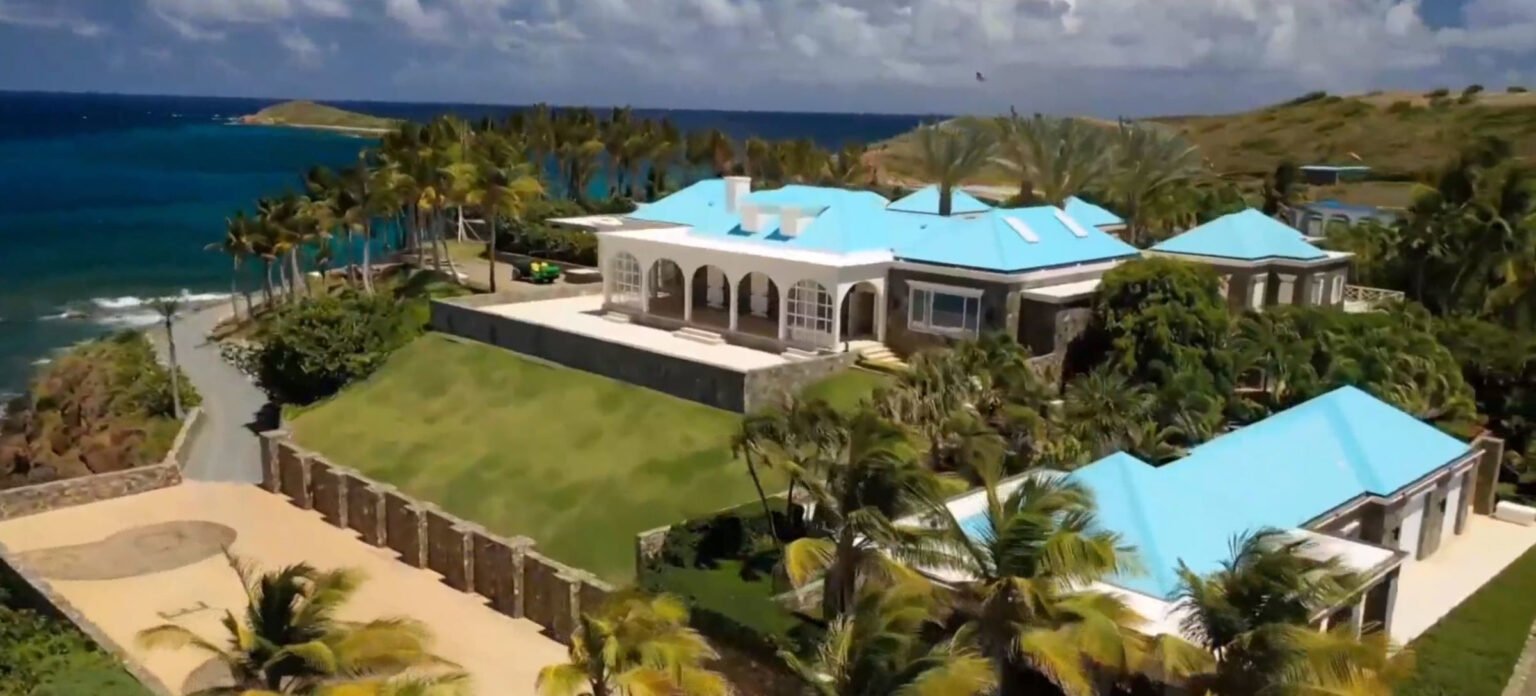
Jeffrey Epstein’s island: What exactly happened on Little Saint James?
Little Saint James sits in the U.S. Virgin Islands between St. Thomas and St. John. Jeffrey Epstein bought the island in 1998 for $7.95 million. The remote setting and private access made it possible to move people and activities with little outside notice. Over the next two decades the property became central to allegations of sex trafficking that stretched across multiple jurisdictions.
Island of Sin
Epstein hosted frequent gatherings that drew models, business contacts, and political figures. Some guests later described the atmosphere as freewheeling; others said they had no idea what happened after the main parties ended. The island earned several nicknames in the press and among staff, including Island of Sin, Orgy Island, and Pedophile Island. The remote location and Epstein’s wealth allowed those activities to continue for years before serious scrutiny arrived.
With power and money comes loyalty
Staff and contractors handled daily operations and transport. Victims described being flown into St. Thomas, then ferried across on Epstein’s boat Lady Ghislaine. Airport workers noticed repeated arrivals of young women and girls, yet generous tips kept questions at bay for a time. Locals recalled seeing girls who appeared underage sunbathing or socializing near the main residence. The pattern created a closed system that limited outside interference.
Rape and coercion
Several women and girls who came to Little Saint James described being pressured into sexual encounters and prevented from leaving. Sarah Ransome, then twenty, said Epstein directed her to have sex with a guest and later confiscated her passport after she attempted to swim away. She was located by a search party that included Epstein and Ghislaine Maxwell. Similar passport seizures appear in other accounts from the same period.

Maxwell's Legal Accountability
Ghislaine Maxwell’s name surfaced repeatedly in victim statements about Little Saint James. She was convicted in 2021 on charges that included sex trafficking and sentenced to twenty years in prison. In early 2026 she declined to answer questions during a congressional hearing related to the broader Epstein network. Her conviction marked one of the few direct legal consequences tied to the island’s operations.

Recent Document Releases and New Evidence
Large batches of previously sealed material were released by the Department of Justice in late 2025 and early 2026. The files contained millions of pages along with videos and photographs that had not been public before. Additional victim and staff testimony described daily routines on Little Saint James, visitor patterns, and the logistics of moving people between the island and the mainland. Network diagrams included in the releases showed how recruitment and transport were coordinated.
Victim Outcomes and Settlements
Sarah Ransome received a one-million-dollar settlement connected to her claims. The Epstein estate has paid more than one hundred twenty-one million dollars in restitution to victims through various channels. Some survivors continue to pursue individual or class-action claims. These resolutions shifted attention from immediate criminal proceedings to longer-term financial accountability.
Post-Epstein Ownership and Redevelopment Plans
The estate sold Little Saint James and neighboring Great St. James in 2023 to investor Stephen Deckoff for sixty million dollars. A portion of the proceeds went to the U.S. Virgin Islands government under an earlier settlement agreement. Deckoff announced plans for a small luxury resort, yet as of early 2026 no major construction had begun. The structures Epstein built remain largely untouched.
The record now includes ownership transfer, criminal convictions, and substantial victim compensation. Little Saint James no longer operates under Epstein’s control, but the documented harm to those brought there remains part of the public record.