How many houses did Jeffrey Epstein own?
Jeffrey Epstein had a lot of houses. Not that this is surprising – he was incredibly rich, and rich people love to invest in real estate. The world is once more looking into everything Epstein related these days, since his close confidante Ghislaine Maxwell was arrested.
This means his houses are of course in question. From the private island with a strange temple-like building, to the massive New York City mansion with questionable paintings there’s a lot to unpack when it comes to the late Epstein’s homes.
Here are the homes we know he owned when he died in prison last year.
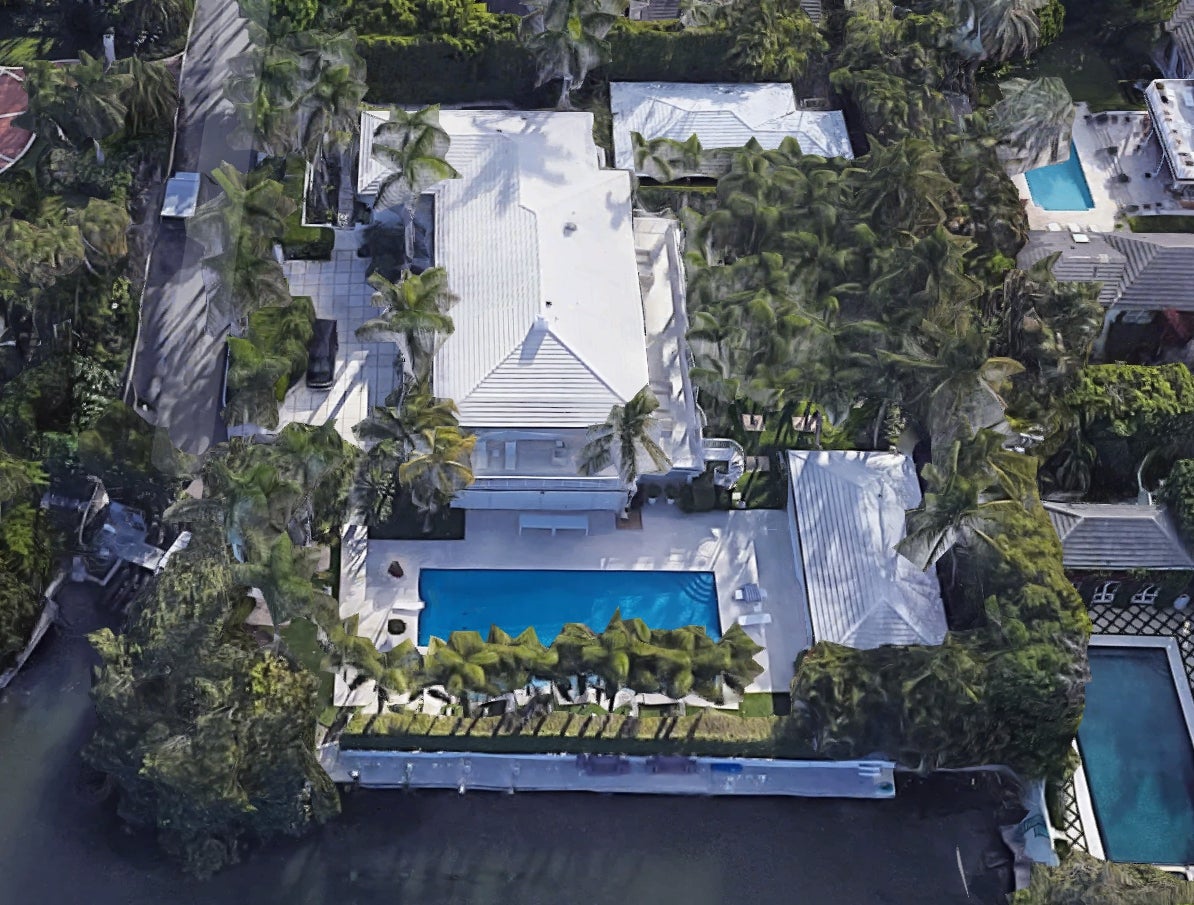
Palm Beach, Florida
The Palm Beach home that Jeffrey Epstein owned is currently for sale and valued at about $21.9 million. The home is also about a mile from the much talked about Trump-owned Mar-a-Lago club.
The home is described as having an Intracoastal view in the online listing, six bedrooms, and seven and a half bathrooms. The home is about 14,223 square feet with a view of some nearby islands.
The pool is the most prominently displayed feature in the listing – in fact, there are no in-home images to view. Though the listing assures potential buyers the home comes with a pool house, staff house, and three-car garage as well.

Zorro Ranch, New Mexico
Epstein also acquired land in New Mexico – 7,500 acres of land to be exact. On the ranch sits a 27,000 square foot mansion as well as some other buildings, making it essentially a compound. The property is estimated to be worth approximately $18 million.
This plot of land also has an airplane hangar and landing strip.
With Epstein now passed away it has been said that New Mexican officials are hoping to take back the abundant land.

NYC, New York
Epstein’s downtown New York City mansion is also currently for sale at a whopping $88 million dollar price point. This massive seven-story building has an unobscured view of the famous Central Park, and has forty different rooms. The building contains 28,000 square feet of room.
This mansion would be considered enormous if it was located anywhere in the world, but in NYC – where land is hard to come by and housing prices are astronomical, this mansion feels even more shockingly gratuitous. What’s even more insane is that he was gifted this building for free.
This building, which is listed as French neoclassical in design, appears to have the expectation of a commercial sale due to its excessive size and downtown location. It’s also worth noting Jeffrey Epstein literally lived on Easy Street.

Paris, France
Epstein also had an apartment in Paris, France. Not much is known about the apartment, but we’d be remiss not to mention it in an article listing his various properties. The apartment is described as a “luxury apartment”, and is nearby to the famous Arc de Triomphe.
In fact, Epstein was coming back from his Paris apartment in 2019 when he was arrested by authorities in Teterboro Airport in New, Jersey – likely on his way to his New York mansion.
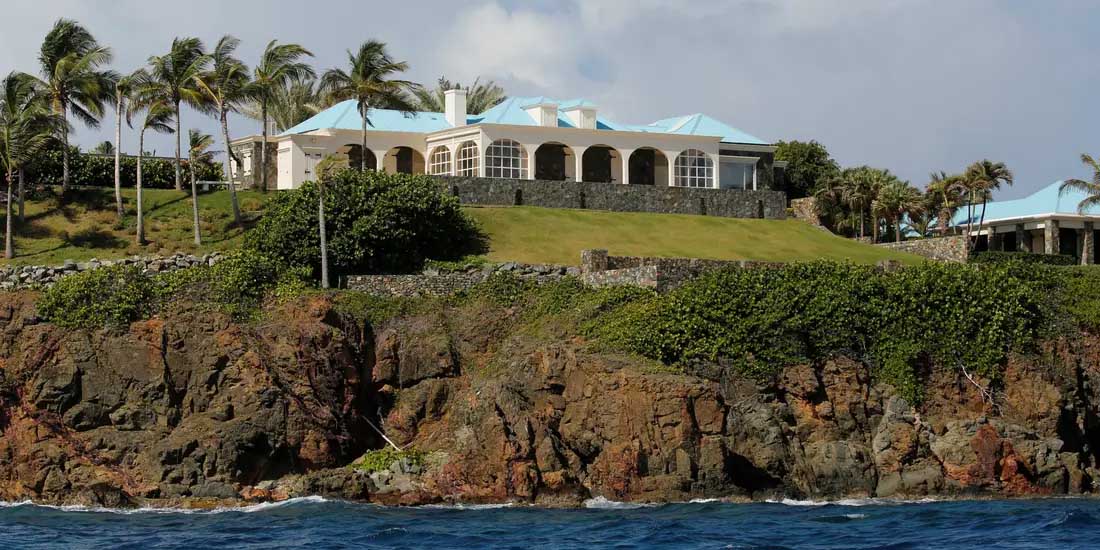
Little St. James, US Virgin Islands
Of course, there is the ever notorious private island people can’t stop talking about. Little St. James sits in the middle of the Caribbean and is 78 acres with a large compound on it. Ever since Epstein’s death, the island has been a hotspot for tourists of the tropical archipelago to try and get near in the hopes of a glimpse at the place where Epstein’s depraved acts went unchecked.
The island was frequently referred to by various nicknames ranging from Orgy Island to Little St. Jeff. The island is said to house an “underwater office and pool” (we have no idea what that would look like), an amphitheater, and a number of illegally imported plant life.

The island also has a strange blue and white striped building frequently said to look like a temple. The building’s purpose is unknown, though some say it was where Epstein played music, it is more often the target of various conspiracy theories related to Jeffrey Epstein’s crimes.
What some people don’t know is that Epstein also purchased the island Greater St. James, where locals lived. Authorities are now working to seize both islands.
Where did Jeffrey Epstein live? All the houses he owned — 2026 update
Before his death in 2019, Jeffrey Epstein maintained a portfolio of luxury properties that spanned the United States, the Caribbean, and Europe. These residences were not just homes; they were central settings in investigations, lawsuits, and media scrutiny that followed his arrest and conviction as a sex offender. Here’s a clear breakdown of the major properties Epstein owned or controlled, and what became of them.
New York City — Upper East Side mansion
Epstein’s primary residence was a vast Manhattan townhouse on East 71st Street, near Fifth Avenue. Often described as one of the largest private homes in New York City, the seven-story mansion reportedly contained dozens of rooms, a private elevator, and extensive security.
This property became infamous after law enforcement searches and subsequent reporting tied it to Epstein’s social life and alleged criminal activity. After Epstein’s death, the mansion became part of his estate. In 2021, it was sold for roughly $51 million, with proceeds directed toward settling claims from victims.
Little Saint James — U.S. Virgin Islands
Perhaps the most notorious property in Epstein’s portfolio was Little Saint James, a private island he purchased in the late 1990s. The island included multiple structures, docks, and a striking hilltop building that fueled years of speculation and conspiracy theories.
Little Saint James was repeatedly referenced in court filings and victim testimony. Following Epstein’s death, the island was sold in 2023 to a private buyer, marking the end of Epstein’s ownership of the property most closely associated with his crimes.
Palm Beach, Florida
Epstein also owned a mansion in Palm Beach, Florida, located close to the ocean in one of the city’s wealthiest neighborhoods. This house played a key role in the 2005–2008 investigation that led to Epstein’s controversial plea deal in Florida.
The Palm Beach property was eventually demolished after being sold in 2021. Like the New York mansion, the sale proceeds were used as part of financial settlements related to civil litigation.
Paris, France
Epstein maintained a luxury apartment near the Arc de Triomphe in Paris. Less discussed than his U.S. properties, the Paris residence reflected his international lifestyle and connections. French authorities later opened their own investigation into Epstein’s activities in France, although the property itself was never charged as a crime scene.
The Paris apartment was sold off as part of the estate liquidation process.
Zorro Ranch — New Mexico
Epstein’s most expansive property was Zorro Ranch, a roughly 7,500-acre ranch outside Santa Fe. Unlike his urban homes, Zorro Ranch was secluded and sprawling, featuring multiple residences, stables, and private roads.
The ranch drew renewed attention after Epstein’s death, when law enforcement executed searches related to ongoing investigations. As of 2026, Zorro Ranch remains unsold, tied up in legal and environmental issues, and continues to attract scrutiny.
Additional residences and access
Beyond properties he owned outright, Epstein had access to homes and estates belonging to associates, often traveling via private jet between locations. These properties were not legally his, but they contributed to his ability to move frequently and host guests across jurisdictions.
What happened to the properties after Epstein’s death?
Epstein’s estate entered probate after his death, with assets—including real estate—used to fund a victims’ compensation program. By the mid-2020s, most of his high-profile properties had been sold, demolished, or transferred to new owners, effectively dismantling the physical footprint of his wealth.
Why these homes still matter
Epstein’s residences remain significant not because of their luxury, but because they illustrate how wealth, mobility, and privacy enabled abuse for years. Each property has become part of the historical record of the case, studied by journalists, prosecutors, and the public as symbols of how power can shield criminal behavior.
In 2026, Epstein’s houses stand less as monuments to excess and more as reminders of accountability—and of the systems that failed to stop him sooner.