Here are the reasons why people are calling for Netflix to pull ‘Cuties’
Netflix’s film Cuties sparked intense debate when it arrived on the platform in 2020, with critics accusing it of hypersexualizing children. The conversation has evolved since then, but the movie’s core provocation remains the same: a look at how young girls absorb and replicate adult sexual signals before they understand what those signals mean.
Director Maïmouna Doucouré set out to examine that gap between imitation and comprehension, and the film still stands as one of the sharper entries in a small wave of intimate coming-of-age stories centered on outsider girls navigating modern pressures.
Controversial culture clash
The initial outrage peaked in September 2020 when members of Congress labeled the film child pornography and the hashtag #CancelNetflix trended for days. Those attacks were loud and immediate, yet the film stayed on the service for its full four-year licensing window. It left Netflix globally in September 2024 simply because the exclusive deal expired, not because sustained removal campaigns succeeded.
The episode exposed a familiar fault line between those who see any depiction of children in sexualized contexts as inherently exploitative and those who argue that confronting the issue on screen can be a form of critique. Cuties landed squarely in that divide and became a flashpoint for larger arguments about media influence, immigrant identity, and the limits of artistic intent.
Cinematic manifestation
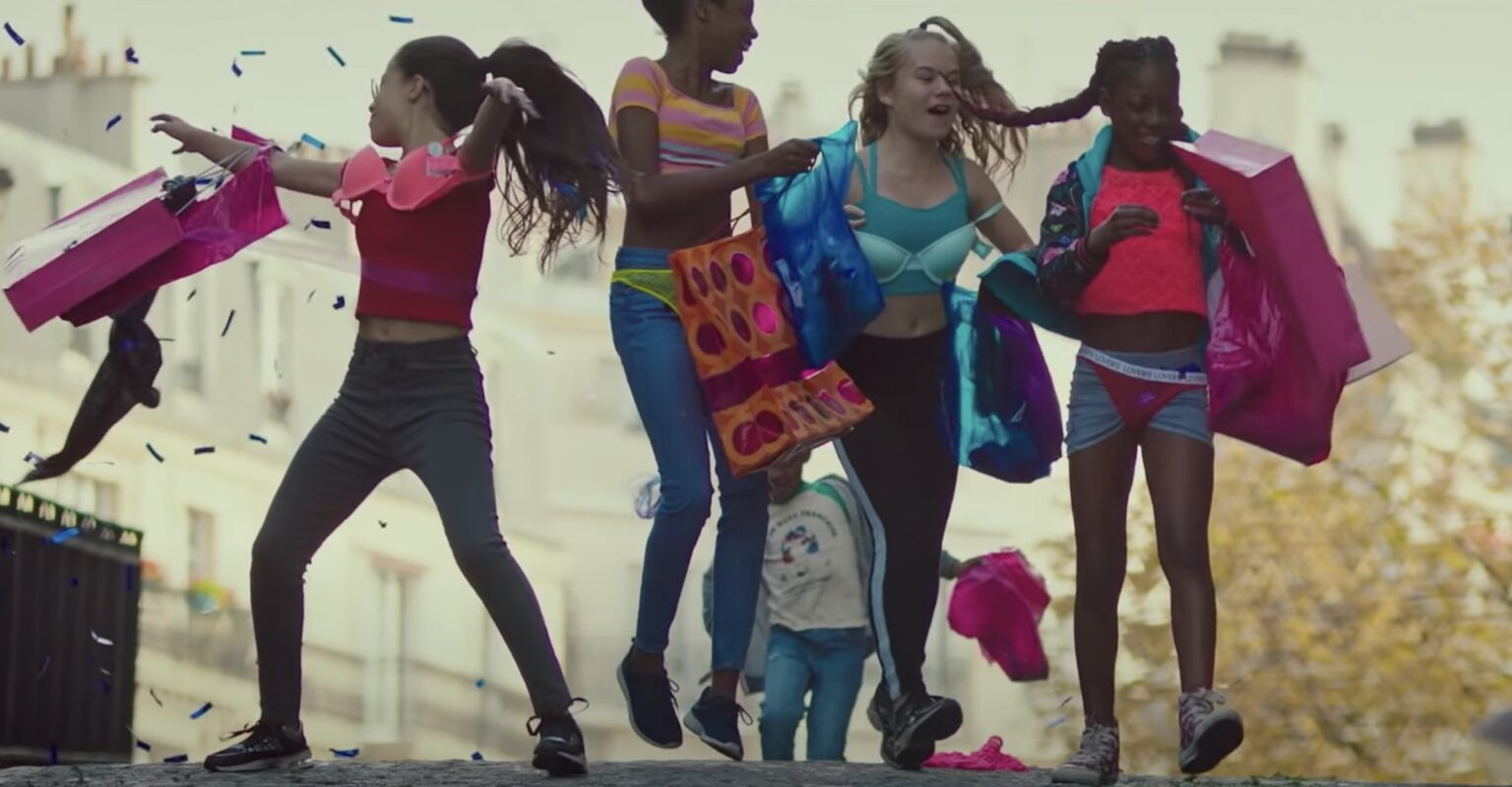
The story centers on eleven-year-old Amy, played by Fathia Youssouf, a French-Senegalese girl living in a Paris housing project. She is pulled into a dance crew called the Cuties after watching their bold routines online. The group rehearses increasingly provocative choreography drawn from music videos and social platforms, aiming for a local competition. In performance scenes the camera lingers on hip thrusts and crotch-focused framing that mirror the very imagery Amy is trying to master.
Other sequences push the discomfort further. Amy photographs her own genitals and posts the image on social media, though no explicit content appears on screen. Earlier in the same scene she makes a sexual advance toward an adult cousin in an attempt to avoid punishment. These moments are presented without graphic nudity or simulated sex acts, yet they remain unsettling because they show a child weaponizing adult behavior she barely grasps.
Poignant not porno
Doucouré has repeatedly stated that the film contains no nudity and no sex scenes. She drew from her own upbringing and from interviews with girls in similar situations to craft a portrait that is meant to disturb rather than titillate. The narrative arc follows Amy’s realization that mimicking sexualized performance will not grant her the freedom or status she seeks. By the end she steps away from both the restrictive traditions of her family and the false promise that objectification equals power.
The film therefore functions as an argument against the very images it displays. It asks viewers to register the gap between what Amy thinks success looks like and what that performance actually costs her. That distinction is what separates Cuties from pornography, even if the distinction did not shield it from accusations that the distinction itself was irrelevant.
Post-Release Trajectory and Availability
After the initial wave of petitions and congressional letters, Cuties remained available on Netflix until its licensing term concluded. The departure in September 2024 reflected standard contract expiration rather than any fresh wave of organized pressure. The film has since moved to other platforms in select territories, though none have matched the original reach or the accompanying scrutiny.
The episode now reads as a contained moment in platform history: a film that arrived amid accusations of exploitation, survived the storm, and left on schedule once its window closed. The conversation it provoked about youth and media, however, has continued without the movie itself as the central target.
Director's Subsequent Work
Doucouré has kept her focus on young female protagonists navigating identity and cultural expectations. Her 2022 feature Hawa follows an albino girl in Paris who dreams of being adopted by Michelle Obama, extending the same interest in outsider status and media fantasy that shaped Cuties. As of 2025 she is developing a Josephine Baker biopic starring FKA twigs, again centering a Black woman whose public image was shaped by performance, race, and sexuality.
These projects suggest that the questions Cuties raised about how girls learn to present themselves remain central to Doucouré’s filmmaking. The continuity also places the earlier controversy in the context of an ongoing artistic inquiry rather than a one-off provocation.
Honors and Recognition
In 2024 France named Doucouré a Knight of the National Order of Merit, an official acknowledgment of her contributions to cinema. The honor arrived years after the Netflix debate and signals that French cultural institutions continue to view her work as worthy of institutional support despite the international backlash.
Such recognition does not erase the discomfort some viewers still feel about specific scenes in Cuties, but it does locate the director within a national film tradition that values difficult examinations of adolescence over blanket prohibitions on subject matter.
Evolving Social Media Landscape
Recent surveys underscore how the pressures the film dramatized have only intensified. A 2024 Pew Research study found that nearly half of U.S. teens report being online almost constantly, with TikTok and Instagram remaining dominant among girls. Multiple analyses link frequent exposure to sexualized content on these platforms with increased body dissatisfaction, lower self-esteem, and earlier adoption of adult presentation styles.
These patterns echo the world Amy enters when she joins the Cuties. The film’s warning about imitation without comprehension now sits alongside data showing that the platforms feeding that imitation have grown more powerful and more algorithmically precise at delivering the very images Doucouré set out to critique.
The controversy around Cuties ultimately circled back to a simple question: can a film show something harmful in order to condemn it? Doucouré’s answer remains on screen in the form of a child who learns, too late for comfort, that copying adult performance does not make her an adult. The debate over whether that lesson required the scenes that delivered it continues, but the film itself has moved from active flashpoint to a fixed, if still unsettling, reference point in discussions of media, girlhood, and the limits of representation.