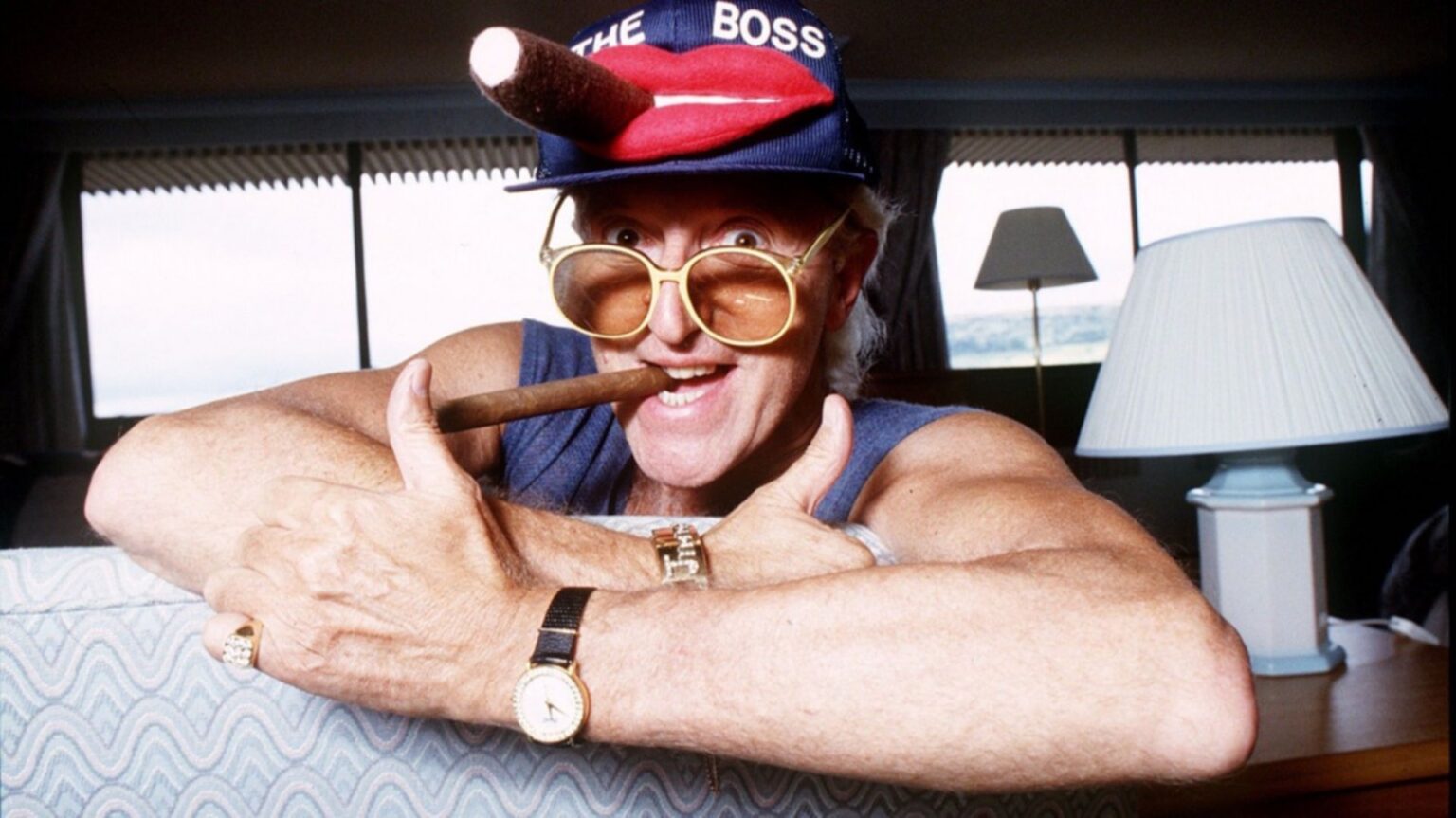
Does this new Jimmy Savile documentary prove how he avoided jail?
Years after his death, the full extent of Jimmy Savile's crimes continues to surface through documentaries, official inquiries, and later cultural reckonings. The Netflix series Jimmy Savile: A British Horror Story, released in April 2022, remains one of the clearest accounts of how a BBC presenter and radio personality maintained access to vulnerable people for decades.
Directed by Rowan Deacon, the two-part limited series draws on archival footage and contemporary interviews. It presents Savile's public image as a charity fundraiser and eccentric personality alongside the growing evidence of his predatory behavior. The first chapter introduces his rise in British media, while the second examines the patterns of abuse that went unchecked for so long.
Savile’s documentary
The series uses recorded interviews in which Savile discusses his charity work at Leeds General Infirmary, including anecdotes relayed by journalist Martin Young. Young recalls Savile describing incidents at the hospital morgue with unsettling ease. Footage of Savile interacting with fans, including children waiting for autographs, underscores how his public persona created opportunities for contact that later testimony showed were routinely exploited.
The documentary notes Savile's long-standing relationship with members of the royal family, particularly Prince Charles, who sought his advice on media and public relations over roughly twenty years. These connections are presented as part of the broader network that allowed Savile to operate without serious scrutiny during his lifetime.
Savile’s crimes
Savile died in October 2011 at the age of eighty-four. A year later, Operation Yewtree and the joint NSPCC and Metropolitan Police inquiry titled Giving Victims a Voice began examining allegations against him. Peter Spindler, then head of specialist crime investigations, described Savile as a predatory sex offender based on multiple accounts. The inquiry ultimately recorded 450 alleged victims of Savile out of 589 total allegations spanning 1955 to 2009, with 214 crimes formally documented.
John Cameron of the NSPCC characterized Savile as a well-organized prolific sex offender who used his authority and influence to procure children and offend against them. The scale of the abuse across hospitals, BBC premises, and other institutions became clear only after his death.
Legacy and Physical Remnants
Savile's Glen Coe cottage, long associated with his crimes, was demolished in 2026 after repeated vandalism. The property had been targeted for years as a visible reminder of the scandal. Its removal marks one of the final physical traces of a life that left few other standing monuments once the extent of the abuse became public.

Later Media Portrayals
In 2023 the BBC broadcast the four-part drama The Reckoning, which dramatized Savile's career and the institutional tolerance that enabled his offenses. References to the case have continued to appear in other productions, including the 2025 film 28 Years Later and its 2026 sequel. These later works treat the scandal as established history rather than breaking news.
Institutional Failures and Reforms
Official inquiries revealed that Savile abused victims across multiple hospitals and BBC locations. Contemporary analyses noted that few individuals in positions of authority faced formal consequences for enabling or ignoring the abuse. The reports highlighted systemic gaps in safeguarding that allowed repeated access to children and young people over decades.
Victim Impact and Reporting Changes
Following the exposure of Savile's crimes, the NSPCC recorded a significant rise in calls to its helplines. One study noted an initial increase of more than eighty percent in reports of abuse. The surge demonstrated both the scale of unreported cases and the effect of public acknowledgment on willingness to come forward.
The Netflix documentary and subsequent inquiries established a clearer record of how influence and institutional silence operated in Savile's case. Later media treatments and the demolition of associated properties show that the aftermath continues in both cultural and physical forms long after the initial revelations.