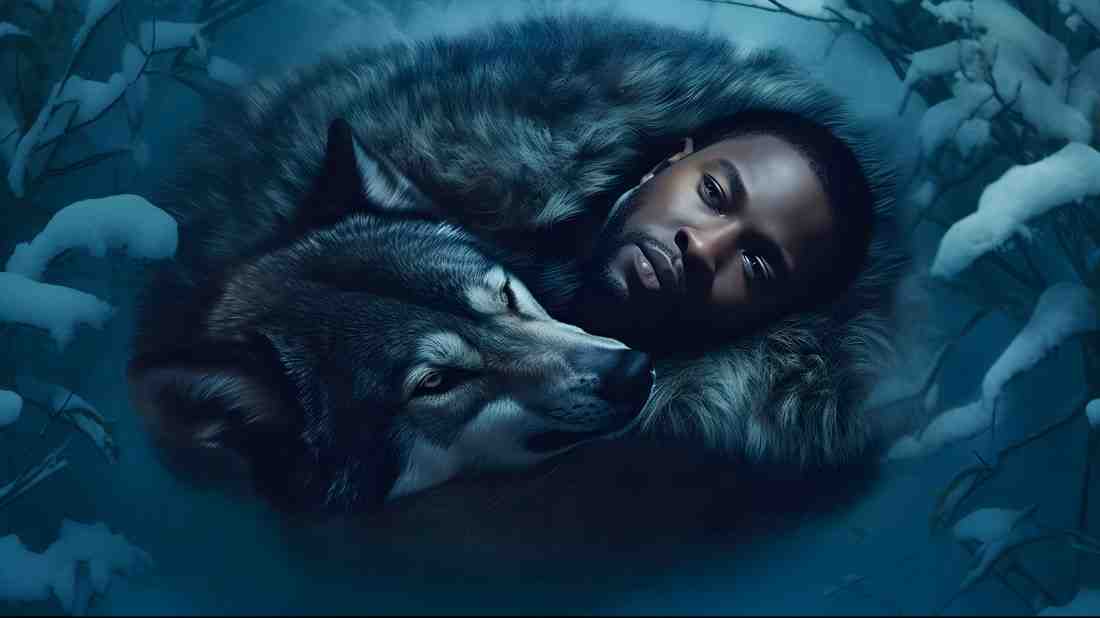
Lonely Wolf International Film Festival Announces 2025 Award Winners
The Lonely Wolf International Film Festival has officially announced the award winners of its sixth edition, confirming 2025 as the most uncompromising and thematically volatile season in the festival’s history. Curated by festival founder and director Adrián Pérez, the selection was drawn from 987 submissions representing 54 countries, resulting in 43 winning films across feature, short, documentary, experimental, and screenplay categories.
Following five years of sustained growth as a virtual-first festival—reaching approximately 3,500 viewers annually and generating more than 10,000 streams—the 2025 edition marks a decisive shift away from representational balance and toward curatorial extremity. Pérez has described the season as intentionally risky, emphasizing that the selected works do not merely align with the festival’s identity but actively constitute it.
Premiering virtually from December 18 to 31, the 2025 Official Selection comprises 73 films, including ten Best Picture nominees. Rather than pursuing cohesion of tone or genre, the program embraces formal dissonance and ideological friction. Across narrative fiction, documentary, and experimental cinema, the works demand sustained engagement, resisting passive consumption and algorithmic familiarity.
 Major Award Recipients and Official Selection Highlights
Among the most awarded titles is Love Is Real, directed by London-based filmmaker Albert Bullock. Created when Bullock was 24, the 17-minute film interrogates sexual identity and intimacy through a confrontational lens, culminating in imagery that reframes sex as alienation rather than resolution. The film received multiple awards following its controversial online circulation and was recognized by the festival for its formal precision and conceptual rigor.
The feature jury awarded Best Feature Film to Hólmganga, directed by Lasse Kissow, an 8th-century Danish Viking epic that fuses mythic violence with existential inquiry. In contrast, Zhihui Long’s Where the Flowers Blooming transforms historical trauma from China’s Cultural Revolution into a meditative 128-minute cinematic study of memory and rupture, exemplifying the festival’s confidence in long-form, politically unflinching work.
In documentary cinema, Rajesh PK’s Blu’s and Tom Dey’s JUMPMAN were recognized for rendering invisible communities and interior lives with ethical clarity. Both films foreground marginal experience without aestheticizing precarity, aligning with the festival’s long-standing resistance to extractive storytelling.
 Recurring Motifs and Curatorial Throughlines
A notable thematic convergence emerged across the 2025 selection: images of submission, animality, and surrendered agency recur independently in multiple works. Films such as Laura Calle’s Missing and Romi Banerjee’s Ghee—the latter introducing the fictional substance “Enthrallium,” which eradicates independent thought—use hospitality, ritual, and care as mechanisms of control. These parallel gestures, uncoordinated yet resonant, reflect contemporary anxieties surrounding autonomy, consent, and power.
Horror unearths power beyond polite scenes
Banerjee’s Ghee, directed at age 26, was singled out for its understanding of horror not as escapism but as excavation, exposing how domination operates through politeness and intimacy rather than overt violence.
Expanded Recognition Beyond the Official Selection
Beyond the Official Selection, the festival recognized a wide range of formally ambitious works. Chuck Harding’s Bella Lune – Blissful Escape subverts medical iconography through fetishized authority figures, while Elliott Forrest and Kelly Hall-Tompkins’s Face to Face: Forgotten Voices Heard transforms Carnegie Hall into a democratizing acoustic space for socially marginalized speakers.
Archives breathe new life into cinema
Archival experimentation was honored through Maki Natalis’s Foreclosure, which resurrects and reconstructs Ragona’s The Last Man on Earth (1964) into a metamodern cinematic palimpsest, asserting archives as living, mutable material rather than static artifacts.
Other awarded works include Konstantin Karpeev and Anatoliy Trofimov’s Frankly, a 71-second meditation on millennial ennui; Steve Hunyi’s Garbage Rex, a neo-noir descent into urban marginality; and Ulisse Lendaro’s The Saint of Brooklyn, a rigorously unsentimental portrait of devotion and physical brutality.
Screenplay Awards and Narrative Innovation
Ambitious scripts spark festival discovery
The Screenplay Selection recognized works distinguished by conceptual ambition and narrative risk. Awarded screenplays ranged from mythological reconfigurations and dystopian pedagogies to domestic psychological thrillers and politically charged genre hybrids. Across the category, jurors highlighted a shared resistance to closure, favoring moral ambiguity, unresolved trauma, and philosophical inquiry over narrative consolation.
Institutional Identity and Festival Trajectory
Now entering its sixth year, the 2025 edition represents a consolidation rather than an expansion of Lonely Wolf’s mission. Built as a virtual festival combining traditional prestige markers with global digital access, the event has cultivated an active international audience and a sustained critical presence without aligning itself with studio-adjacent definitions of independence.
Confronting form with daring cinema
Rather than functioning as a marketplace or talent pipeline, the festival positions itself as a site of confrontation—between form and content, politics and aesthetics, comfort and risk. The 2025 award winners collectively reinforce this identity, asserting cinema as a space for inquiry rather than reassurance.
The sixth edition stands not as a retrospective of trends, but as a present-tense record of filmmakers operating at the edges of narrative, ethics, and form, united only by an unwillingness to domesticate their work.