



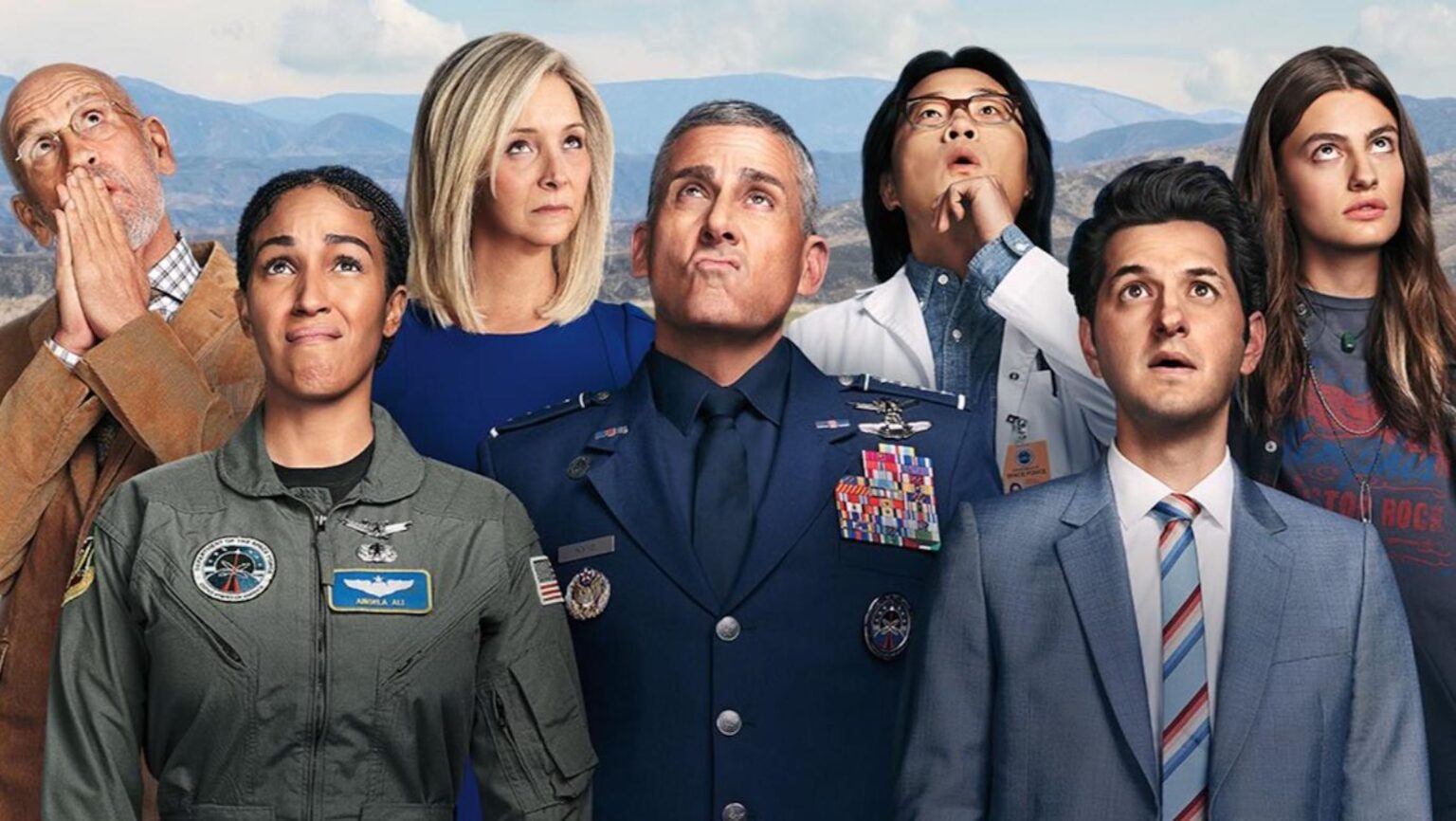
Have you watched Netflix’s ‘Space Force’? Here’s why it’s hot trash
When the trailer dropped for Netflix’s Space Force, the prospect of Steve Carell steering a workplace comedy about the newest branch of the military felt like a sure bet. The early hype leaned hard on Carell’s Office pedigree and the promise of brisk absurdity. What arrived instead was a tonal muddle that never quite settled on its own register, leaving viewers who came for nonstop punchlines with something closer to a strained dramedy.
Season one landed with a 39 percent Tomatometer score and a Metacritic hovering near 50, numbers that reflected widespread frustration with the show’s uneven mix of workplace stress and half-hearted gags. The gap between marketing and execution made the disappointment sharper; trailers sold hijinks, while episodes kept cutting from family tension straight into awkward one-liners that landed with a thud.
Comedy, or lack thereof
The core complaint stayed consistent across both seasons: the show simply was not very funny. Season two improved its Rotten Tomatoes score into the 80-90 range, yet critics still flagged the same uneven tone that undercut even the better episodes. The space-monkey sequence remained a stand-alone oddity, while most scenes traded in earnest domestic friction rather than satire. When the series attempted levity, the surrounding seriousness made the jokes feel misplaced rather than surprising.
Viewers who tuned in expecting rapid-fire banter instead found lengthy stretches of bureaucratic maneuvering and personal fallout. The show’s better moments arrived when it stopped forcing comedy and simply let the characters navigate the mess they inherited.
Accidentally sincere
The father-daughter relationship between Mark Naird and Erin remained the strongest thread, and season two leaned into those dynamics with slightly more confidence. Reviews described the follow-up season as more self-aware, allowing the interpersonal beats to breathe instead of rushing toward punchlines. Erin’s tentative romance and her rapport with Captain Angela Ali still provided the clearest emotional anchors, even if the show never fully committed to the dramedy lane it kept brushing against.
John Malkovich’s Mallory also benefited from the modest tonal shift, giving the pair’s tense professional rapport room to turn occasionally tender without an immediate comedic undercut. The suggestion that the series might have worked better as a workplace drama never disappeared; season two simply proved the point by edging closer to that identity without fully embracing it.
Big stars & small parts
The pattern of underutilized talent persisted. Lisa Kudrow’s character vanished into a prison storyline that never received a clear explanation, and the rest of the marquee names—Patrick Warburton, Jane Lynch, Fred Willard—received similarly abbreviated screen time. Season two kept the core ensemble intact yet still treated many of its biggest names as brief cameos rather than recurring forces.
Audiences who arrived expecting to watch comedy heavyweights riff off one another left disappointed. The decision to assemble such a stacked cast for limited arcs felt like a miscalculation that carried through the entire run, leaving the show thinner than its billing suggested.
Rushed stories
Season one compressed the creation of an entire military branch, the construction of a moon base, and an international incident into ten half-hour episodes. Season two trimmed the order further to seven episodes and picked up after the moon-base fallout, focusing on proving the unit’s worth under a new administration. The shorter run and constrained pacing left several threads feeling abbreviated, even as the follow-up attempted to correct some continuity gaps.
The original impulse to treat the material like a traditional sitcom clashed with the longer-form storytelling the premise seemed to require. Had the series committed earlier to hour-long episodes or a narrower scope, the individual arcs might have landed with more weight instead of rushing past the very moments that could have grounded the satire.
Season 2 Adjustments and Reception
Production moved to Vancouver in an effort to trim costs, and Norm Hiscock joined as co-showrunner to help stabilize the tone. The season picked up after the moon-base events and shifted focus to bureaucratic survival under new leadership. While the Tomatometer rose noticeably, the improvement remained partial; the series still struggled to convert its stronger character work into consistent comedy.
Why It Was Canceled
Netflix pulled the plug in April 2022 after season two’s February debut. Modest viewership numbers, high production costs, and a broader content-reduction push at the streamer all factored into the decision. The modest global hours watched did not meet internal renewal thresholds, closing the door on further seasons despite the creative adjustments that had been made.
Legacy and Cultural Footprint
The real U.S. Space Force had been established in 2019, giving the show a timely hook that it never fully exploited beyond surface-level parallels. Viewers and critics continued to measure the series against The Office expectations, and the comparison rarely worked in its favor. IMDb user ratings settled at 6.7 across both seasons, indicating a persistent but mixed audience that appreciated the cast chemistry without fully embracing the finished product.

Cast Careers Post-Space Force
Steve Carell moved between other comedies and dramatic roles without returning to the military satire lane. Lisa Kudrow and John Malkovich maintained steady television and film schedules, while Ben Schwartz continued voice and live-action work. The ensemble never reconvened for a substantial joint project, leaving the original complaint about wasted star power as a lingering footnote rather than a launching pad.
Tone Evolution: From Misfire to Modest Improvement
Season two earned notice for feeling more comfortable in its own skin, dialing back the forced sitcom beats in favor of workplace and family dynamics. The shift validated the original suggestion that sincerity might suit the material better than broad satire, yet the series still stopped short of fully committing to that lane. The evolution clarified what had been missing rather than erasing the first season’s structural problems.
Looking back, Space Force arrived with real assets—an appealing cast, a timely premise, and occasional flashes of genuine warmth—yet never aligned its ambitions with its execution. The two-season run offered a case study in how marketing, tone, and episode length can work against even well-intentioned projects. The series closed without fanfare, leaving behind a record of missed opportunities rather than a lasting addition to the workplace-comedy canon.
