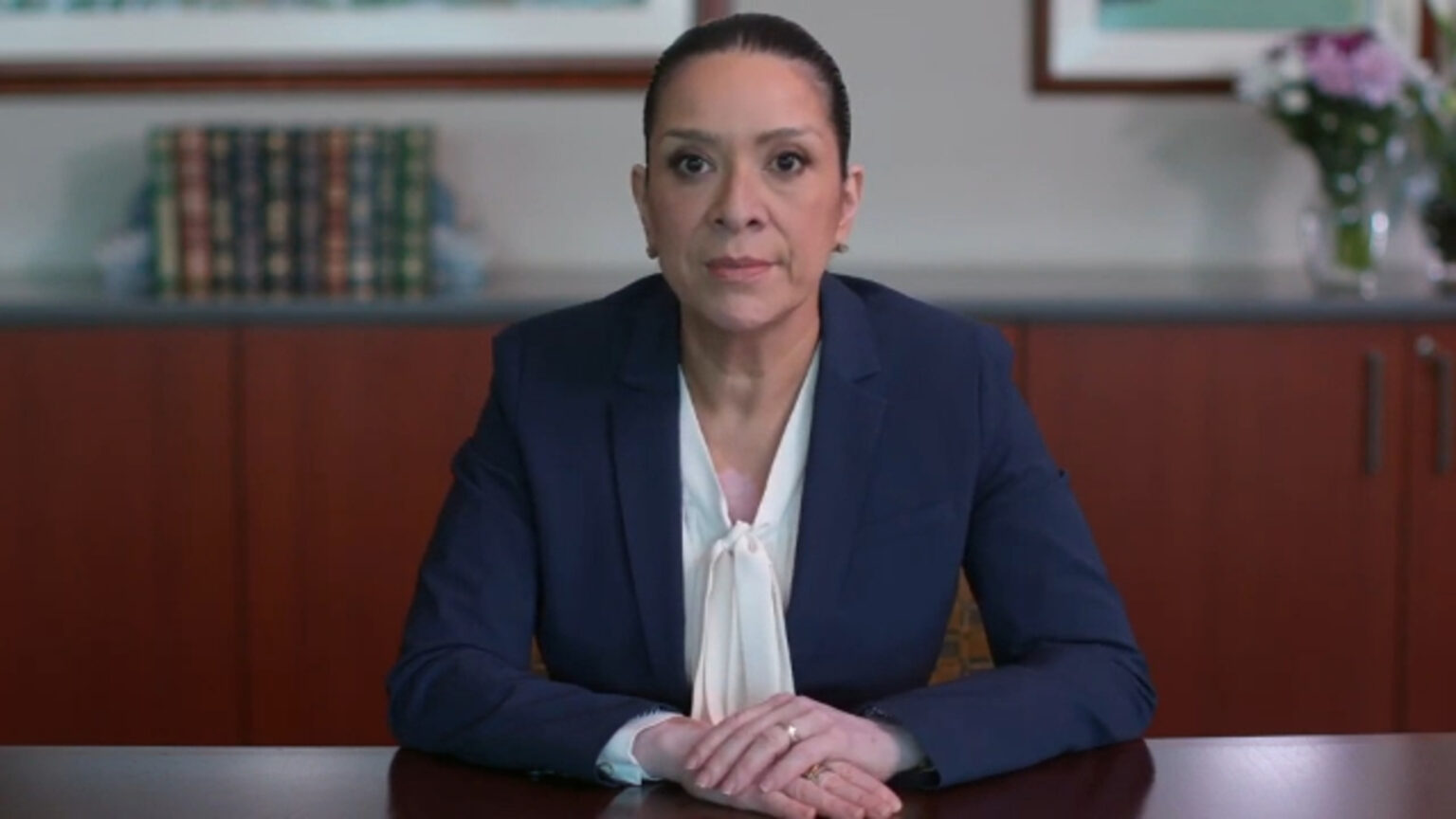
Jeffrey Epstein case: The judge has spoken after attack on her family
Two weeks ago, my life as I knew it changed in an instant. That is how Esther Salas, the federal judge whose family was murdered by a hostile attorney, began her statement on The Savoy Show. Holding back tears, Salas describes what would be a nightmare for anyone: the loss of her husband and son to a murderer. While it seems like Esther Salas was the target of one angry man, she presided over a case involving Jeffrey Epstein, making it look like a political conspiracy. Here’s what we know about Esther Salas and her involvement in the Epstein case.
Who is Esther Salas?
Esther Salas is a U.S. federal judge who presided over a civil suit involving Jeffrey Epstein and Deutsche Bank. The plaintiffs in the case were investors who felt that Deutsche Bank led them astray because they didn’t disclose that Epstein was their client. They felt the Epstein association was a liability they should have known about. The suit was filed in 2017 after Deutsche Bank’s stock tumbled when their association with Jeffrey Epstein went public. It went public after the Federal Reserve criticized the bank for not flagging high-risk U.S. transactions. In the same week, Deutsche was slapped with a fine for failing to flag Epstein’s suspicious transactions. Before the Epstein case, Salas was best known for being the judge who sentenced Real Housewives of New Jersey stars Teresa and Joe Giudice for fraud, reaming out the couple before handing down their prison sentences. She remains the first Hispanic woman to serve as a U.S. District Judge in New Jersey and continues to preside over the Karimi v. Deutsche Bank class action that centers on Epstein-related AML compliance issues.
One last glorious weekend
Salas’ son, Daniel wanted to celebrate his return from his Catholic university with a few friends. Due to COVID-19, Salas and her husband, Mark, were initially concerned about whether they could host the party under safety guidelines. They worked out a feasible plan to keep their guests safe, and the party went ahead. According to Salas, the party was wonderful, full of laughter and smiles. Little did they know that tragedy would strike. An attorney who worked on the Epstein case was planning to come to the Salas’ home and murder Esther. He shot her son instead.
Salas’ family was murdered
The doorbell rang on Sunday while Esther was conversing with Daniel. He went upstairs to answer the door. That’s when Salas heard gunfire. A disgruntled attorney dressed as a FedEx worker came to their door with a gun and shot Salas’ son. Salas’ son Daniel’s last words to his mother were “I love talking with you, Mom.” right after, he dashed up the stairs to answer the door. He took a bullet and died trying to protect his father. Mark Salas was in critical condition and needed multiple surgeries, but survived. At first, it was unclear whether or not the murders were due to the Epstein case Salas started presiding over.
Who was Roy Den Hollander?
The disgruntled attorney who shot Salas’ family was identified as Roy Den Hollander, 72. He was a self-described men’s rights lawyer and anti-feminist on his website. He also wrote an essay on The Daily Beast where he called Salas “a lazy and incompetent Latina judge.” Hollander only served one case in front of Salas, a call to declare selective service unconstitutional since it doesn’t include women. He left the case in 2019 after being diagnosed with a terminal illness. He was found dead of a gunshot wound the day after attacking Salas’ family. According to Salas, Hollander had an entire dossier on where her family lived, went to school, and attended church. This information prompted Salas to deliver a call to action. Authorities later linked Den Hollander to the separate 2020 murder of men’s rights activist Marc Angelucci in California.
Esther Salas’ call to action
Salas believes she was targeted due to her position as a federal judge. Also, she believes her information was too easy to obtain. Anyone with an internet connection could have looked up her address. Plus, companies sell information online to people looking to “dox” officials. Salas wants to make that harder to do. Salas’ aim is to start a national conversation about better privacy protections for federal officials. Salas acknowledged the issue around the internet and privacy is complicated but would like the policy to shift to ensure private information doesn’t fall into deadly hands. Her advocacy produced concrete results when Congress passed the Daniel Anderl Judicial Security and Privacy Act in December 2022. In 2026 she warned against any federal legislation that might weaken stronger state-level privacy protections already in place.

Legacy of Daniel’s Law and Federal Protections
The Daniel Anderl Judicial Security and Privacy Act, signed into law in late 2022, directly addresses the gaps Salas identified after the attack. It restricts public disclosure of personal information about federal judges and their families and creates grant programs that help states adopt similar safeguards. Salas has stayed involved in pushing for full funding of those grants and in urging additional states to pass versions of Daniel’s Law modeled on New Jersey’s statute. The legislation stands as the clearest legislative outcome tied to her public statements after the murder of her son.

Rising Threats to the Judiciary
Salas has noted in 2025 and 2026 interviews that threats and partisan rhetoric aimed at judges have grown more intense since 2020. She has described an environment where political attacks increasingly question judicial independence and where judges feel more exposed when they issue rulings that draw public attention. While the 2020 attack on her family was carried out by a lone individual with no proven link to the Epstein litigation, Salas has framed the broader pattern of escalating threats as a separate and ongoing concern for the judiciary as a whole.

Salas’ Continued Advocacy and Public Role
Since the attack, Salas has received the 2024 Lemkin Medal for her work strengthening protections for judges and was inducted into the Rutgers Hall of Distinguished Alumni in April 2025. She has appeared in major outlets to discuss judicial independence and the practical steps needed to keep judges and their families safe. Her public profile has shifted from the immediate aftermath of the tragedy to sustained engagement on policy and institutional security.

The Deutsche Bank-Epstein Lawsuit Status
The class-action suit Karimi v. Deutsche Bank, which alleged misleading statements about anti-money laundering compliance tied to Epstein clients, remained under Salas’ docket into the mid-2020s. No final public resolution has been reported, and the case continues to be referenced in court filings connected to the original allegations. The timing of the assignment placed Salas on the matter shortly before the 2020 attack, though investigators found no evidence that the litigation itself prompted the violence.
Foul play?
Internet users cited that Esther Salas was targeted four days after the Epstein case was assigned to her bench. Many took to Twitter to express their concern that someone took a hit on her because of the Epstein case, not because of a hostile attorney who appeared to be unrelated. The Epstein case was one of the hundreds of cases Salas presided over. New Jersey has the highest caseload for federal judges in the U.S. Salas presided over 485 civil cases and over fifty criminal cases in one year. No evidence has emerged linking the attack to the Epstein litigation beyond the coincidence of timing, and Den Hollander’s actions have been treated as those of an individual acting alone.