‘Black Mirror’ S4E2: “Arkangel”
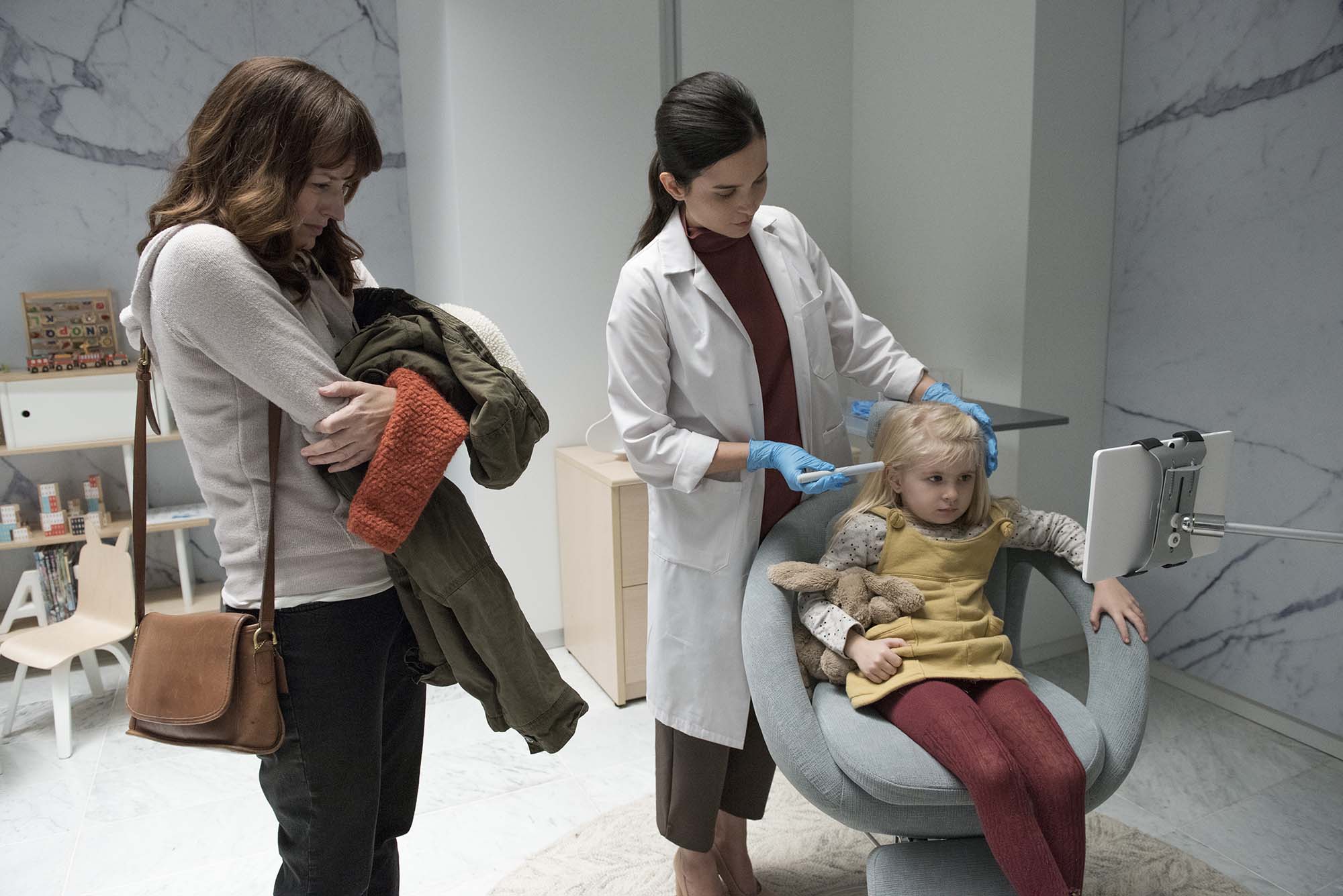
We’re attempting to review each episode without spoilers, so if you want to go in completely fresh, close the review now! Logline: A mother struggles to shield her daughter from the world, before discovering a helpful new technology. Verdict: Black Mirror’s take on helicopter parenting, taking the everyday fears of parents and injecting them with a healthy dose of technological terror. Rosemarie DeWitt’s character is a mother obsessed with finding complete safety for her kid, no matter the cost, and the technical means are already here today in embryonic form. “Arkangel” explores parental guidelines, filter systems, and the limits on what one can realistically hide from children, ending on a cautionary note about the insidious downsides of such tech.
“Arkangel” is a frenzied look at parenting-plus-tech, but some of the characters and actions are hardly believable. Brenna Harding’s scenes as the daughter pile in too many broken-teenager tropes in an attempt to find effect. Eventually the episode does find a dramatic thread to yield some surprise, but the wait is a bit much. “Arkangel” still relishes in how uncomfortable Black Mirror can make you feel, exploring uncharted territory and capitalizing on common fears about children. Even if you’re not a parent, Charlie Brooker does a good job of transporting you inside the head of a mother who sees the whole world as a barrage of threats to her child, emotional territory we’ve not seen Black Mirror tackle before.
Real-World Parental Monitoring Tech in 2026
Apps like Life360 provide real-time location tracking popular among parents. Content control tools including Bark and Qustodio monitor digital activities. TikTok Family Pairing Mode extends platform-specific parental oversight. These systems mirror the surveillance and filtering functions shown in the episode, moving the premise from speculative to everyday infrastructure.
Ethical Debates on Child Surveillance Since 2017
Discussions continue around where child privacy rights override parental control. Episode themes compared to smartwatch GPS products marketed for safety. Broader questions on whether shielding from pain is protective or limiting keep the cautionary note alive in policy talks and family forums.
Jodie Foster's Directorial Approach to Arkangel
Foster aimed for an intimate character study resembling a Bergman film. She chose to avoid graphic imagery to keep focus on relational dynamics. Episode shot in Canada to evoke working-class American settings. Veteran movie star Jodie Foster (The Silence of the Lambs) directed this episode, and she perfectly captures the sense of panic that can be part of a parent’s world, with emphasis placed on keeping the episode centered – actually, claustrophobic – at times.
Reception and Legacy of Arkangel
Episode frequently cited in parenting tech and helicopter parenting analyses. Remains part of broader Black Mirror discussions into 2025-2026 with new seasons airing. Fan interest includes occasional calls for sequels similar to USS Callister. A sense of social realism hangs over the whole piece, with the central mother-daughter relationship redolent of authenticity.
Guttural moments are peppered throughout, Foster managing to wring out every speck of horror. Despite some character missteps and odd trope use, Black Mirror still manages to explore fully earned, heavy drama. Foster highlighted the mother and daughter as essentially the same person in relational terms. Focus on emotional authenticity over graphic content supports the social realism noted originally. Current parental apps mirror core surveillance and filtering functions shown in the episode. Foster's claustrophobic style and DeWitt performance remain standout elements.