



Here’s why Korean movies are better than recent Hollywood flicks
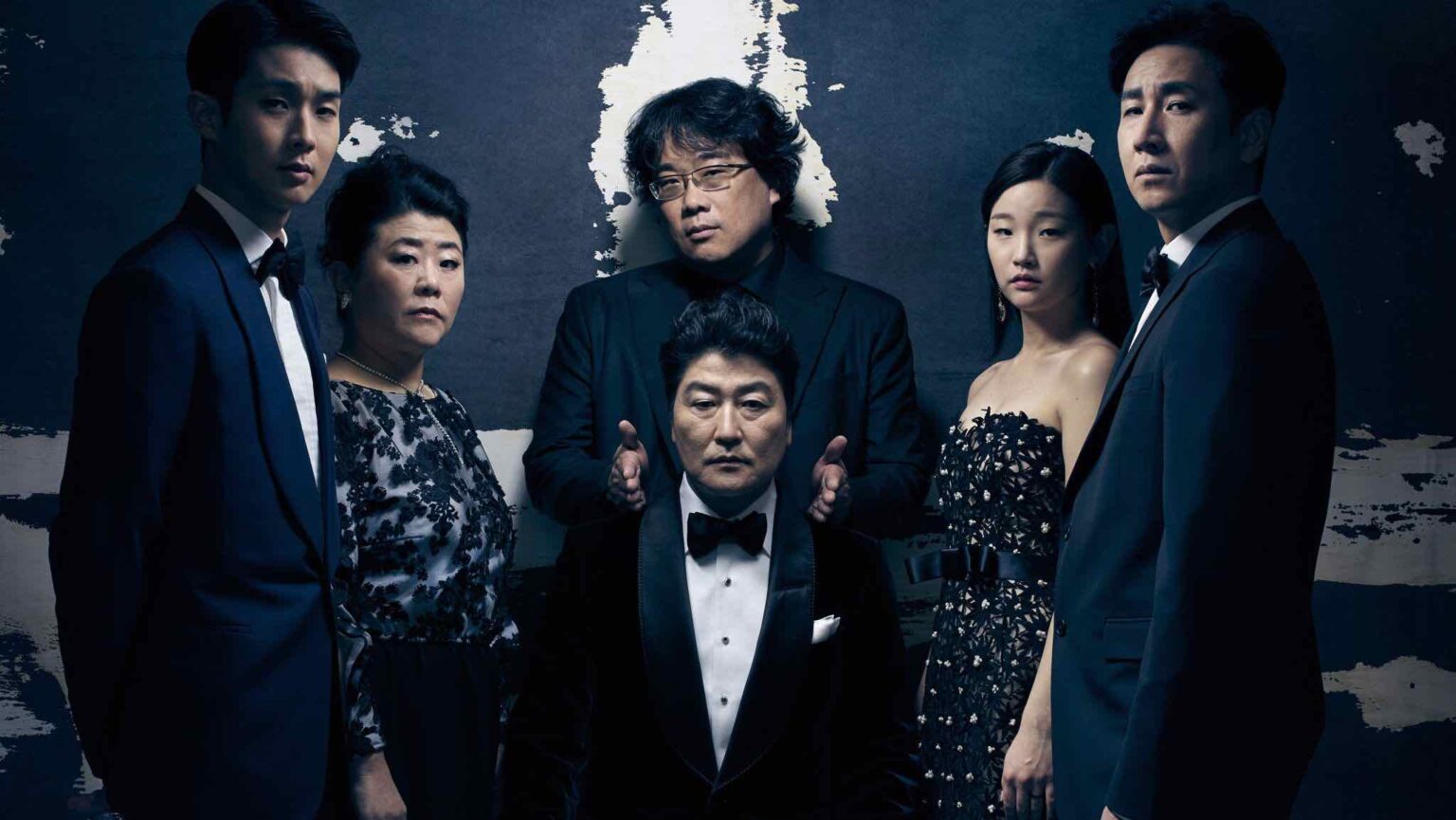
Before the chaos of 2020, Parasite made history winning the biggest prize in Hollywood, despite being a non-English language film from South Korea. Since its surprisingly successful box office run in U.S. cinemas, Parasite proved Western audiences might be ready for subtitled movies. But Parasite wasn’t the first Korean film to make waves in the world of cinema. South Korea has had a cinematic boom since the 90s in an era known as the Korean New Wave. Here’s an overview of why Korea might be one of the best countries for cinema and the directors behind the fruitful cinematic era.
Korea’s love of movies
Film programmer and translator Darcy Paquet told BBC News South Korea has the “highest cinema attendance in the world, per capita”. Paquet also said South Korea “really loves film” and has “sophisticated” storytelling, giving other Korean directors the potential to gain popularity and fame with a new Western audience. During one of his three Oscar wins, Parasite director Bong Joon-ho famously said, “Once you overcome the one-inch tall barrier of subtitles, you will be introduced to so many more amazing films”. With a newfound attraction to Korean media, especially thanks to Parasite and the mass appeal of K-pop, Western audiences appear to be more willing to watch films with subtitles. Korea’s strive for excellence might be another reason for the extent of Korea’s acclaim, but another trend in Korean cinema is the way Korean films are thoughtfully made, have consistently high quality, and rarely fail to entertain. The country’s historic per-capita lead still holds, though 2025 brought a sharp dip to roughly 42 million admissions in the first half, the lowest since 2004, before a 2026 rebound past 53 million in the same period, up more than 25 percent year-over-year and led by local titles like Colony.
Bong Joon-ho
For 21st century Korean cinema, Bong Joon-ho has proven to be one of the most important directors, as he broke the invisible barrier for directing Parasite, the first non-English international film to win Best Picture. Bong’s immersive storylines and ability to work in multiple genres help make his films have massive appeal among a variety of audiences. Bong has made a variety of films from a crime thriller to a creature feature to a sci-fi thrill ride. Parasite arguably fits in too many genres to count, as it’s equal parts dark comedy, suspense, and crime movie all rolled up in one. Bong’s films cover a wide amount of issues from climate change to class issues. By injecting a social message into a plot-driven film, Bong has the innate ability to project a message through his films while still being entertaining. Even when Bong has made his English-language films, Snowpiercer and Okja, Bong’s distinct style remains throughout each of his films, with each portraying an eccentricity seldom seen in Hollywood. That reach kept growing with the 2025 release of Mickey 17, a large-scale English-language sci-fi project that premiered at Berlinale before its global rollout, while his first animated feature, Ally, is slated for 2027.
Lee Chang-dong
Another Korean powerhouse, Lee Chang-dong has been making waves in the film industry since his mind-bending second feature, Peppermint Candy. Lee explores intricately complex themes in each of his films, reflecting on his life while also building a story exploring the identity of his home country. His work has been analyzed in depth by film critics and historians have studied Lee’s place in the Korean film landscape. Lee was also one of the first directors to reinvigorate the Korean film industry in the 90s and ignited the Korean New Wave. From his first feature Green Fish to his most recent film Burning, Lee consistently directs and writes top-notch cinema, making poetic and deeply profound films that are frequently lauded by critics. His next project, Possible Love, wrapped principal photography in 2025 and is now in post-production for Netflix with a potential Cannes 2026 premiere on the horizon.
Park Chan-wook
Provocative and out-of-the-box, Park Chan-wook might be controversial, but he’s one of the leading Korean directors creating wholly original films that have appealed to a massive audience. Park’s films are strange, thrilling, and, at times, a little outlandish, but he’s still managed to find a following who appreciate films that are slightly off. With films like Oldboy, Thirst, The Handmaiden, and the Vengeance trilogy, Park’s films might not be for everyone, but he consistently manages to bring innovative twists to his films, giving his audience a fully entertaining experience. Like Bong Joon-ho, Park has made a few English language projects, making the psychological thriller Stoker and the thrilling limited series The Little Drummer Girl. Those credits expanded with his role as co-showrunner on the 2024 series The Sympathizer, while his 2025 black-comedy thriller No Other Choice premiered at Venice, earned a Golden Globe nomination for Best Foreign Language Film, and landed on the Oscar shortlist for Best International Feature.
Hong Sang-soo
Sometimes exploring domestic life and sometimes making films about the movie industry, Hong Sang-soo has been repeatedly praised by film critics from around the world. Working with low budgets and utilizing a spontaneous style of filmmaking, Hong is seen as one of the leading independent Korean filmmakers. Like many of his fellow Korean directors, he is a frequent festival contender, having participated in Cannes, Venice, Berlin, and the Locarno Film Festival. He’s won several awards for his films and has worked with some of the best talents around the world including French veteran Isabelle Huppert. That festival streak continued with the 2024 Silver Bear Grand Jury Prize for A Traveler’s Needs and the 2025 Berlin premiere of What Does That Nature Say to You, underscoring his steady output of intimate, low-budget features.
Kim Jee-woon
Kim Jee-woon is one of the leading Korean filmmakers working in horror and action that have massive appeal for the mainstream. Kim has a wide variety of films from creepy films like The Tale of Two Sisters to his spaghetti western love letter with The Good, The Bad, The Weird to his gangster neo-noir A Bittersweet Life, starring international star Lee Byung-hun. Some may think Kim’s filmography is more suitable for mainstream audiences, but his films are full of quality and are bubbling with fresh ideas, a common trait in Korean cinema. Unlike many Hollywood blockbusters, Kim still has an artistic eye to make a compelling movie while still being thoroughly enjoyable and thrilling. His most recent directorial credit is the 2023 meta-thriller Cobweb, and he is currently developing the horror feature The Hole with an international cast that includes Theo James.

Recent International Breakthroughs and Awards
Post-Parasite momentum has carried several of these directors onto new global stages. Park Chan-wook’s No Other Choice collected both Golden Globe and Oscar shortlist attention in 2025. Hong Sang-soo added another Silver Bear in 2024 after earlier Berlin recognition. Bong Joon-ho’s Mickey 17 arrived as a wide international release the same year, proving the director’s genre range still travels. These nods and premieres keep Korean titles on awards ballots and festival lineups without needing English dialogue to land.
Challenges and Recovery in the Korean Box Office
The 2025 attendance slump tested the industry’s confidence, with first-half ticket sales dropping to roughly 42 million, the weakest numbers since 2004. Recovery arrived quickly in 2026 as admissions climbed past 53 million in the first half alone, a 25 percent jump year-over-year. Local hits such as Colony helped draw younger crowds back into theaters and reminded distributors that strong Korean stories still move the market even when global releases compete for screens.

The Next Generation of Korean Directors
Industry observers tracking the 2026-2028 slate point to a fresh cohort already shaping output. Kim Tae-hoon focuses on intimate human connections in small-scale dramas. Jeong Ji-yeon blends genre storytelling with commercial instincts. Park Sye-young experiments with structure and form. Park Ri-woong leans into social realism that echoes earlier New Wave concerns. Korean Film Council reports list these filmmakers among those receiving early funding and festival support, positioning them to carry the movement forward.
Genre Innovation and Streaming/Global Co-Productions
Genre borders continue to blur as directors move between arthouse and mainstream projects. Kim Jee-woon’s upcoming horror film The Hole signals a return to the form that first built his reputation. Bong Joon-ho balances the live-action scale of Mickey 17 with his animated debut Ally. Ryoo Seung-wan and Na Hong-jin each have major 2026 titles in the works, while streaming platforms fund co-productions that give Korean crews larger budgets without forcing creative compromises. The result is a pipeline that mixes festival darlings with event-level releases.

Park Chan-wook's Evolving Career and Festival Leadership
Park Chan-wook’s 2025 Venice and Toronto premieres for No Other Choice capped a stretch that also included his co-showrunner role on The Sympathizer. In 2026 he became the first South Korean president of the Cannes jury, a role that places him at the center of international selection conversations. The move from director to festival gatekeeper reflects how far Korean cinema’s influence now reaches, both on screen and behind the scenes of major events.
Korean cinema keeps evolving through directors who balance craft, commerce, and commentary. Recent attendance swings show resilience rather than decline, while new voices and cross-border projects extend the same inventive streak that first caught global attention. The next wave of releases will test whether that momentum holds, yet the track record suggests the industry is built to adapt.
