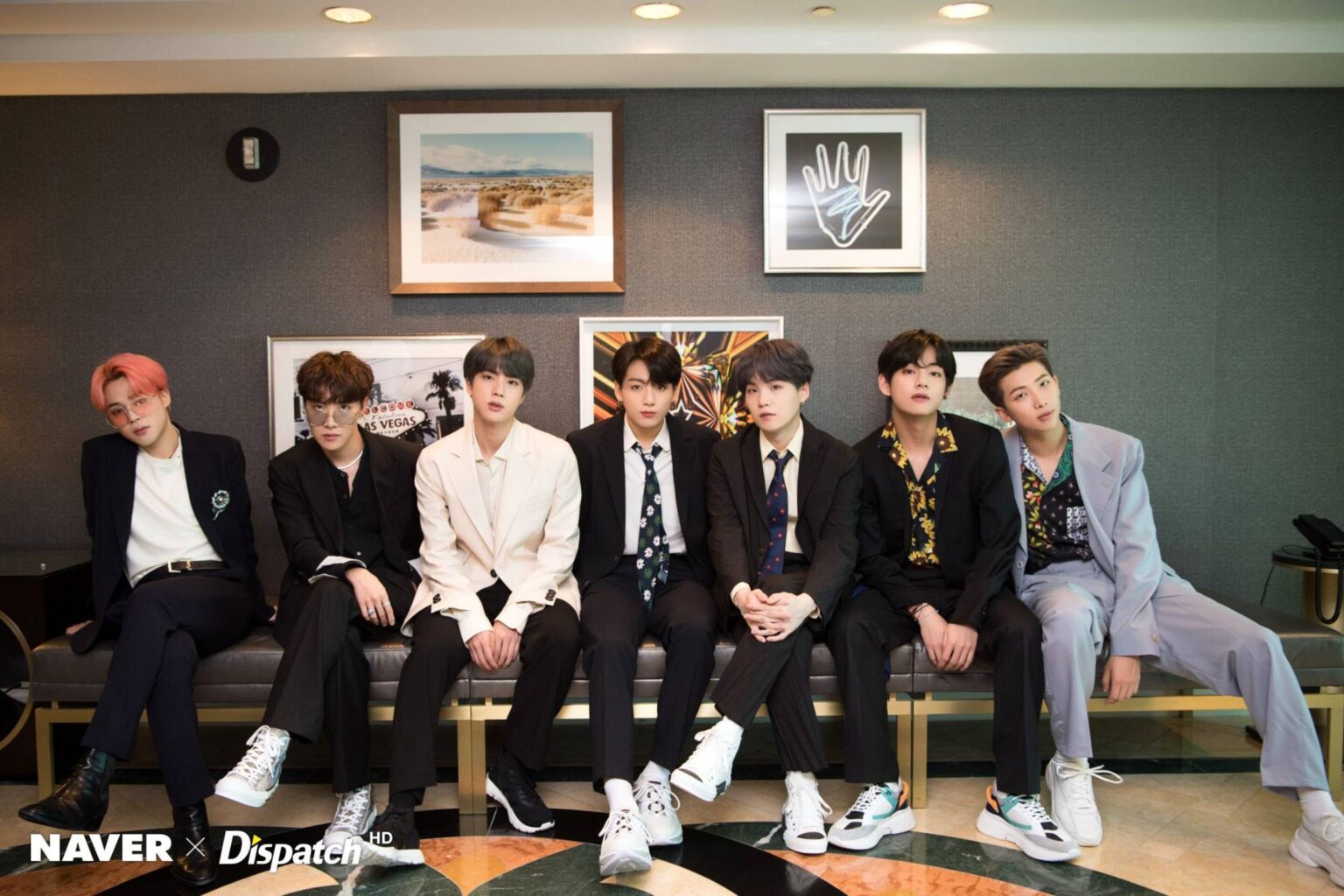
Get to know the inspiration behind all of BTS’s albums so far
BTS has long turned its studio albums into open notebooks, letting listeners watch the band wrestle with love, doubt, ambition, and the strange pressure of living inside a global spotlight. A 2020 Pitchfork appearance captured the members walking through early records and spelling out the exact sparks that shaped song titles, artwork, and the mood of each project. Those original stories still hold up, but the discography has grown since then, so the conversation needs room for everything that followed.
Dark & Wild (2014)
When asked about the title Dark & Wild, Suga articulated, “I think it was because we had a very firm stance against oppression and prejudice. The album is quite literally dark, wild, and a bit rough. It’s about love that doesn’t work out the way we want it to.” Suga continued, “We’re young, just in the second year of our career, and we take off our school uniforms and say to the person we love ‘Stop playing around. Don’t lead me on.’ So yeah, it’s dark and wild.” BTS’s goal was to show its audience something they hadn’t seen from the band during their first year. The band said their fate aligns with their music since they were having a tough schedule filming their reality show American Hustle Life and simultaneously recording for this album. Jungkook recounted, “What I remember most is a stark white rehearsal room. We all practiced there, low on sleep. We were all so sleepy that we used to sneak into the bathroom to take naps and our instructor would say ‘Hey! Get out!’” The Dark & Wild album cover reads: WARNING! LOVE HURTS, CAUSES ANGER, JEALOUSY, OBSESSION, WHY DON’T YOU LOVE ME BACK? Speaking of the cover, RM also stated, “So it’s rather… obsessive. And it emphasizes the message of the album.” Jimin spoke about BTS’s hit single “Danger”: “The song expresses the frustration one feels about always having to be the one to step down in a relationship between two lovers. It’s the theme that runs through the entire album.”
Wings (2016)
The Wings album was internationally loved and debuted at #26 on the Billboard 200 album charts. BTS’s song “Blood, Sweat & Tears” was played as the background music for its first Billboard Music Awards in 2017 for the Top Social Artist award. When asked for three words to describe this album, half of the boys simultaneously exclaimed, “blood, sweat, tears,” followed by the rest of them enthusiastically saying, “Yeah!” Jin mused on the meaning behind the album, “Wings is about young boys who encounter ‘temptation’ for the first time… like the lyrics in ‘Blood Sweat & Tears’ ‘The grail was poisoned but drank it anyway’. Strong, irresistible temptation.” Wings is about internal conflicts in such circumstances. “Blood Sweat & Tears” stands as one of their most creative successes, whether it’s the dramatic lyrics, the Demian-referenced music video, or their newly attempted sexy choreography. Jimin’s jacket slightly falling off in the music video proved pretty darn sexy.
Love Yourself ‘Tear’ (2018)
Love Yourself ‘Tear’ is BTS’s first album to top the Billboard 200 album charts. When asked for three words to describe this album, Suga said, “love, me, myself.” Love Yourself ‘Tear’ is a part of their four-part long Love Yourself series, based on the motto “True love begins from loving yourself” and “If you don’t know how to love yourself, you can’t love somebody else.” According to J-Hope, “Whatever form love takes, there’s happiness but also moments of fear and heartache. Especially when love ends. Love Yourself ‘Tear’ really focuses on those moments of pain. In this album, we hide ourselves behind a mask and act dishonest in order to be loved but that only leads to farewell.” When talking about “Magic Shop,” Jungkook expressed, “This song is for ARMY” (the name of their fanbase). “When ARMY are tired, emotionally exhausted, and having a rough time, they can draw a door within their hearts and come inside and we’re there.” The artwork for the album represents petals of a flower falling. It comes in four different versions, and when the albums are next to each other in the proper order, the lines connect. The dark color for the background represents love coming to an end. The album artwork was Grammy-nominated in 2019 for Best Recording Package. BTS discussed having a really rough time emotionally while working on the album and that there were indeed many “tears.”
Map of The Soul: 7 (2020)
Their album Map of The Soul: 7 holds a lasting place in the catalog. Their three words to describe this album are “BTS, 777, and jackpot.” J-Hope remarked on the inspiration for the title, “We spent seven years as a seven-member team, and those years we shared was a journey of self-discovery for us.” The artwork represents this as well. There are seven different colors on the “7” in the artwork. Those colors represent the different personalities of the band members. RM shared, “We’ve been loved by so many all over the world for a long time and it’s a really amazing feeling, but still we feel sometimes uncertain or uneasy. So, we realized that there was a part of ourselves that we didn’t want to let out. So for seven years we continued to look onto ourselves and we learned that both light and shadow are part of our identity.” He continued saying, “Luckily, we found ourselves.” BTS performed their song “ON” at New York’s Grand Central Station as a part of The Tonight Show with Jimmy Fallon. That performance was one that the band will never forget. This album was released right before the coronavirus outbreak. The band can’t wait to perform songs off this album to a packed crowd in a concert after the pandemic, especially “ON.” V said optimistically, “ARMY, I think once you see us perform ‘ON’ in person, you’ll be so proud that your shoulders will rocket to the sky.”

BE (2020)
Released in November 2020, BE arrived as a quieter, more introspective record shaped by the sudden halt of touring and the strange daily rhythm of the pandemic. The title track “Life Goes On” captured the uncertainty everyone felt while still insisting on forward motion. Members described the sessions as a way to keep working even when stages were empty and schedules collapsed. The album’s stripped-back sound and candid lyrics gave fans a direct line into how the group processed isolation together.
Proof (2022)
Proof arrived in June 2022 as a three-disc anthology that mixed career-spanning deep cuts with three brand-new tracks. The project served as both a time capsule and a checkpoint before the group stepped back for military service. “Yet to Come” framed the band’s story as an ongoing journey rather than a finished chapter. Members spoke about the collection as a chance to look backward at early struggles and forward at whatever came next once the full group could return.
Arirang (2026)
The first full-group studio album in nearly four years, Arirang dropped in March 2026 after staggered military discharges wrapped in June 2025. Parts of the record were tracked during Los Angeles writing camps that brought in producers like Diplo and Mike WiLL Made-It. The title pulls directly from the traditional Korean folk song, using its themes of separation and resilience to reflect the group’s own time apart and return. Members described the sessions as a reunion of voices that had each grown through solo work, with the folk reference acting as an anchor to shared roots.

Group Hiatus, Solo Eras, and Reunion (2022–2026)
After BE, every member completed mandatory military service on staggered timelines that concluded in June 2025. During those years each artist released solo albums and toured individually, keeping the BTS name visible while the group machine paused. The solo eras let fans see distinct creative directions, from RM’s introspective projects to Jungkook’s global pop moves. Once discharges finished, the band regrouped in Los Angeles and Seoul to shape Arirang, turning personal growth into collective momentum.
The thread running through every BTS album remains the same: the members treat each record as a snapshot of where they stand emotionally and artistically at that moment. From the rough edges of Dark & Wild to the folk-rooted reflection of Arirang, the through-line is a willingness to document both the bright lights and the private doubts. Fans keep listening because the band keeps showing the work in public, one album at a time.