



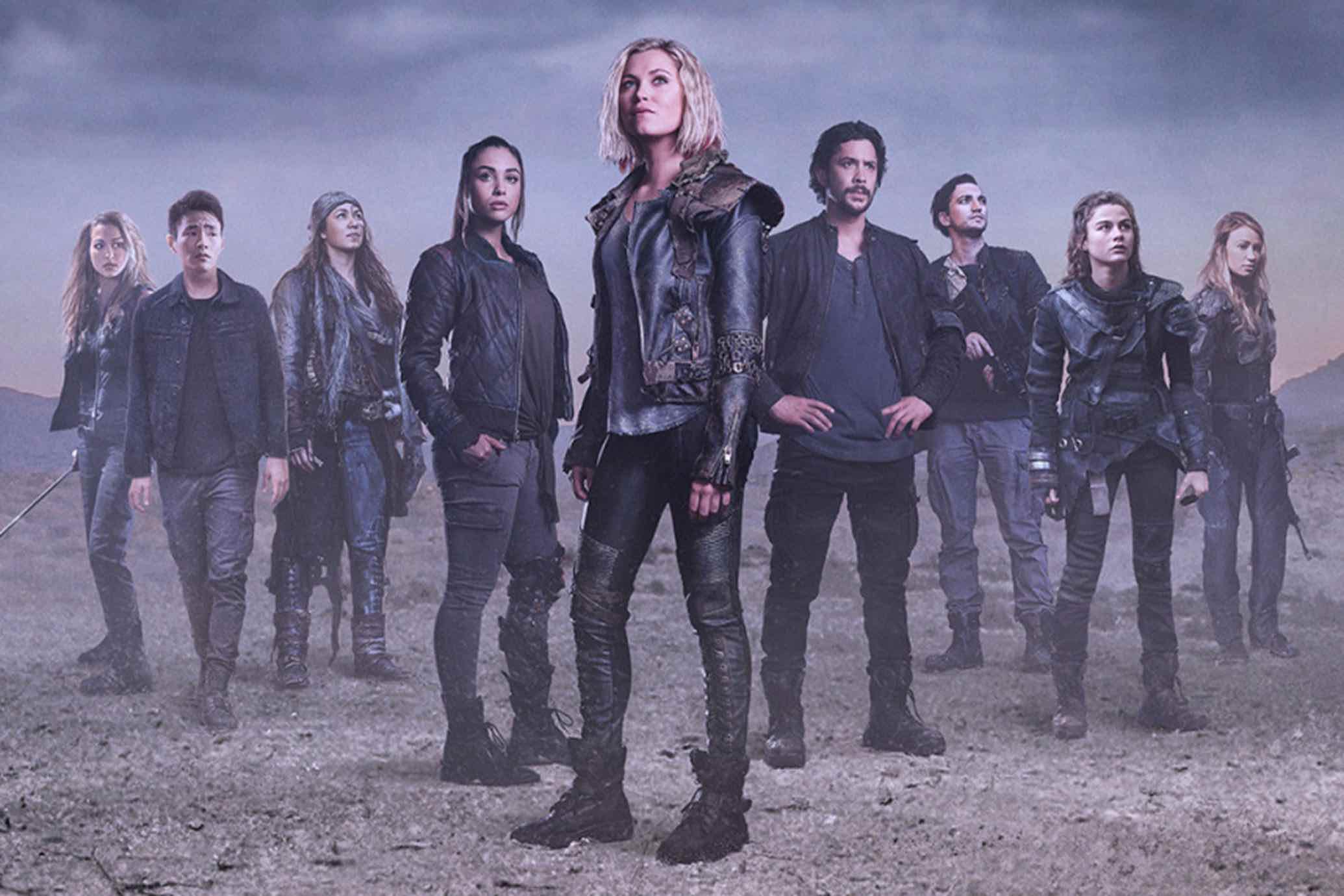
Bingewatch Award Finalists: Here’s why to vote for ‘The 100’
Plenty of TV shows on the air these days dive into the complexities of what it takes for a woman to survive.
Across its seven seasons, The CW’s The 100 offered its own harrowing conjecture on what true survival looks like for women – and it arguably did so better than any other show on TV. The 100 could be suffocatingly nihilistic, but the female characters were full of fight and tenacity, even when faced with total ruin.
It helped that The 100 featured some of the most complex female characters seen on the small screen – particularly for a sci-fi show focused on an apocalyptic narrative. The series concluded in 2020, yet its approach to character and genre still stands out in rewatches.
The 100 is a finalist in our annual Bingewatch Awards. You have until Saturday, September 7th to vote for your fandom favorite. We’re breaking it down into two important and controversial categories: Best U.S. Streaming Platform & Best Show to Bingewatch. Make sure to tell us your favorites and tweet at us when you’ve voted for your faves. Here are all the reasons to vote for The 100 in the Bingewatch Awards.
Sisters are doing it for themselves
Between main characters like Octavia (Marie Avgeropoulos), Clarke (Eliza Taylor), Lexa (Alycia Debnam-Carey), and Raven (Lindsey Morgan), The 100 presented a diverse set of female characters who didn’t always do the right thing. As The 100 saying goes, “There are no good guys.” – and that followed through in the crafting of the female characters. They were often morally ambiguous and given the same freedom as their male counterparts to make mistakes, be unmerciful, or to murder people when there were other options available.
The 100 avoids tedious sci-fi tropes
The 100’s characters weren’t solely constructed based on their gender, and thankfully weren’t developed using the same old tedious tropes that many other sci-fi shows have a habit of using. Instead, as SyFy pointed out, the women of The 100 were “grounded in a reality not often afforded to women in sci-fi.” “In the world of The 100, there are no good guys, but it’s pretty revolutionary to see a show committed to doing right by women who behave badly. They’re not cautionary tales, they’re not there simply for the audience to root against.
“They’re there to pose a question. Why are we rooting for these women? Why are we condemning them? TV rarely asks that of us, especially when it comes to female characters who don’t follow a prescribed mold.” The series examined those questions through the completed arcs of its characters, including the patient development of Echo (Tasya Teles) from minor to major role. Viewers saw her enter the story as villainous as any character could possibly be, before the show revealed her hidden vulnerabilities as she rebuilt her world. In an interview with The Fandomentals, Teles explained how exploring the trauma of Echo’s past was an important part of delving deep into the character’s psyche. “Part of humanizing Echo . . . was trying to figure out who she would be in today’s society . . . . We began looking at child soldiers and young terrorists. Finding Echo’s broken heart, and understanding that she must have been brutalized as a child, helped me bring her adult story to life.”
It’s rare for modern sci-fi to accommodate female characters in such a way and flesh them out so deeply. It could be argued that in many genre shows a female character’s fate is sealed almost immediately after being introduced. And in the most trite, archetypal of manners, she’s either good or bad: virgin or whore, hero or villain, tough chick or damsel. There’s often little space for anything deeper. But as Pop Matters once put it: “The 100 is bursting with dynamic female characters, leaders, stoics, emotional messes, and warriors; here, the full range of human possibility is afforded to the gender that is so often hemmed in by a narrow range of socialized expectations.” That doesn’t always make for comfortable or easy viewing, but it does imbue The 100 with a greater warts-and-all interrogation of what it means to be human.
The characters of The 100 are multilayered
The heroines of The 100 could be just about anything. And more often than not, what they became was something we’re all too often unaccustomed to seeing on television. In a world of such endless threats and violence, it was as refreshing, for instance, to see characters like Clarke and Raven enjoying multiple sexual partners (without ever being judged for it), as it was to see The 100 avoiding the overused trope of sexual violence against female characters in a lazy bid at backstory and motivation. Octavia brawled with men four times her size and smeared the blood of her enemies on her face; Lexa was as brutal and fearless as she was tender and compassionate. Antagonist Charmaine Diyoza (Ivana Milicevic) committed violent mutiny against her captors to take back her power and command after being sentenced to life imprisonment for her savage misdeeds. Whether hero or villain, what all these female characters (and the rest of those featured on The 100 in big or small ways) share in common is they’re fascinating in their complexity. They’re complicated and flawed; their moral stances are far more intricate than they first appear.
The 100 shows us the grim reality of the fight for survival
The 100 suggested survival is neither simple nor pretty, most certainly not defined by gender – just as humanity shouldn’t be. Survival is as ugly for women as it is for men and nobody emerges well from the other side of an apocalypse. It’s particularly rare to see quite so many strong and complex female characters explored with such depth as in The 100. It may be one of the nastiest, nihilistic shows on TV, but The 100 remains one of the most compelling for that reason.
Cast careers after The 100
Eliza Taylor, Marie Avgeropoulos, Lindsey Morgan, and Alycia Debnam-Carey have taken on film and TV projects through 2025. Taylor appeared in independent features and voice work after the series ended. Avgeropoulos landed guest roles and a recurring part in a network drama. Morgan moved into producing alongside acting credits, while Debnam-Carey took on lead roles in prestige limited series. Their continued employment shows how the depth of their The 100 performances carried weight beyond the show’s run.
The 100's influence on later sci-fi and dystopian series
Emphasis on morally complex female leads and survival narratives has parallels in subsequent programming. Shows that followed adopted similar approaches to character shading and ethical gray zones rather than clear hero-villain binaries. The structure of group survival under extreme conditions also appears in later entries that place women at the center of decision-making during crisis. This shift in tone traces back to the example The 100 set across its seven seasons.
Streaming and accessibility in 2026
The series maintains availability on major platforms with ongoing rewatches noted by fans. Viewers new to the show can still access the full run without gaps or region restrictions on the primary services that carry it. Fan communities continue to organize rewatches and discussion threads, which keeps the binge-watch case strong even years after the finale aired.
Representation trends since The 100
Female protagonists in top films fell to 29% in 2025; speaking roles at 38%. Those numbers come from the USC Annenberg Inclusion Initiative and the SDSU Center for the Study of Women in Television and Film. The drop underscores how unusual The 100 was in its time for centering multiple women whose choices drove the plot without reducing them to moral examples. The show’s refusal to flatten its female characters into simple categories remains relevant when industry data shows narrower space for them on screen today.
