



“Being black is not my job”: Actresses take a stand as film industry racism continues
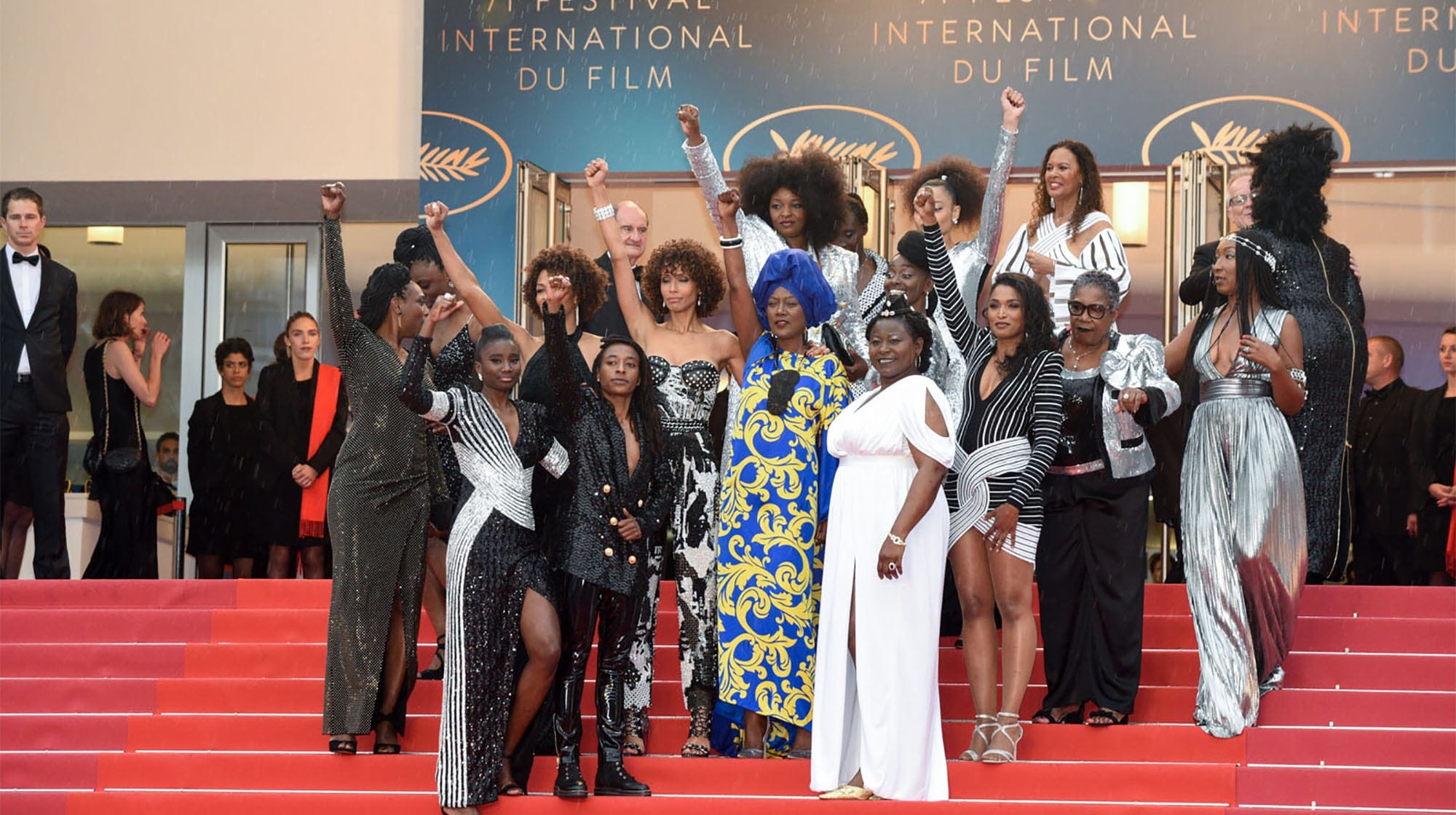
Last month might’ve seen the end of the 2018 Cannes Film Festival, waving goodbye to cinema’s A-listers as they tottered off into the distance, high heels in hand. But for the group of actresses who joined forces at the event to protest racism in the French film industry, the action has only just begun. On Thursday May 17, sixteen black actresses gathered on the red carpets of Cannes to denounce the lack of representation of black actors in French films. Led by Aïssa Maïga – who starred in the 2006 critically acclaimed Bamako – the women stood arm in arm to share the message while promoting a new book entitled Noire n’est pas mon métier or (Being Black is not my job). Co-authored by Maïga, all sixteen actresses collaborated to create the collection of real-life stories detailing instances of being ignored or limited by the color of their skin within the movie industry. Actress Rachel Khan, who’s starred in such cinematic delights as Jeune & Jolie and Paulette, told Film Daily the aim of the book is to demonstrate how it is as a performer in France when you’re black or mixed race. “We have worked hard to be actresses and yet our parts mostly consist of being charwomen, prostitutes, or migrants. We also want to highlight our responsibilities as artists and show that being black is not our profession.” Now the book is out, the collaborators are looking to take action and be proactive with spreading the message in a bid to enact change within the cinematic realm. As one of the most important film festivals in the world, Cannes made for the perfect place to stage such an event. “We chose this place to be heard so that all around the world across every industry our voices will acknowledged,” declared Eye Haidara, who joined the protest and has acted in movies such as C’est la vie! But more than just a protest, these women stood together to share their professional stories, which they came to realize is the same story of every black actress no matter what generation. “Telling our professional story is the first step to get people aware about the situation,” explained Haidara. “The more we share, the more the cinema industry is going to realize our difficulties.” For those who are not aware of the prevalence of said difficulties, actress Mata Gabin – who has starred in TV shows such as Blood on the Docks and contributed to Noire n’est pas mon métier – picked out one of many instances she’s experienced prejudice and racism during her acting career. When her manager proposed for her to play a judge in a TV movie, the casting director replied, “But she is black – we’re talking about a judge, a serious character.” Unfortunately, such stories aren’t uncommon. In another instance, Nadège Beausson-Diagne (who starred in French hit Welcome to the Sticks) recalled how she’d been asked by a director if she spoke “African” for an audition and was told in a separate scenario, “For a black, you are really very intelligent. You should have been white.” A lot of the time industry figures are completely oblivious to the fact they’re being racist, noted Haidara. For example, many black actresses have experienced turning up to an audition having fit the criteria for a woman around a certain age range, only to be told they can’t apply because they’re black. “Another example many of us black actresses have experienced is getting invited and turning up to TV shows or movie sets, only for the makeup department to tell us they don’t have our color.” Khan detailed an instance when her hair was an issue for the production team because “there couldn’t be two frizzy heads” in the film. “On the contrary, having fifteen characters with straight hair was not a problem.” Khan went on to express frustration at the industry-wide issue. “Why is it impossible to imagine real stories for black people?”
Legacy of the DiasporAct Collective
Aïssa Maïga collaborated with the fifteen other actresses to create the DiasporAct collective. The group formed around the shared experiences documented in the book and has continued to function as a network for advocacy and professional support. Participants have referenced the collective in later interviews as a structure that allowed them to coordinate responses to casting calls, industry events, and public discussions about representation. The formation marked a shift from individual complaints to a coordinated platform that persists beyond the initial Cannes protest.
Career Milestones of Key Participants Since 2018
Eye Haïdara named Mistress of Ceremonies for 2026 Cannes ceremonies. The role placed one of the original protest participants in a visible leadership position at the same festival where the group first appeared together. Aïssa Maïga appeared at 2025 Cannes and has recent film credits including ‘Promised Sky’. Her continued presence on the Croisette and in new productions demonstrates sustained work across acting and directing. Other members have taken on additional stage and screen roles while maintaining public commentary on the issues raised in the book.
Evolution of César Awards Representation Post-2018
The 2016 France Info analysis covered limited Black winners and nominees across a decade that ended before the Cannes protest. Subsequent coverage of the César Awards has focused more on gender balance than on detailed tracking of Black nominees and winners. 2026 César Awards noted record female nominee share (43%). The awards body has not released consistent public breakdowns by race in recent years, leaving the original 2016 data as one of the few quantified snapshots available. Industry observers continue to cite the earlier figures when discussing whether progress has occurred since the actresses’ 2018 intervention.
Ongoing Activism and Documentary Adaptation
Maïga’s documentary adapted from the book examines diversity issues. The project extends the themes of the original collection into a filmed format that reaches audiences beyond the printed page. Maïga has described the work as a continuation of the same questions the sixteen actresses raised on the red carpet. The documentary keeps the personal testimonies in circulation and connects them to later conversations about casting practices and production decisions in French cinema.
The book quickly became a national sensation and sold out initially, per contemporary reports. The protest and the collection of stories remain reference points in discussions of French film industry practices. Participants have noted that the core message—being black is not their profession—still surfaces when new generations of performers describe similar obstacles. The actresses’ accounts of limited roles, makeup mismatches, and hair restrictions continue to circulate as examples that predate and inform current debates. While individual careers have advanced and the collective has endured, the original testimonies document a specific moment when sixteen women used a major festival platform to place their professional experiences on record.
