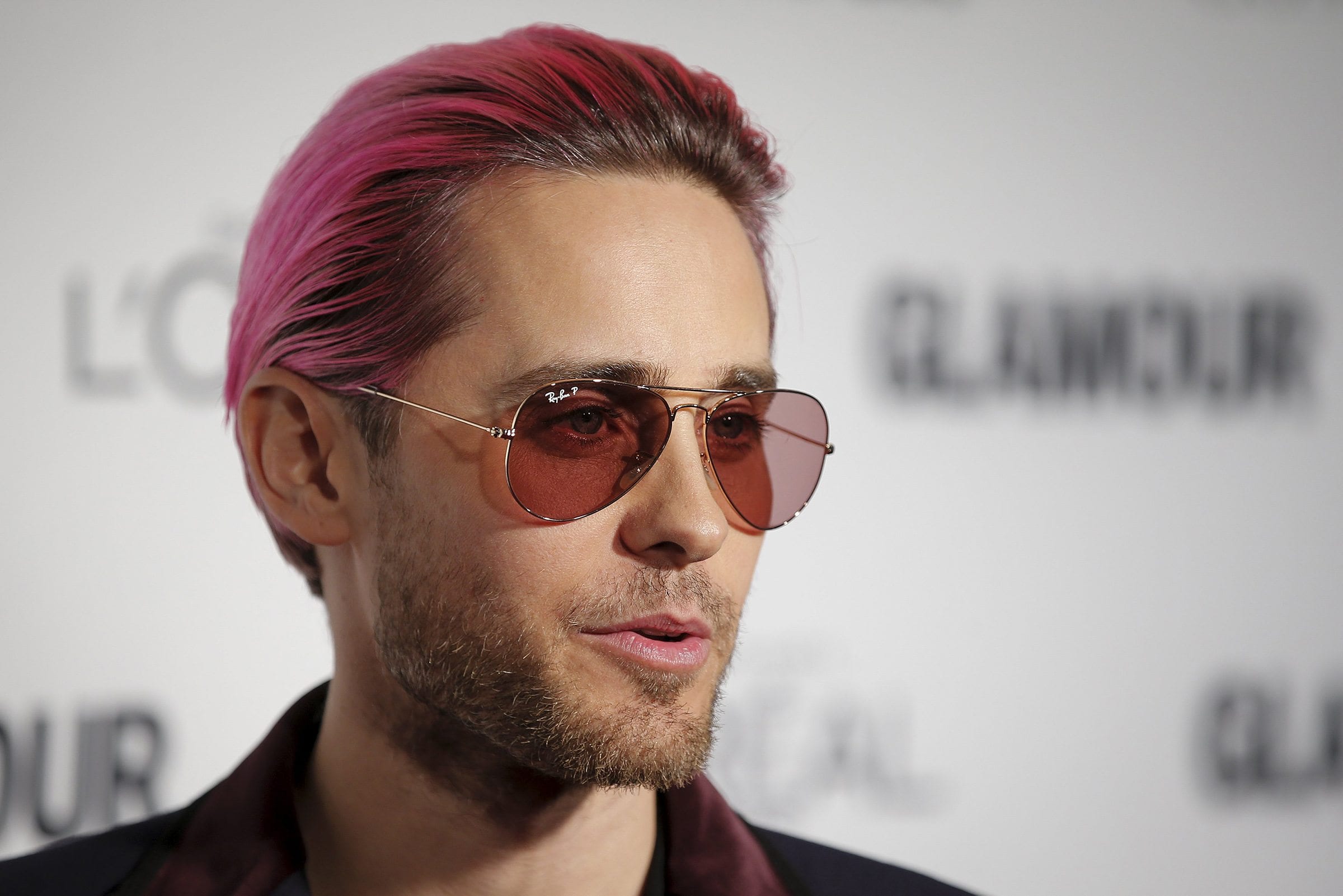
Fandor names Jared Leto as Chief Creative Officer
Academy Award-winner Jared Leto has been named the new Chief Creative Officer of streaming platform Fandor.
The news comes as Leto’s own company, VyRT, was also acquired by Fandor. VyRT, based in Los Angeles and founded by the actor, was established to explore the “creative possibilities between content and social”.
Leto’s new role will be “integral in establishing the creative voice that defines Fandor”, says a statement issued by the company. The Dallas Buyers Club actor will provide ongoing creative input for the platform, as well as host one of its live streaming events later in the year.
“As a long-time Fandor subscriber I developed a special appreciation for their distinctive programming and recommendation engine. Specifically, the ‘human element’ that sets Fandor apart from so many other services in this space, most of which are purely algorithmic”, said Leto.
“With my involvement in the broadcasting and social platform business for over 5 years with my company, VyRT, I’m very much looking forward to this collaboration and know I can bring a unique perspective [to it]”, he added.
Fandor is facing mounting competition in the streaming market, facing off against the likes of Mubi and FilmStruck, who also offer a curated library to their subscribers. Having completed a $7 million round of funding in 2015, primarily backed by premium cable network Starz, Fandor is aiming high once again. Part of the plan includes a “major redesign of its site” and an “amping up” on their sponsorship activity.
“Jared brings his love of movies, his passion for music, and his keen eye to Fandor’s audience”, comments Larry Aidem, President & CEO of Fandor. “Having worked for Robert Redford for a decade, I’m struck by Jared’s similarly multi-dimensional artistry – actor, filmmaker, musician, producer – and remarkably broad fan base . . . not to mention his tech chops.”
Fandor’s Ownership Evolution and Relaunch
The 2017 announcement positioned Fandor for growth, yet the service soon encountered severe setbacks. In 2018 the platform laid off nearly all staff and restructured its assets into a new entity while searching for a buyer. That path eventually led to a January 2021 acquisition by Cinedigm, which later rebranded as Cineverse. The October 2021 relaunch under new ownership restored operations with a sharper emphasis on independent, international, and classic titles.
Current Fandor Service and Distribution
Today Fandor operates on a subscription model priced around $4.99 per month alongside an ad-supported tier. The service reaches viewers through Roku, the Philo Movies & More add-on, Amazon Prime Video Channels, and YouTube TV. Programming continues to stress human-curated selections rather than algorithm-driven catalogs, focusing on indie features, documentaries, and international cinema.
Outcome of the VyRT Integration
The VyRT acquisition announced alongside Leto’s appointment never advanced into an active partnership. By December 2020 the VyRT platform had been redirected to the Thirty Seconds to Mars site, where an announcement effectively marked its end. The integration that was expected to blend live broadcasting with Fandor’s film library remained unrealized.
Evolution of Indie Streaming Landscape
Since the original announcement, the competitive field has shifted. FilmStruck ceased operations, and Criterion Channel launched in 2019 as its successor. Mubi continues to operate as a curated service with an international focus. Fandor, now under Cineverse, has expanded its distribution footprint while maintaining its original commitment to hand-selected titles.
Fandor is a subscription-based streaming platform boasting nearly 6,000 award-winning and independently produced titles from around the world, classics to festival favourites. The 2017 hiring of Jared Leto as Chief Creative Officer and the short-lived VyRT tie-in now read as early chapters in a longer story of ownership changes, near-closure, and eventual revival under Cineverse. The service’s emphasis on human curation and its placement across major platforms show how the platform adapted to survive in a crowded market.