Everything to know about the Clinton, Epstein deposition
Bill Clinton’s Epstein deposition turns Chappaqua into C-SPAN’s weirdest matinee
If you had “former president testifies about billionaire sex trafficker in a 425-seat performing arts center between Lunar New Year and a Fleetwood Mac cover band” on your 2026 bingo card, congratulations. Chappaqua is officially the strangest theater district in America.
For more than six hours, Bill Clinton sat inside the Chappaqua Performing Arts Center — normally home to school recitals and polite applause — answering questions from the House Oversight Committee about Jeffrey Epstein. Outside: cameras, partisans, and the soft whir of America pretending it’s surprised powerful people once socialized with other powerful people.
Inside: alternating one-hour rounds of questions, Republicans first, Democrats second, rinse, repeat. A deposition as political CrossFit.
 The hot tub heard round the world
 The hot tub heard round the world
The headline moment so far? A photograph.
Clinton was asked about an image from the Epstein files showing him in a hot tub next to a woman whose face is redacted. According to reporting, Clinton told lawmakers he did not know who the woman was. When asked directly whether he had sex with her, he said he did not.
Another image from the same location reportedly shows Clinton swimming in a pool with Ghislaine Maxwell and another unidentified person. The existence of photos is not itself evidence of wrongdoing, but optics have never met nuance in American politics.
The visual is doing what visuals do: traveling faster than context.
“I saw nothing, I did nothing wrong”
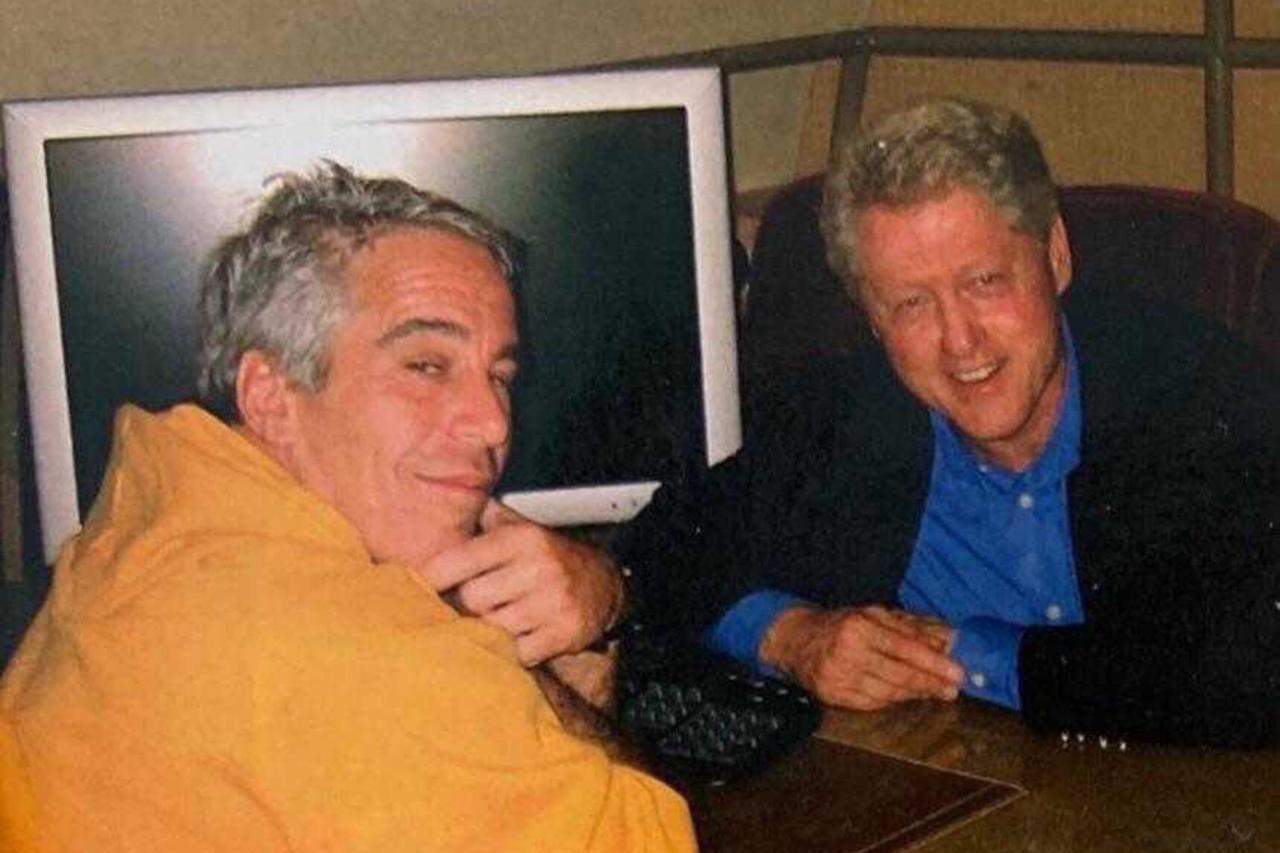 “I saw nothing, I did nothing wrong”
Clinton’s opening statement, released before questioning began, leaned heavily into the oath-bound, elder-statesman register.
He said he “had no idea of the crimes Epstein was committing.”
He added: “I saw nothing, I did nothing wrong.”
He insisted that if he had known, he “would have turned him in myself.”
He also warned lawmakers that they would hear “I don’t recall” often. Not as a dodge, he argued, but as a function of time and memory. “I am bound by my oath not to speculate, or to guess,” he said, adding that it does not help anyone for him to “play detective 24 years later.”
That line — not playing detective — is likely to age about as peacefully as a subpoena.
Hillary: also in the building, also not thrilled
 Hillary: also in the building, also not thrilled
The day before, Hillary Clinton spent six hours under questioning. According to Democrats, the session “went in circles.” According to Republicans, it was tense. According to the rest of us, it was inevitable.
Bill Clinton opened his testimony by getting personal. He said: “You made Hillary come in. She had nothing to do with Jeffrey Epstein. Nothing. She has no memory of even meeting him.”
In Chappaqua, nothing says domestic solidarity like pre-emptive deposition chivalry.
Republicans say they plan to release video of Hillary’s testimony. Democrats say release everything — video, transcripts, the whole thing. Transparency is apparently bipartisan, provided it lands on the other party’s head.
Trump: in the files, in the room, in the subtext
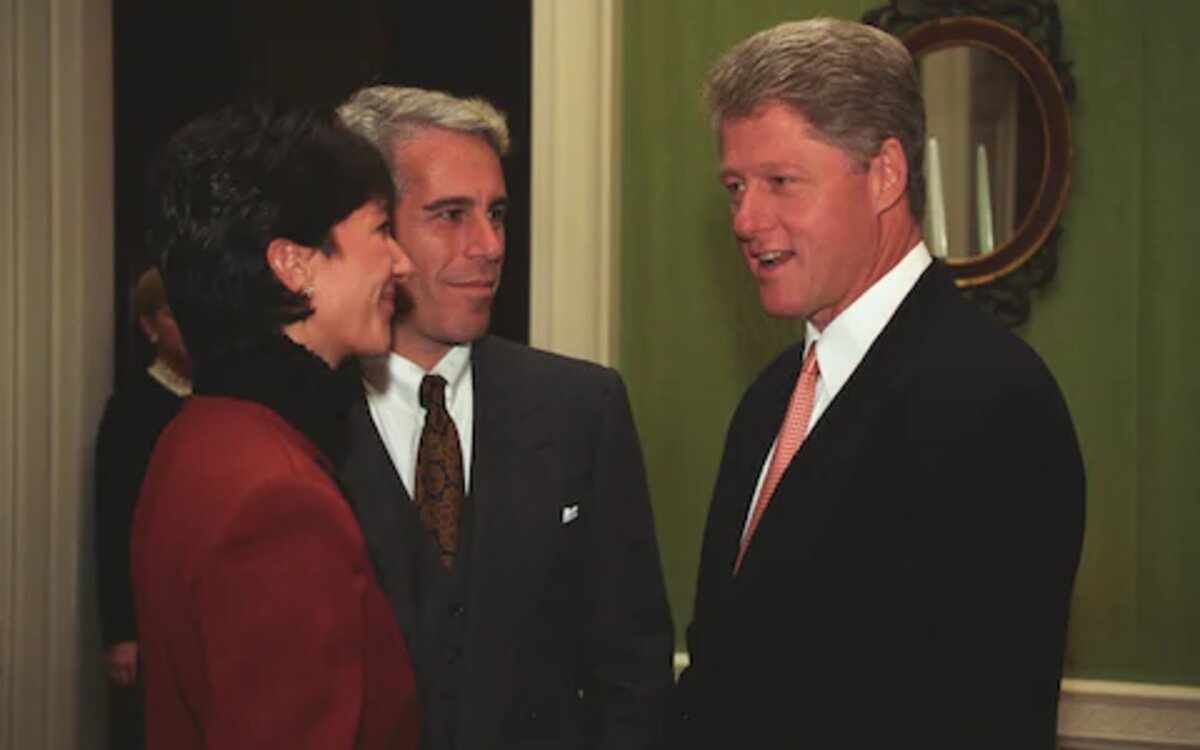 Trump: in the files, in the room, in the subtext
The name hovering over the proceedings like a ghost at a donor dinner? Donald Trump.
Democratic lawmakers say Clinton brought up “additional information” about discussions he had with Trump. They argue that his testimony raises more questions about what Trump knew and when. They want Trump to testify.
Republican chair James Comer says Clinton was asked whether Trump should be called. Clinton reportedly responded: “That’s for you to decide.” Comer also said Clinton testified he has no knowledge of Trump being involved in Epstein’s crimes.
Garcia, the top Democrat on the committee, pushed back on Comer’s characterization, saying it was not a “complete, accurate description” of what was said and demanding the “full transcript.”
Trump, for his part, weighed in from the sidelines: “I don’t like seeing him deposed.” He added: “But they certainly went after me more than that.”
In the Epstein files released by the Department of Justice, Trump is mentioned thousands of times. The two men were photographed together in the 1990s and early 2000s. Trump says they had a falling out around 2004. He has repeatedly denied wrongdoing and recently said he has been “totally exonerated.” He has not been accused of crimes by Epstein survivors who have come forward publicly.
Democrats, however, point to a DOJ file summarizing an FBI interview with a former Palm Beach police chief, who alleged that Trump called in 2006 after the Epstein investigation began and said “everyone has known he’s been doing this” and “people in New York knew he was disgusting.”
The Justice Department says it is reviewing withheld documents and will publish any found to have been improperly removed. Democrats claim some witness interviews are missing. Republicans call that narrative political theater.
Somewhere in all of this is a legal process. Also somewhere: campaign messaging.
No Fifth. No drama. Lots of adjectives.
 No Fifth. No drama. Lots of adjectives.
Democratic Rep. Suhas Subramanyam described the atmosphere in the deposition room as “respectful,” with Clinton answering questions in a “thoughtful and deliberate manner.” He emphasized that Clinton has not invoked the Fifth Amendment and has answered at length.
Republican Rep. Anna Paulina Luna said Clinton is being cooperative and that the committee is getting a “clearer picture.”
That’s rare bipartisan agreement: cooperative, lengthy, respectful. Washington’s version of “we’re all very mature about this.”
And yet.
Republicans have signaled the questioning may be more intense than Hillary’s session, given Bill Clinton’s documented trips and interactions with Epstein during his post-presidency philanthropic work. Clinton has long said he regrets the association and did not know about Epstein’s crimes at the time.
Democrats say they are asking tough questions. Republicans say they have lots of them. The political temperature, as one reporter put it, is rising.
How Maxwell kept the orbit tight
 How Maxwell kept the orbit tight
Newly examined DOJ files and emails offer a glimpse of how Ghislaine Maxwell helped cultivate proximity between Epstein and Clinton. While there are reportedly no direct messages between Clinton and Epstein in emails reviewed by reporters, correspondence between Maxwell and Clinton aide Doug Band from 2002 to 2004 suggests a close social channel.
The tone of those emails has been described as flirty and flattering — “social matchmaker,” “lover,” compliments on prowess — the sort of language that ages poorly once indictments enter the chat.
There is no suggestion of wrongdoing by Band, and the files do not implicate Clinton in criminal conduct. But they illustrate how Epstein embedded himself among political, social, and philanthropic elites.
Which is, ultimately, the uncomfortable through line: proximity is not proof — but proximity is power.
The venue, because America is absurd
 The venue, because America is absurd
The Chappaqua Performing Arts Center seats 425. It hosts school music shows. It hosts stand-up comedy. Tomorrow, after the deposition crowds disperse, it will host a Lunar New Year celebration. On 20 March, a Fleetwood Mac cover band.
Yes, Fleetwood Mac. Yes, “Don’t Stop.”
No, there are no additional former presidents booked for future performances.
The symbolism writes itself. The production values do not.

What we actually know
After hours of testimony, what is concretely established?
Clinton denies knowledge of Epstein’s crimes.
He denies wrongdoing.
He denies knowing the identity of the woman in the hot tub photo.
He says he did not have sex with her.
He says he would have turned Epstein in if he had known.
He says he will not speculate.
He says he does not recall certain details from decades ago.
He has not invoked the Fifth.
Democrats say his testimony raises new questions about Trump.
Republicans say he testified he has no knowledge of Trump’s involvement.
Both sides want transcripts — for very different reasons.
The hearing remains closed-door. Video and transcripts are expected to be released after review.
Until then, the nation is left parsing adjectives, second-hand summaries, and partisan interpretations delivered to cameras outside a suburban theater.
America loves transparency. It just prefers it edited.
For now, a former president sits under oath in a town that votes blue, answering questions about a man who weaponized wealth and access to prey on the vulnerable. The powerful insist they saw nothing. The public insists it saw everything. The transcripts, when they arrive, will not reconcile those two instincts.
And somewhere in the lobby, a Fleetwood Mac poster waits patiently for its turn.