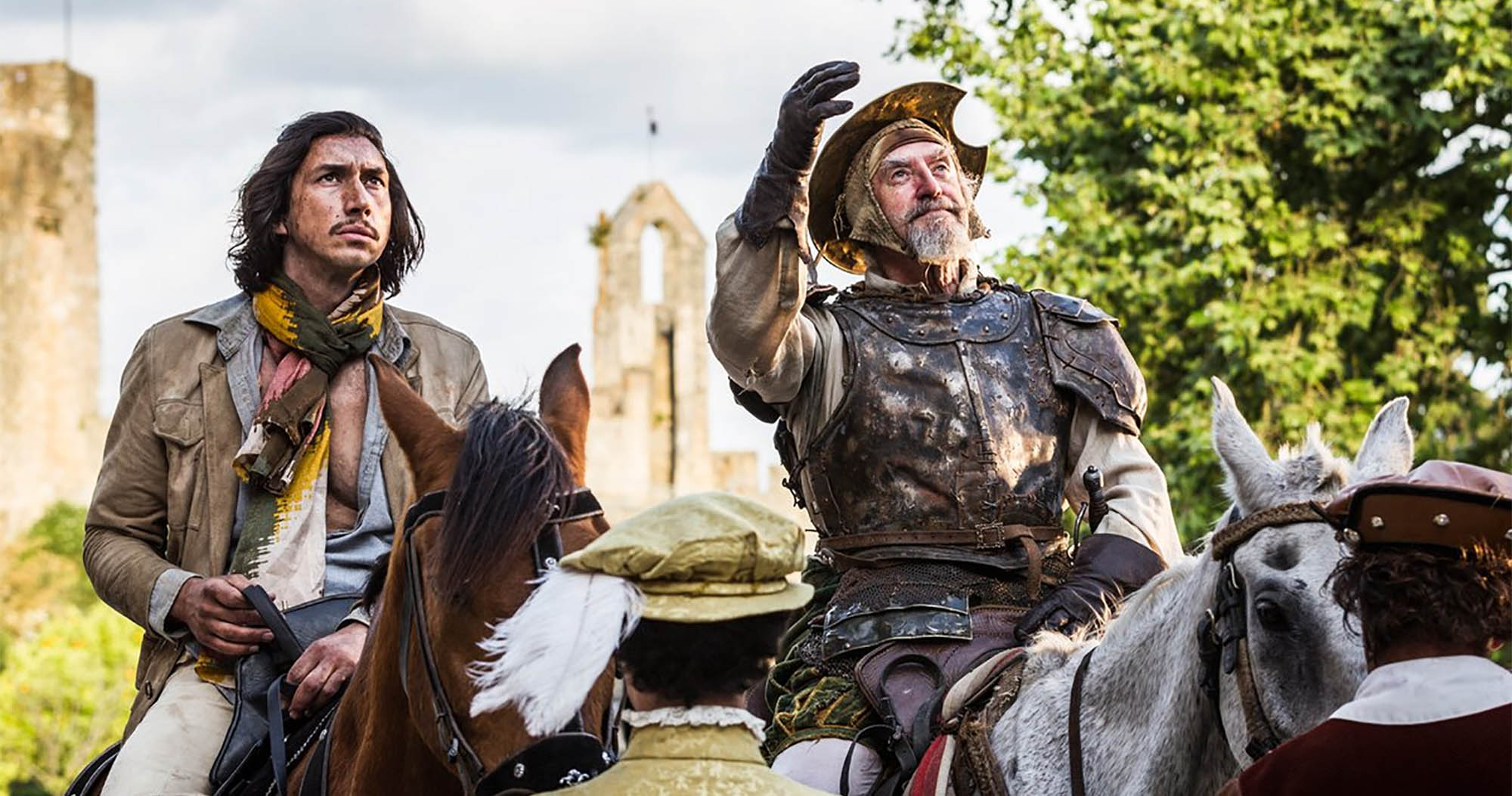
Terry Gilliam’s ‘Don Quixote’: The drama’s far from over
The saga of Terry Gilliam’s The Man Who Killed Don Quixote has stretched across nearly three decades, and the 2018 French court ruling that cleared the path for its Cannes debut hardly ended the story. Last month, a French court ruled in favor of Festival de Cannes, granting it permission to debut Terry Gilliam’s long-plagued The Man Who Killed Don Quixote on its prestigious closing night on May 19. Complicating Gilliam’s problems was a minor stroke, first reported by French newspaper Nice-Martin – from which has recovered —and the withdrawal of Amazon (which partially funded the production) from the film’s US distribution. The court dismissed the writ brought by Portuguese director Paolo Branco (Alfama Films) who sought to block Cannes’s screening of Quixote. The writ followed a lawsuit filed in May 2017 claiming Branco’s exclusive rights over Quixote. During production, a French court granted Branco a preliminary decision but refused to block Gilliam’s continued production of the film. Despite the suit, Festival de Cannes selected The Man Who Killed Don Quixote for its 2018 festival, bestowing it closing-night honors. That’s when Branco went to court. Cannes promptly challenged the move and offered a scathing assessment of Branco’s character, printed in full by IndieWire. It stated that Branco “has shown his true colors once and for all during this episode . . . (and) has threatened us, via his lawyer, with a ‘humiliating defeat.’” Branco had also accused Cannes of “forcing matters” by showing the film. Cannes’s specific response exposed the festival’s own problematic history with the producer: “Our entire profession knows that ‘forcing matters’ has always been Mr. Branco’s favourite method, and we should recall that he organised a press conference a few years ago where he denounced the Festival de Cannes because it had not kept a ‘promise to select’ one of his films. This was an accusation which didn’t go anywhere, because the Festival does not make promises to select films: it either selects them or it does not. “Today, Mr. Branco has allowed his lawyer to use intimidation and defamatory statements, as derisory as they are ridiculous, one of which targets the former President of an event which he has made use of throughout his career to establish his own reputation.” The upshot is that Cannes chiefs Pierre Lescure (Didier) and Thierry Fremaux (Lumiere!) sided squarely with Gilliam and took up the legal case on his behalf. Gilliam began working on Don Quixote – affectionately referred to as the most cursed film in history – in 1989 and attempted and failed to shoot in 2000. At Cannes in 2016, Branco announced the film would be produced by his Alfama Films. Conflict arose immediately. Branco tried to micromanage Gilliam, always delivering “demands”. Gilliam claims that funds Branco guaranteed never materialized, thus voiding the agreement. Branco and Gilliam parted ways before pre-production was over, with Gilliam giving the reins to producer Mariela Besuievsky.
Health Scare Update
Gilliam clarified that the reported stroke was actually a perforated medullary artery. He recovered quickly enough to walk the red carpet at the May 2018 Cannes premiere without visible difficulty. The incident added another layer to the project’s already mythic reputation, yet it did not derail the closing-night slot that had been secured through the court victory.
Branco Lawsuit Resolution
The Paris Court of Appeal ruled in favor of Branco on rights claims in June 2018. Gilliam’s producer countered that core creative rights remained intact and that a financial settlement cleared the remaining obstacles. The film moved forward to release regardless, confirming that legal friction alone could not halt a project this determined to reach an audience.
Production Completion
Principal photography wrapped in June 2017, and post-production finished by late that year. The completed cut screened at Cannes the following May, transforming years of stalled attempts into a finished feature. The handoff to producer Mariela Besuievsky proved decisive in steering the final stage to completion.
Critical Reception and Legacy
Critics gave the finished film a 66 percent Tomatometer score, praising Gilliam’s visual invention and the lead performances from Adam Driver and Jonathan Pryce while noting occasional narrative messiness. Metacritic logged a 58, reflecting mixed but engaged responses. Some reviewers called it Gilliam’s strongest work in two decades, arguing that the decades-long struggle had sharpened rather than diluted his signature style of tilting at impossible odds.
Box Office Performance
The worldwide gross settled around 2.5 million dollars against an estimated 16 million euro budget plus earlier sunk costs. Limited theatrical playdates could not overcome the long shadow of its troubled history, and the result was viewed as a commercial disappointment. The numbers underscored how even a completed Gilliam project can struggle to find mainstream traction in a market wary of expensive eccentricity.
Making-of Documentary
The 2019 release of He Dreams of Giants served as a direct sequel to the earlier Lost in La Mancha. The new documentary captured the final successful production phase and offered behind-the-scenes context for the legal and logistical hurdles that had once seemed insurmountable. Viewers gained a clearer picture of how Gilliam and his team navigated the last stretch of a project long defined by near-misses.
Release Timeline and Distribution
After the Cannes bow, the film reached US and Canadian audiences through a limited Screen Media rollout in April 2019. The UK and Ireland followed in January 2020. Later availability on streaming platforms such as Hulu extended its reach beyond initial theatrical windows. Each territory added another chapter to the distribution story that began with the 2018 court decision.
The completed The Man Who Killed Don Quixote stands as evidence that persistence can outlast both legal blocks and production setbacks. Gilliam’s vision survived the 2018 drama, the health scare, and the subsequent rollout challenges, delivering a finished work that carries the weight of its own legend. The film’s journey from stalled shoot to festival closer and eventual streaming presence illustrates how long-gestating projects can still find an audience when the final cut finally arrives on screen.