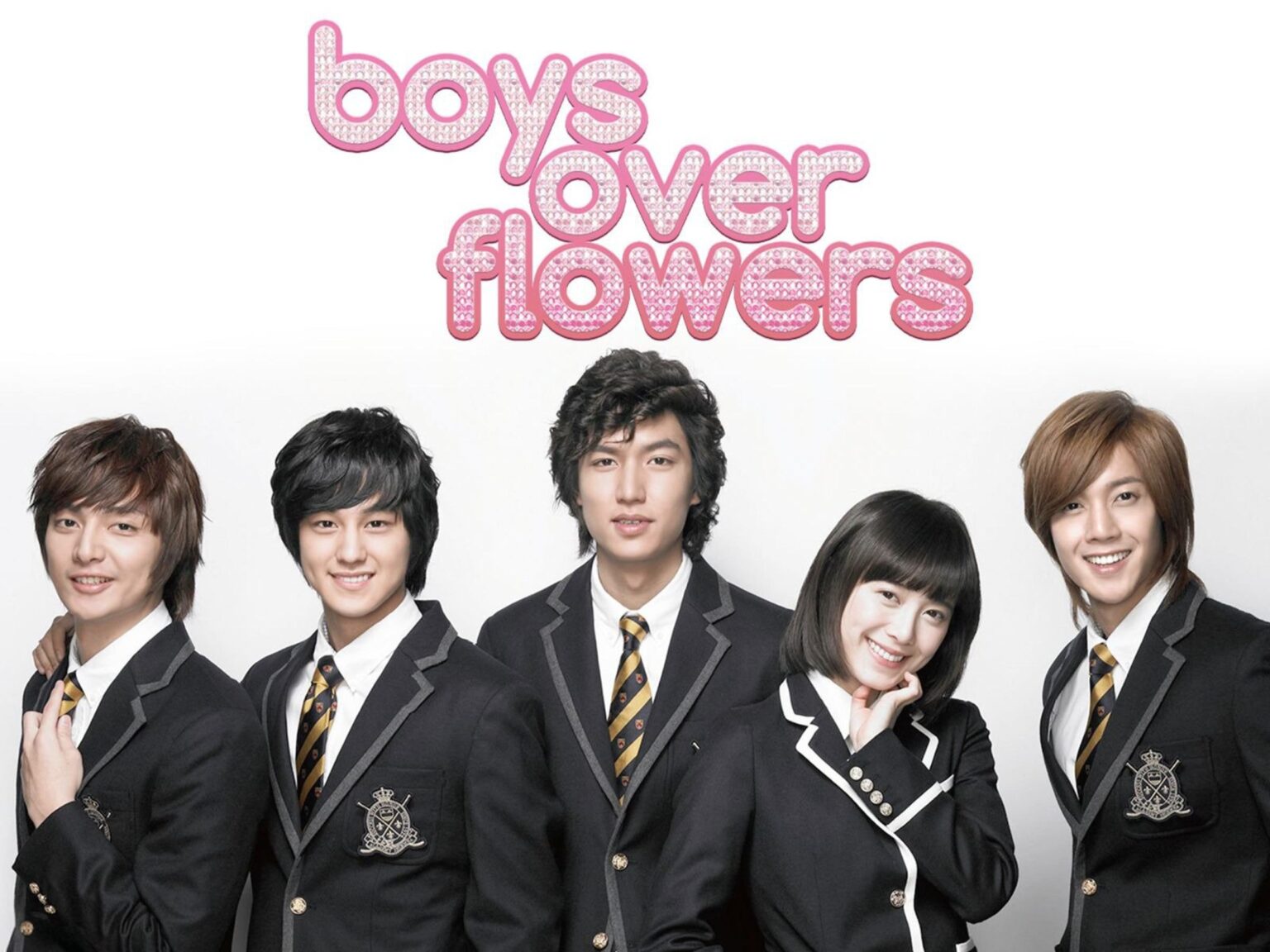
How has ‘Boys Over Flowers’ remained so popular over the years?
Korean culture has gone global thanks to our beloved streaming services many of us couldn’t live without. K-drama Boys Over Flowers was one of the first media productions from Korean culture to lead the Hallyu wave to the West. In 2009, the K-drama world was taken over by Boys Over Flowers, a South Korean TV show about the high school world, giving the teen romance genre new life. Based on the 90s manga, the series is about a working-class girl who gets tangled up in the lives of a group of wealthy young men in her high school. Boys Over Flowers aired for 25 episodes on KBS2 from January 5 to March 31, 2009. The show quickly became one of the first K-dramas to gain international acclaim. In fact, the show is credited with launching the career of its lead actor, Lee Min-ho, who previously appeared in a small number of low-budget high school dramas. After many years, Boys Over Flowers still remains one of the best Korean dramas for newcomers to enjoy.
Trendsetter
Boys Over Flowers attracted high viewership ratings and buzz throughout South Korea during its broadcast in 2009 and created a huge Korean Wave throughout Asia, which eventually led to Japan, Thailand, Vietnam, Singapore, India, Nepal, Malaysia, Philippines, Taiwan, Sri Lanka. The K-drama was so successful, cast members held tons of sold-out events across Asia such as concerts and meetings. According to Korea Herald, the enormous success of Boys Over Flowers sparked a fashion and grooming trend among Asian men due to its well-groomed metrosexual male characters. Academic and media sources continue to link the show to kkotminam and soft masculinity trends. The trend is described as influential in shaping Asian male grooming and fashion perceptions years after the original broadcast.
A trip down memory lane
Boys Over Flowers is appreciated for its honest depiction of the high school world. The series reveals how high school is more than just academics; it’s a life full of obstacles one must overcome. As stated in Korea Herald, viewers say the show is nostalgic, bringing them back to their own high school days.
What’s their popularity secret?
It’s 2026 and the show remains a staple reference point for new viewers. Stars in the K-drama believe the 2009 show is still relevant and popular today. Boys Over Flowers is still cited in 2025–2026 best K-dramas lists and fan discussions. Gateway status is reinforced by ongoing new viewer testimonials. The series continues to serve as the gateway show for many new Korean drama fans.
All hail streaming services
Availability has shifted over time. Netflix availability ended around May 1 2026 in several regions. The show remains available on other services like Amazon Prime Video in some markets. These platform changes keep the series reachable for new audiences without relying on a single service.

Cast Then and Now
Multiple 2025–2026 YouTube videos and social posts compare the cast after 17 years. Lee Min-ho continued success with international projects into 2025, appearing in Pachinko season two and When the Stars Gossip. The other members of the F4 have also stayed visible through variety shows, music releases, and occasional drama cameos. Fans use these updates to track how the original quartet has aged into different chapters of their careers while the 2009 series stays fixed in memory.
Streaming Landscape in 2026
Platform rotation has changed how people access the show. Left Netflix around May 1 2026 in multiple regions. Still accessible on other platforms such as Amazon Prime Video in some markets. Viewers now piece together availability through regional catalogs and occasional licensing windows rather than expecting permanent residence on one service.
Ongoing Cultural Legacy
Frequently included in 2025–2026 best of and must-watch classic K-drama roundups. Active Reddit and social media conversations in 2025–2026 keep the title circulating among both longtime fans and first-time watchers. The drama’s influence appears in newer productions that borrow its mix of class tension, friendship dynamics, and stylized romance.
Remakes and Global Adaptations
Korean version inspired or accompanied remakes in Taiwan, China, and India. The original manga has multiple international adaptations. Each version tweaks the setting and tone for local tastes while preserving the core story of a working-class heroine navigating an elite circle. These adaptations extend the reach of the 2009 drama without requiring viewers to start with the Korean original.
The show’s reach keeps expanding through new platforms and fresh eyes. Its core appeal, a sharp look at class, friendship, and first love, holds up across regions and generations. That steady pull explains why Boys Over Flowers still surfaces on lists and in conversations long after its original run.