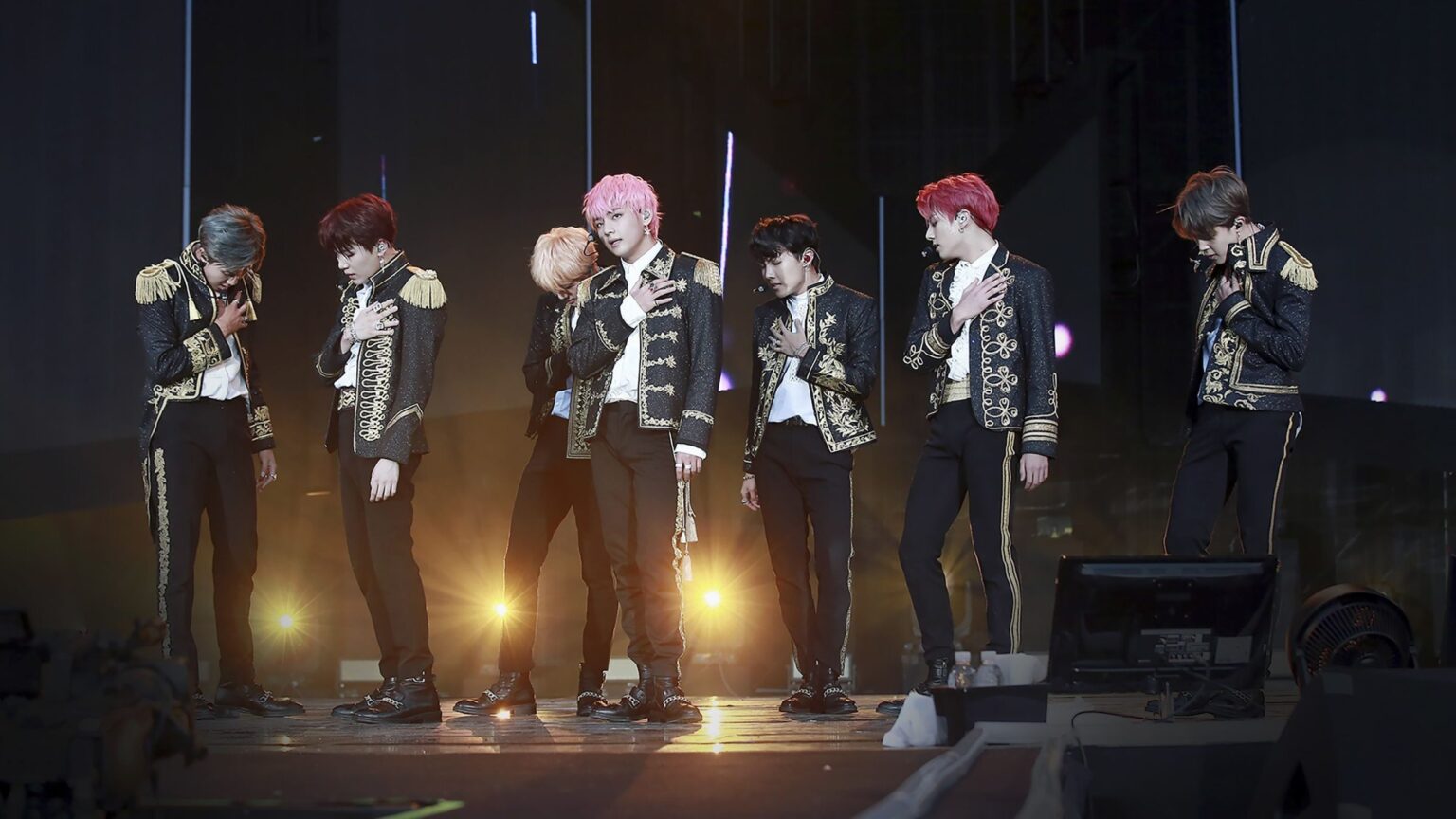
What does BTS stand for? Your favorite boyband name explained
You have their picture on your wall, you save up for their concerts, and you know all of the lyrics to their songs; yet, you aren't quite sure what their name means. K-Pop band, BTS, have taken over the world with their catchy songs, fierce looks, and flawless dance moves; however, fans are still wondering, “What does their name actually stand for?” After a little digging around, we finally have the scoop, and guys, it’s probably not what you thought.
Who are you?
Even if you’re not familiar with BTS’s music, you’ve probably seen their name in headlines about the group breaking records and selling out stadiums. In fact, the group is so loved, fans have waited in line for days just to get a peek of them in person – yes, days. The K-Pop supergroup is composed of seven members: Jimin, RM, V, Suga, J-Hope, Jin, and Jungkook. The group exploded onto the music scene in 2013 and are currently on top of the world after completing military service by early 2026 and returning with a new album and tour. Many were confused about what the letters “BTS” meant, so fans began to refer to them as the “Bangtan Boys” or other nicknames inspired by the letters. (Our guess was Boys Talk Sexy.) When traveling the globe, “BTS” is more commonly used for different languages to understand; but, where did the letters “BTS” come from in the first place? Surely, there must be a meaning behind them.
Deeper than we thought
The name “BTS” actually stands for the words “Bangtan Sonyeondan” which translates in English to “Bulletproof Boy Scouts” – but what does the name mean? According to member J-Hope, “It has a profound meaning . . . ‘Bangtan’ means to be resistant to bullets, so it means to block out stereotypes, criticisms, and expectations that aim on adolescents like bullets, to preserve the values and ideals of today’s adolescents.”
Right in front of us all along
Little did we know, BTS has actually revealed their true identity within their songs. They have rapped and sang referring to themselves as the bulletproof boy scouts on many occasions, like their song “Attack on Bangtan,” saying: “Go forth like the Bulletproof Boy Scouts/Attack, aren’t we brave?/The brave Bulletproof Boy Scouts.” (Don’t be upset if you’ve made this realization now, “Bulletproof Boy Scouts” doesn’t exactly fit in with the BTS acronym.)
The power of acronyms
After touring in the U.S. in 2017, BTS added “Beyond The Scene” as an English brand identity extension while retaining Bangtan Sonyeondan as the official Korean name. According to Soompi, BTS's entertainment agency, the new name symbolized youth who go against the grain to move forward and avoid settling. Part of BTS’s vibe and style is to stay true to themselves, even if it means changing their looks, themes, and musical styles time from time. They wanted to reflect these changes through their various names – after all, we’re ever-evolving humans!

Military service and full group return
All seven members completed mandatory military service by January 2026, marking the end of a staggered enlistment period that began in 2023. The full group return allowed them to resume joint schedules for the first time in years, shifting focus from individual projects back to collective releases and performances. First full-group activities were announced shortly after the final discharge, confirming that the seven-member lineup remained intact and ready to move forward together. Fans tracked discharge dates and reunion signals closely, turning each homecoming into a communal milestone that reinforced the group’s shared history.

ARIRANG era and 2026 comeback
The fifth studio album ARIRANG arrived on March 20, 2026, serving as the official post-hiatus statement. The record opened the next chapter with new material that reflected the members’ individual growth during service while maintaining the group’s signature blend of introspective lyrics and high-energy performances. The ARIRANG World Tour launched in April 2026 and quickly expanded across multiple continents, bringing the reunited lineup to stadiums and arenas that had remained empty during the hiatus. Early tour dates demonstrated that demand had not waned, with ticket sales and streaming numbers confirming the group’s continued global reach.

Fan community during the hiatus
ARMY sustained engagement throughout the military period by analyzing symbols and signals that hinted at future plans. Red circles in social media posts and references to solar terms became part of an informal code that fans decoded in real time, keeping collective anticipation alive. The 13 Years 13 Eras concept unveiled for FESTA 2026 gave supporters a structured way to revisit career milestones and connect past eras with the upcoming reunion. These activities kept the conversation active and ensured that the return felt like a continuation rather than a reset.

Name in different languages and cultures
The Japanese rendering Bōdan Shōnendan preserves the original Korean meaning while adapting the pronunciation for local audiences. Despite regional translations, BTS remains the universal shorthand that travels easily across borders and avoids confusion in international coverage. This consistent abbreviation supports the group’s global accessibility strategy, allowing new listeners to recognize the name without needing to learn the full Korean phrase first. The choice reflects the same logic that guided the 2017 addition of an English extension: clarity across languages without replacing the foundational identity.