Click now: ‘Jeffrey Epstein house’ files shock
The Jeffrey Epstein townhouse at 9 East 71st Street has long stood as one of Manhattan’s most notorious addresses. What once read like a real estate listing now reads like a ledger of ownership changes, legal proceedings, and public records that continue to surface years after the fact.
A blot on history
Federal agents who searched the property in 2019 documented an extensive collection of photographs depicting nude and partially clothed young women, along with cash, loose diamonds, and an expired passport issued under another name. The home later sold in March 2021 for $51 million, with proceeds directed in part toward the victims’ compensation program. Current owner Michael Daffey completed a $925,000 renovation between 2024 and 2025 that altered both the interior layout and the exterior presentation of the limestone facade.
Peeping pedophile
Maria Farmer, who worked at the residence in the 1990s, described a concealed media room equipped with stacked monitors that displayed live feeds from multiple rooms, including bathrooms and bedrooms. Portions of her 1996 FBI complaint were released in late 2025 Epstein file disclosures, confirming elements of the original account. Farmer has continued to testify publicly and to press for the release of additional records.
Pampered playpen
Virginia Roberts Giuffre has stated she was brought to the townhouse for encounters arranged by Epstein that involved several high-profile men, including Prince Andrew. The prince has maintained he never met Giuffre. In late 2025 he was formally stripped of remaining titles and honors following new document releases and the publication of Giuffre’s posthumous memoir. The memoir renewed attention on the specific layout and use of rooms inside the New York residence.
Lavish lifestyle
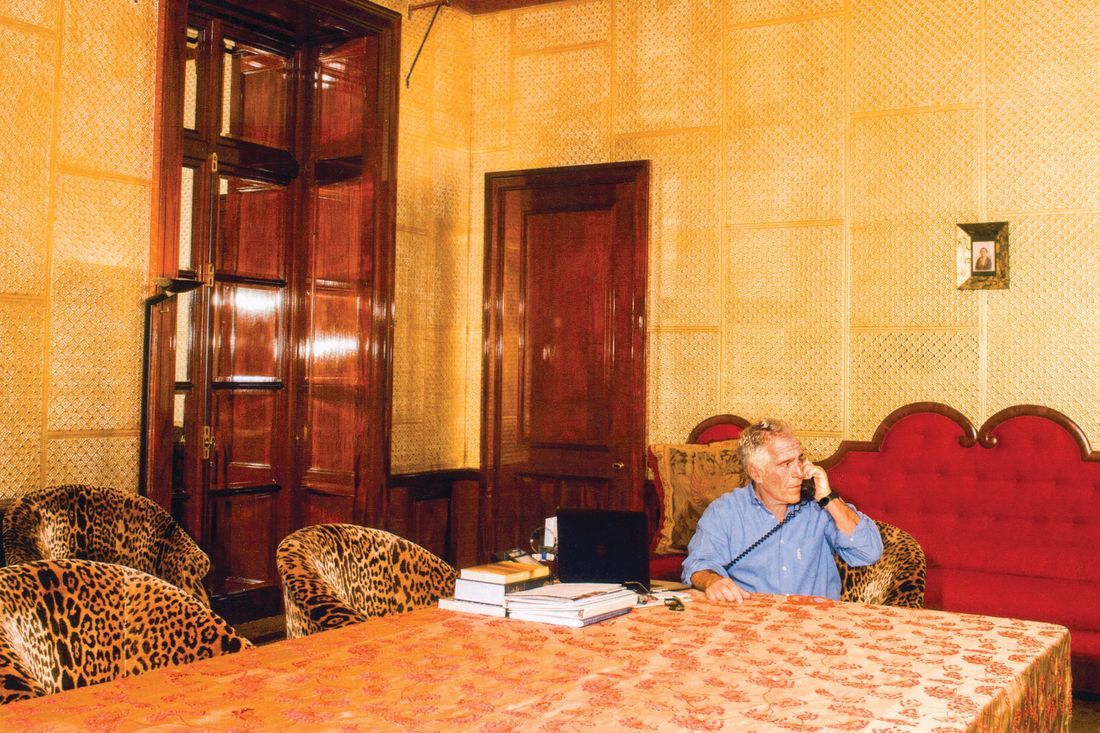
Contemporary accounts described taxidermy animals, leopard-print furnishings, and a large Oriental painting of a woman holding an opium pipe. Photographs published by The New York Times in August 2025 showed additional items, including a first edition of Lolita and framed photographs of Epstein with prominent figures. Several pieces of furniture and decorative objects later appeared in a Millea Bros. auction after the 2021 sale.
Clashing Clinton
A 2002 visit by former President Bill Clinton to the townhouse was confirmed by a Clinton spokesman in 2019. In February 2026, Clinton gave sworn testimony before the House Oversight Committee in which he stated he had seen nothing suspicious and ended contact with Epstein years earlier. The deposition reiterated that he had no knowledge of the crimes later charged.
Questionable conveyance
Leslie Wexner purchased the property in 1989 for $13.2 million and later transferred it to an Epstein-controlled entity. Records show the 1998 sale price was $20 million, paid in installments, with full title passing to Maple Inc. in 2011. Wexner has stated he was unaware of Epstein’s criminal activity and ended the professional relationship years before the 2019 arrest.

Current Ownership and Renovation
Michael Daffey, a former Goldman Sachs executive, acquired the house in the 2021 transaction. The subsequent renovation addressed both structural systems and interior finishes. Public records list Daffey as the current owner, and the property no longer appears on the market.
Post-Sale Fate of Contents
After the 2021 purchase, remaining furnishings and decorative objects were removed and sold. Auction records from Millea Bros. include a Viennese desk, bronze sculpture, and several lamps that match photographs taken during Epstein’s occupancy. The dispersal of these items has provided additional documentation of the original interior arrangement.
Newly Released Interior Photographs
The August 2025 New York Times publication included previously unseen images from the 2019 search and from Epstein’s time in residence. The photographs show credenzas covered with framed pictures, personal books, and small artifacts that had not appeared in earlier reporting. These images have been used by researchers comparing the documented decor with statements from former staff and visitors.

Ongoing Document Releases and Survivor Testimony
Additional Epstein file releases in 2025 and 2026 have included an FD-71 form that references aspects of Maria Farmer’s 1996 complaint. Farmer and other survivors have testified before congressional committees seeking fuller disclosure of surveillance records and visitor logs. These releases continue to supply context for the operational details of the townhouse during Epstein’s ownership.
The property at 9 East 71st Street remains a fixed point in the public record. Ownership has changed, renovations have altered its appearance, and successive document releases have added detail to earlier accounts. The house itself continues to figure in legal proceedings and archival research long after the original sale listing closed.