What was Jeffrey Epstein like when he was younger?
Jeffrey Epstein is known today as a monster – a man who trafficked underage girls and abused hundreds of women. It makes us wonder whether Epstein had always shown a degenerate streak or whether he was quite different in his younger years.
Epstein had quite a normal childhood growing up in Brooklyn, NY in the 50s & 60s. He had a solidly middle-class upbringing, was well-liked amongst his group of friends, and known as a quiet, “nerdy” child. The image cultivated by Jeffrey Epstein later in life is the polar opposite of his childhood years. Here are the details of the smart young boy who turned into a sexual predator.
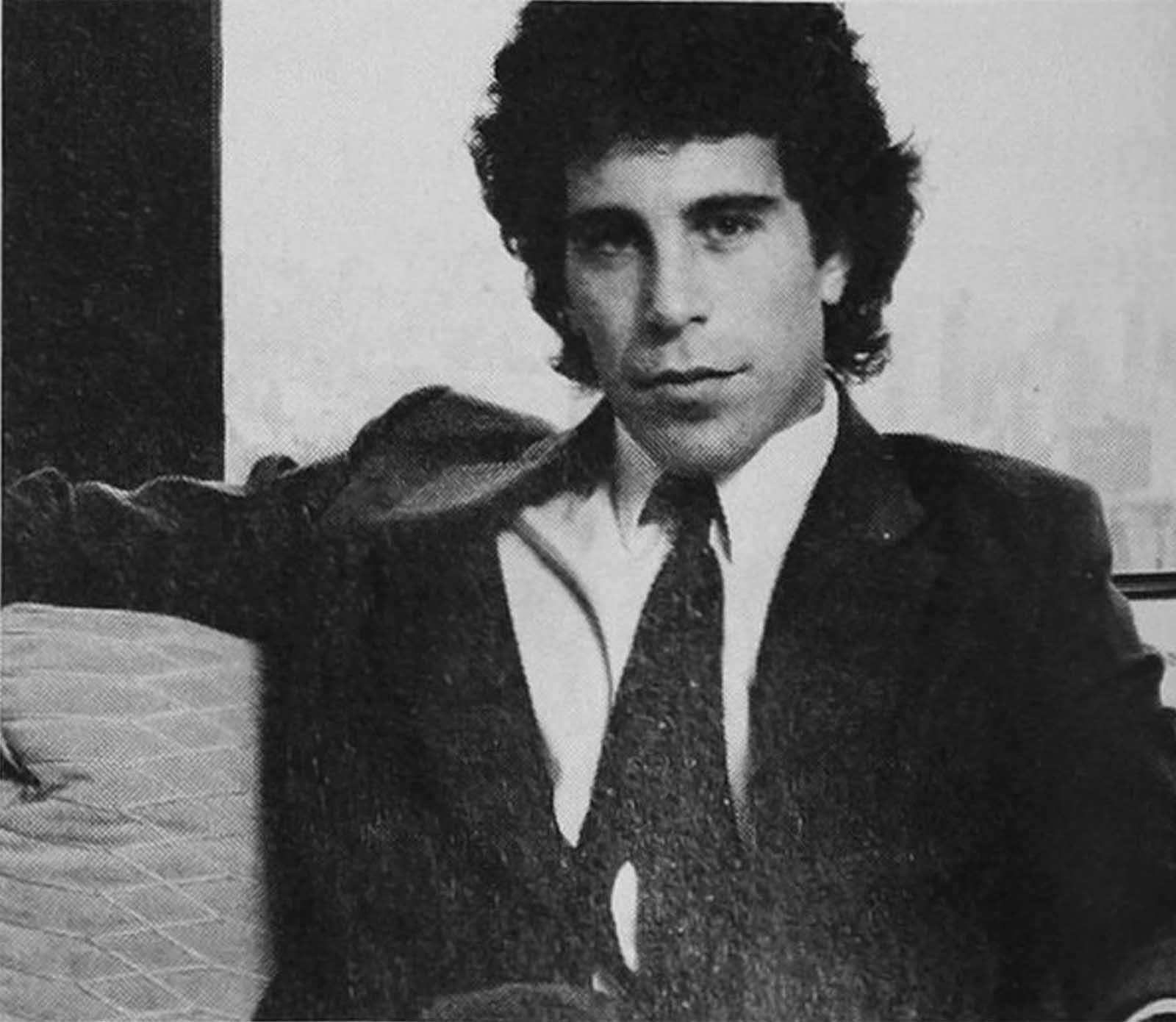
Middle-class suburbia
Jeffrey Epstein once stated that he grew up in Coney Island, but more specifically he grew up in SeaGate, a private community on the western edge of Coney Island. SeaGate is New York’s oldest gated community, a middle-class, suburban haven with a strong Jewish community that has lived in the neighborhood for around a hundred years.
Epstein was born to Seymour & Paula Epstein, the children of European immigrants. Seymour & Paula both worked, Paula managing to hold down a full-time job while also being a homemaker & a mother.
The Epsteins were said to be a modest family who worked hard and were respected in their community. Neighbors of the Epsteins described the inauspicious family as, “They were so gentle, the most gentle people”.
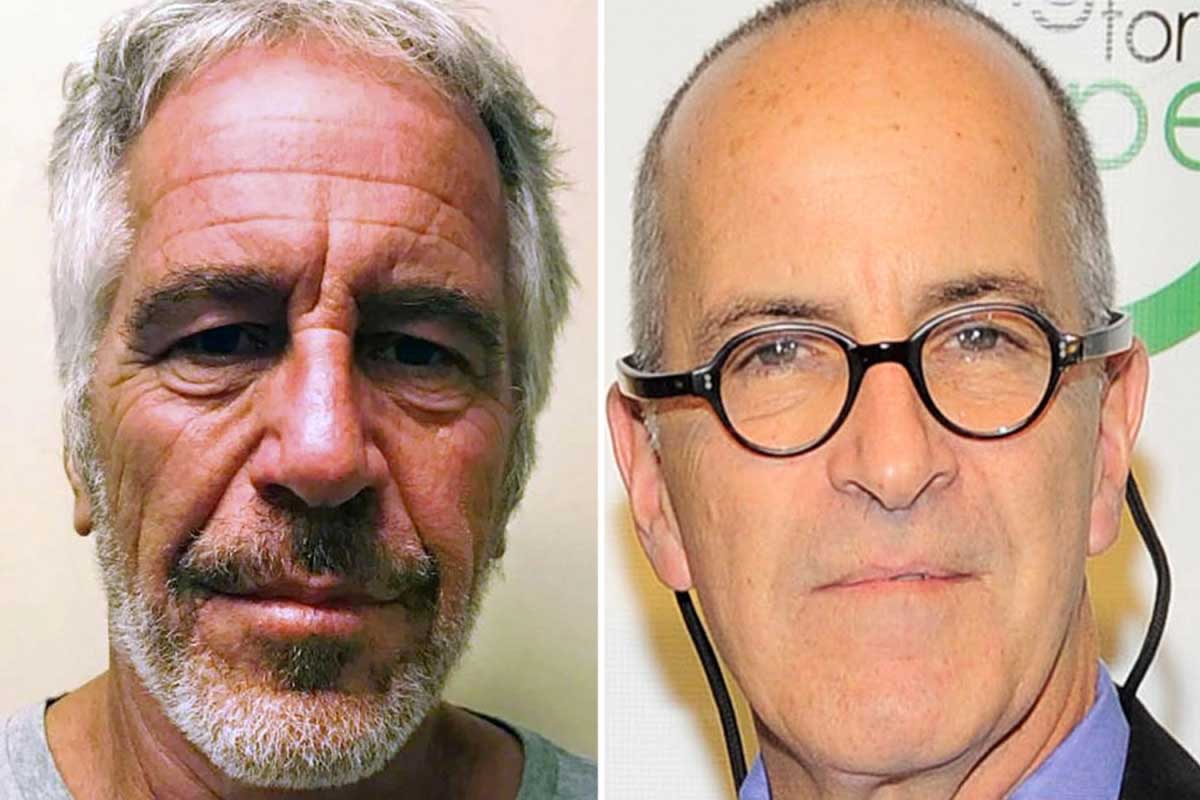
High school’s golden boy
Epstein & his younger brother Mark were seen as exceptionally gifted children. They were both brilliant at math and Epstein was a talented piano player having learned when he was very young.
Epstein entered Lafayette High School in Gravesend having skipped two grades. He became quite popular with his peers and was given the nickname “Eppy” in his friend group. Epstein was a nice guy all around, even tutoring his friends in math. One of his classmates, Beverly Donatelli, remembered that Epstein taught her geometry in just two months and that he was the reason she went to college.

Although there was a fair amount of racial tension within Lafayette High School with Italian families unhappy about the Jewish presence, Epstein breezed through his time there. Epstein spent his free time playing piano & adding to his prize stamp collection.
At the age of sixteen Epstein graduated from high school and began taking advanced math classes at Cooper Union and found a job tutoring students. Two years later in 1971, Epstein transferred to New York University to study mathematical physiology, but he never graduated.
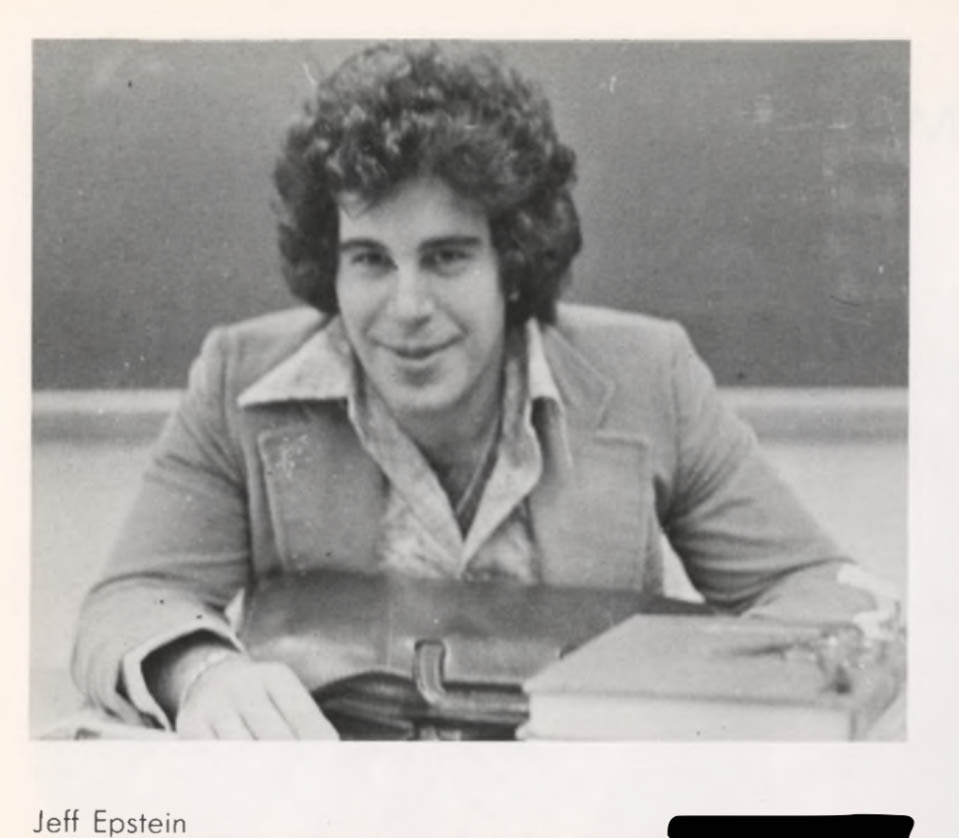
Going down a darker road
Epstein’s first taste of a more elite lifestyle was also his segway into predatory behavior. He got a job teaching math to affluent teenagers at an elite New York preparatory school on the Upper East Side known as Dalton.
Epstein began to dress flashier in fur coats, revealing shirts, and gold chains. Although he was a teacher, Epstein would sometimes drop in on the students’ parties, even somewhere they were drinking alcohol. Many who attended Dalton noticed his “too-friendly” behavior with the young female students. The school officials eventually asked Epstein to leave though the exact reason was never clear.
After Epstein left Dalton, he went straight to Wall Street, and soon after he started J. Epstein & Co., his own finance firm. From here, Epstein’s business & personal life became increasingly complicated & murky as time went on – and of course, we know what came next.


Always a creep? What Jeffrey Epstein was like when he was younger
By 2026, the question isn’t whether Jeffrey Epstein became predatory later in life—it’s whether the warning signs were present from the beginning. The record suggests they were.
Epstein’s early biography is marked by improbabilities that, in hindsight, look less like luck and more like a pattern of access without accountability. Born in Brooklyn in 1953, he was academically capable but uncredentialed. Despite lacking a college degree, he secured a teaching job in the early 1970s at the elite Dalton School in Manhattan. He taught math and physics to privileged teenagers—an environment that would later feel uncomfortably familiar.
Former students and colleagues have described Epstein as socially awkward, overly intense, and unusually interested in cultivating proximity to wealth and power. Nothing criminal was proven from this period, but boundaries were porous. He was dismissed from Dalton under murky circumstances that were never publicly clarified. By 2026, that silence reads as institutional discretion rather than exoneration.
After Dalton, Epstein’s ascent accelerated. He entered finance via Bear Stearns, again without conventional credentials, where he quickly attached himself to high-net-worth clients. His reputation among peers was mixed: brilliant to some, strange and opaque to others. He projected confidence, spoke in absolutes, and cultivated mystique. The money followed—but so did secrecy.
Accounts from the 1980s and 1990s describe Epstein as obsessive about control and status. He collected properties, installed surveillance systems, and curated social environments where he set the rules. Former associates have recalled his fixation on youth, appearance, and hierarchy long before any public allegations surfaced. These were not private quirks; they were part of how he organized his world.
Crucially, Epstein’s early relationships show a consistent theme: he sought proximity to institutions that conferred legitimacy—elite schools, banks, philanthropies—while avoiding scrutiny. Each environment buffered him. Each failure to interrogate his background reinforced the lesson that rules were negotiable if you appeared valuable enough.
By the late 1990s, allegations of sexual misconduct with minors began to surface. The 2008 non-prosecution agreement in Florida retroactively reframed his entire earlier life. Behaviors once dismissed as eccentric or arrogant took on sharper meaning. Patterns of grooming, boundary-testing, and leveraging authority were no longer ambiguous—they were coherent.
In 2026, psychologists and investigators reviewing Epstein’s early trajectory tend to converge on the same conclusion: predators rarely materialize overnight. They refine tactics. They learn which signals trigger alarm and which grant access. Epstein’s youth shows rehearsal—socially, professionally, and structurally.
That doesn’t mean everyone saw him clearly at the time. Many didn’t. Some didn’t want to. Others benefited from the arrangement. The more uncomfortable truth is systemic: Epstein’s early life wasn’t ignored because it was invisible; it was ignored because it was inconvenient to question someone who appeared useful.
So was he “always a creep”? The evidence suggests something more precise—and more damning. He was always someone testing limits, watching reactions, and adjusting behavior based on what he could get away with. What changed over time wasn’t the impulse. It was the scale—and the protection.