



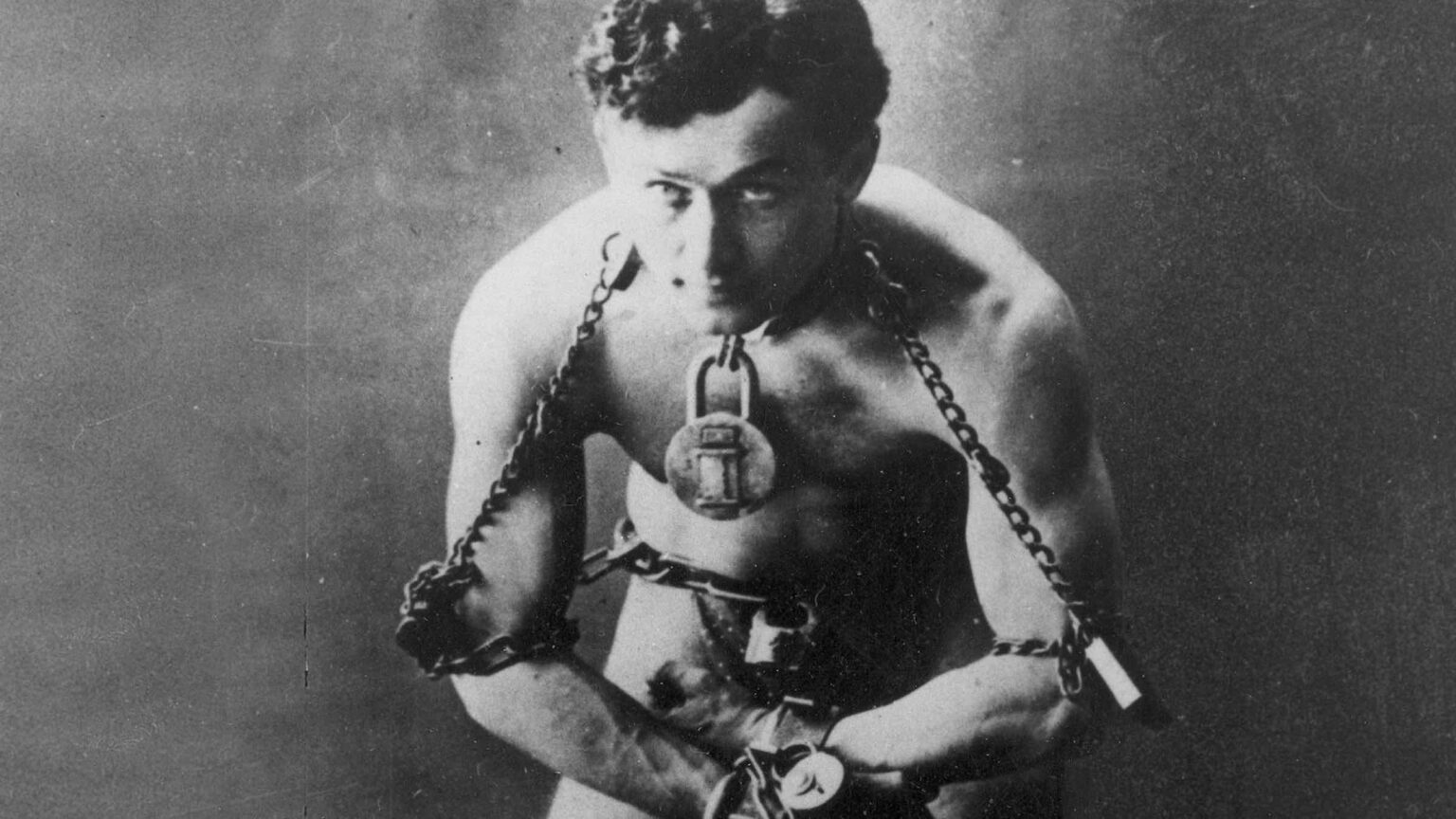
The strange death of Harry Houdini: Accident – or murder?
Harry Houdini built his legend on vanishing acts and impossible escapes, yet the final chapter of his life remains the most debated. Hungarian-born Erik Weisz, who became the world’s most famous escape artist, died on Halloween 1926 in Detroit after a ruptured appendix led to fatal peritonitis. The question that still lingers is whether a student’s punches in a Montreal dressing room triggered the end or merely coincided with an illness already in motion.
Houdini's Early Life and Name Origins
Born Erik Weisz in Budapest in 1874, Houdini arrived in the United States as a child when his family immigrated. He first performed as a trapeze artist before shifting to magic in his teens. The name change to Harry Houdini reflected both a nod to French conjurer Jean-Eugène Robert-Houdin and a desire to craft a distinctly American stage identity. That early reinvention set the pattern for a career defined by constant reinvention and relentless self-promotion.
Houdini's Crusade Against Spiritualism
After World War I, Houdini turned his public profile toward debunking fraudulent mediums who claimed to contact the dead. He attended séances undercover, exposed hidden wires and trapdoors in lectures, and published books detailing the tricks he had witnessed. The campaign made him enemies in Spiritualist circles and placed him at the center of a cultural debate over grief, science, and belief that continued long after his death.
A blow to the gut
Despite a broken ankle sustained during a Chinese water torture cell escape in Albany earlier that month, Houdini honored his Montreal booking. On October 22, 1926, McGill University student J. Gordon Whitehead visited the dressing room at the Princess Theatre and asked whether Houdini could withstand repeated blows to the abdomen. Houdini agreed to the test while reclining because of his injury. Whitehead delivered several sharp punches before Houdini called a halt. Contemporary accounts describe the exchange as cordial rather than hostile, yet the timing would fuel speculation for decades.
The show must go on
Houdini continued performing in Montreal before traveling to Detroit. On October 24 he took the stage at the Garrick Theater with a fever of 104 degrees. Doctors had already diagnosed appendicitis and urged immediate surgery, but Houdini refused to cancel. He collapsed multiple times during the show. That same afternoon he entered Grace Hospital, where surgeons discovered the appendix had ruptured and peritonitis had set in. Without antibiotics, the infection proved overwhelming.
The Houdini Code and Posthumous Séances
Before his death, Houdini and his wife Bess agreed on a secret code word, “Rosabelle,” that would confirm any genuine posthumous message. Bess held annual Halloween séances for the next ten years, inviting journalists and spiritualists to witness the ritual. In 1936 she ended the tradition, declaring that Houdini had not returned. The code and the séances became enduring symbols of the couple’s bond and the public’s fascination with whether the master of escape could break free from death itself.
The legend continues
More than two thousand mourners attended Houdini’s funeral in New York on November 4, 1926. Early press reports blamed J. Gordon Whitehead for the fatal injury, yet later medical reviews, including a 2013 analysis in the World Journal of Emergency Surgery and subsequent studies through 2023, concluded that blunt trauma rarely causes appendicitis and that the timing in Houdini’s case was almost certainly coincidental. Houdini had likely been experiencing symptoms before the punches occurred. The debate persists because the story is more dramatic than the medical record, but the evidence points to a tragic delay in treatment rather than deliberate assault.
Modern Cultural Impact and Ongoing Interest
Nearly a century later, Houdini’s life continues to draw new audiences. Recent biographies, traveling museum exhibits, and archival releases have kept his name in circulation through 2024 and 2025. Appleton, Wisconsin, where the family settled after immigrating, maintains dedicated Houdini spaces that attract visitors year-round. The combination of stage spectacle, personal mystery, and cultural endurance ensures that the questions surrounding his final days remain part of the legend rather than footnotes to it.
