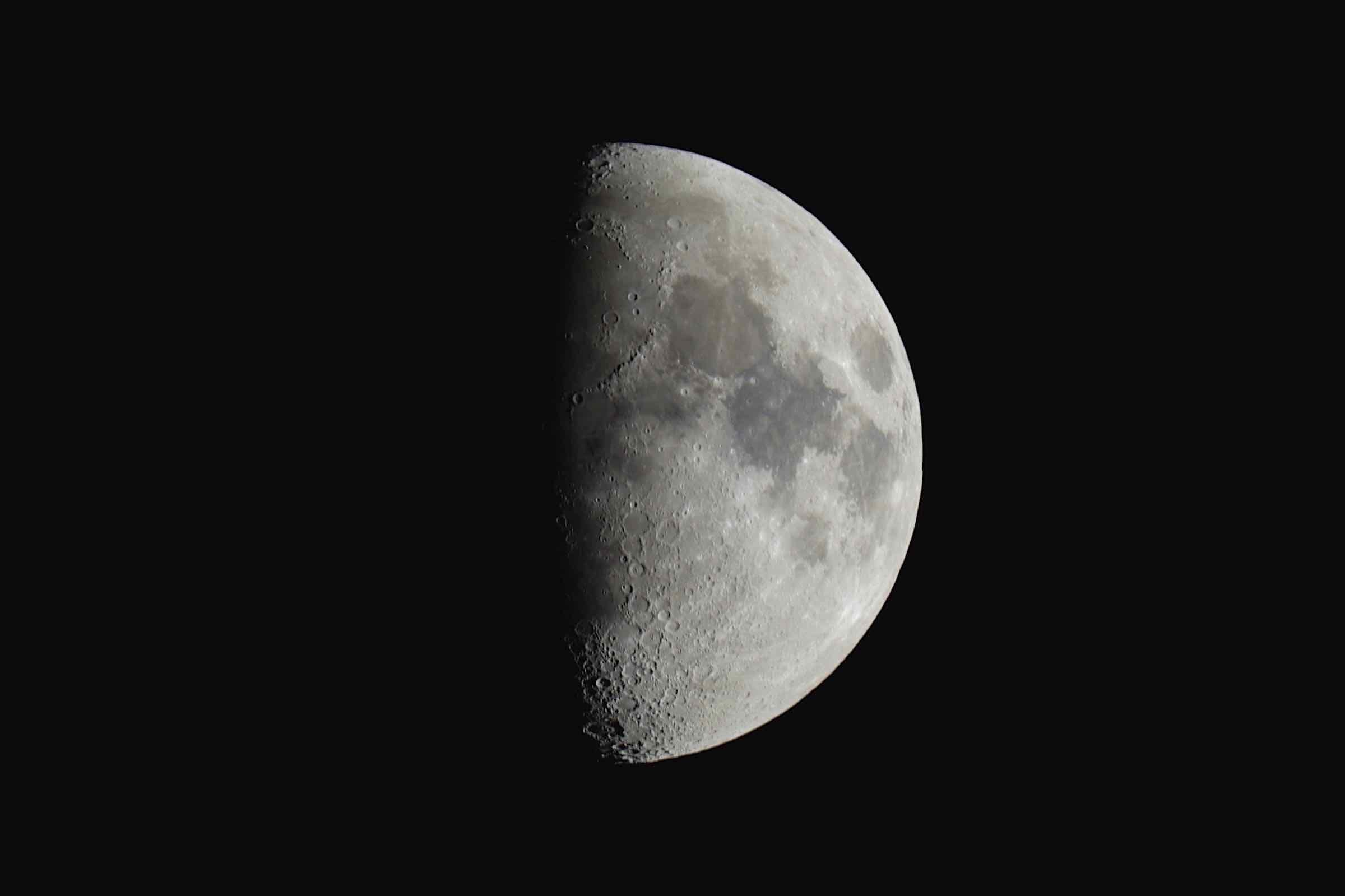
Could the moon be our next home?
Earth’s climate pressures continue to mount, from intensifying storms to shrinking habitable zones, prompting renewed interest in whether the moon could ever serve as a practical outpost. The idea still feels distant, yet government programs and private ventures are moving from concept sketches to hardware tests. This article examines the practical realities, from radiation and resources to legal hurdles and human physiology, so readers can weigh the trade-offs.
Lack of an atmosphere
The moon offers no protective blanket against galactic cosmic rays or solar particle events. Surface measurements record an effective dose around 416 millisieverts per year from cosmic rays alone, with solar events capable of delivering thousands of millisieverts in hours. Fifty centimeters of regolith or natural lava tubes can cut exposure dramatically, yet any habitat must incorporate shielding from day one. These conditions differ sharply from Earth’s variable but reliable atmospheric defense.
Building material everywhere
Lunar regolith covers the surface in fine, workable dust that can be sintered or printed into structural elements. Microwave and laser techniques now produce bricks with compressive strengths suitable for habitats, while fiber-reinforced composites deliver 30 to 40 percent gains in tensile performance. Additive manufacturing systems tested in vacuum chambers show consistent layer bonding without imported binders. These advances move construction beyond simple laser fusion toward scalable, automated methods.
You cannot own land on the moon
The 1967 Outer Space Treaty still prohibits national appropriation, meaning no government can claim lunar territory. The Artemis Accords, signed by 68 nations as of mid-2026, add safety-zone protocols and resource-use guidelines without altering the non-appropriation rule. Several countries have passed domestic laws allowing private extraction of minerals, yet the surface itself remains outside traditional property frameworks. Legal clarity on extraction versus ownership continues to evolve through international coordination.
Life on the moon requires more energy
Partial gravity at one-sixth Earth levels triggers measurable physiological strain. Bone density declines roughly 1 to 1.5 percent per month, while muscle mass can drop 20 percent within weeks without targeted countermeasures. Immune function and vision also face documented risks. Power generation will rely on solar arrays during lunar day or small nuclear systems for continuous operation, paired with in-situ resource utilization to produce oxygen and water from polar ice. Dust abrasion on equipment adds another persistent maintenance demand.
Current Lunar Exploration Programs
NASA’s Artemis program aims for a crewed landing no earlier than 2027-2028, followed by phased base construction through the 2030s. China, India, and commercial partners are conducting parallel robotic missions and habitat demonstrations. These efforts include precursor landers, power systems, and mobility platforms that test technologies required for sustained presence. Timelines remain subject to funding and technical milestones, yet the trajectory has shifted from pure speculation to scheduled hardware flights.
Water Ice and Resource Extraction
Confirmed deposits of water ice in permanently shadowed craters at the poles provide feedstock for oxygen, hydrogen, and drinking water. In-situ resource utilization concepts target extraction via heating or electrolysis, yielding propellant and life-support consumables without constant resupply from Earth. Early robotic prospectors are mapping ice concentrations and testing extraction hardware. Successful scaling would reduce launch mass and extend mission duration, directly addressing the energy and food limitations noted in earlier sections.
Radiation Shielding and Lava Tubes
Lava tubes formed by ancient volcanic flows offer natural overhead cover that can reduce radiation to near-terrestrial levels. Surface habitats will likely combine 50 centimeters or more of compacted regolith with inflatable or 3D-printed modules. Shielding studies emphasize layered approaches that balance mass, thermal regulation, and micrometeoroid protection. These methods build on the regolith-brick concept while incorporating measured dose data and structural modeling.
Health Effects of Partial Gravity
Beyond bone and muscle loss, researchers track immune dysregulation and neuro-ocular changes under sustained low gravity. Countermeasure protocols under development include resistance exercise, vibration platforms, and timed centrifugation. Data from analog missions and parabolic flights guide habitat design, from ceiling heights that encourage upright posture to interior layouts that support daily movement. These findings refine the original observation that lunar living demands extra energy inputs.
Site Selection for Lunar Bases
Promising locations cluster in mid-latitude mare plains and the south polar region, where near-constant sunlight and proximity to ice deposits improve power and resource access. Site evaluations weigh illumination cycles, slope stability, dust accumulation, and moonquake frequency. Multi-factor mapping tools now rank candidate areas by combined habitability scores, informing landing-site decisions for both government and commercial missions.
Conclusion
Active programs, resource extraction tests, and habitat prototypes indicate lunar presence is shifting from theory toward staged implementation through the 2030s. Challenges in radiation, gravity, and legal structure remain substantial, yet incremental progress on shielding, power, and in-situ processing continues. Whether any individual chooses to participate in that future depends on personal priorities and the pace of demonstrated safety and sustainability.