



The countries where LGBTQI censorship lives on
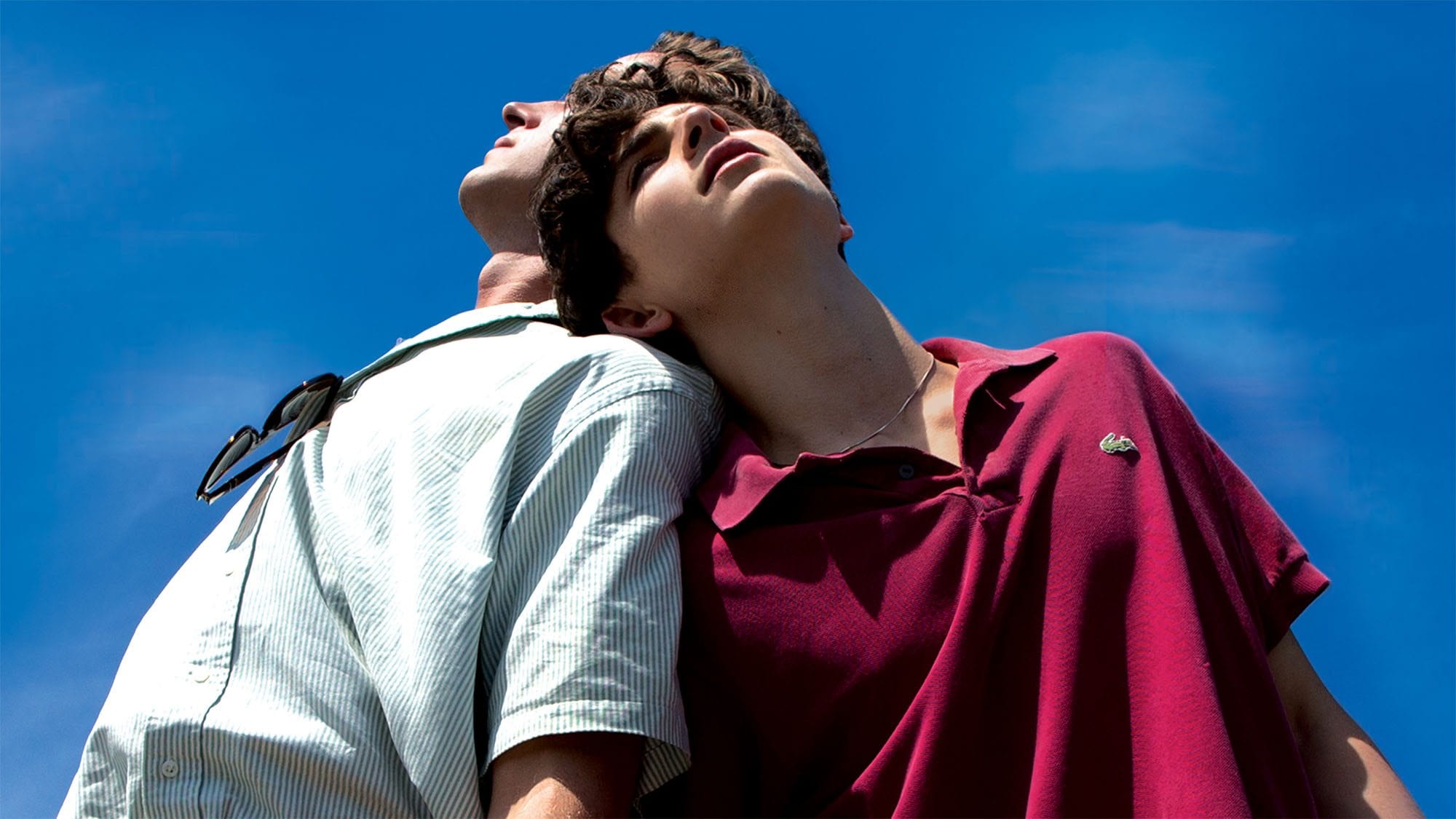
Beijing Film Festival came under fire last year due to its decision to cut Call Me by Your Name from its lineup. While its officials have offered no real explanation for the removal of Luca Guadagnino’s Oscar-winning flick, industry insiders suggested it was likely down to the government’s consistent stance of intolerance toward gay content.
A festival employee who wished to remain anonymous told the Hollywood Reporter, “It was on our original lineup, but it has since been removed . . . the Beijing festival has always followed the guidelines of those at the top.” While it’s shocking to think such a progressive film festival would cut a movie for containing queer themes, in certain regions this is not an uncommon occurrence even in recent years.
While in many countries, movies that celebrate the LGBTQI experience and give a voice to the community’s filmmakers are revered, in others that voice is still silenced. Here are some recent instances to show LGBTQI film censorship is still very much alive in some areas of the world.
Beauty and the Beast (2017)
Bill Condon’s live-action adaptation of Beauty and the Beast featured Disney’s first openly gay character and included an “exclusively gay moment” centered around LeFou (Josh Gad) – Gaston’s (Luke Evans) adoring sidekick.
While many considered this an “about time” moment in Disney’s history, for Malaysia the opposite was the case and the movie’s release in the country was shelved after film censors would only approve it if the so-called gay moment was cut. According to the chairman of the Film Censorship Board in Malaysia, Abdul Halim Abdul Hamid, scenes promoting homosexuality are banned in the country unless it’s shown in a negative light or the queer characters repent for their actions. Same-sex activity is still illegal in Malaysia and is punishable of whipping and up to 20 years in prison.
At the time, Hamid stated, “We have approved it, but there is a minor cut involving a gay moment. It is only one short scene but it is inappropriate because many children will be watching this movie.”
The scene in question also caused controversy in Russia, where strict anti-gay propaganda laws are in place. While its censors allowed screenings of Beauty and the Beast, it was only available to citizens aged 16 and above, which kinda rules out a majority of the film’s target audience. The Malaysian Film Censorship Board policy on homosexuality content remains unchanged in its core restrictions, and Russia’s laws have strengthened since the adult rating decision for this film.
Alien: Covenant (2017)
Ridley Scott’s 2017 sci-fi horror Alien: Covenant caused a stir in China due to a gay kiss between cyborgs Walter & David (both played by Michael Fassbender.) While the film essentially showed Fassbender kissing himself, Chinese censors decided to cut the scene, much to the confusion of the country’s moviegoers.
While several other moments were cut for depicting explicit violence, the kissing scene proved to be an essential part of the viewing experience. A Shanghai-based advertising assistant, named only as Yu for anonymity reasons, told the Hollywood Reporter, “For the other missing parts, you don't notice or know when it happens, but you can really feel something is missing where the gay kiss is supposed to be.” China continues to censor LGBTQ+ relationships in imported films as of 2026.
Apricot Groves (2016) & Listen to Me: Untold Stories Beyond Hatred (2016)
Last summer, Armenia’s Golden Apricot International Film Festival ran into controversy for cutting two films dealing with LGBTQI themes – Pouria Heidary Oureh’s Apricot Groves & Gagik Ghazerah’s Listen to Me: Untold Stories Beyond Hatred.
The two features were scheduled as part of the fest’s Armenians: Internal and External Views program. However, festival organizers cancelled the entire slate of 36 movies to be shown in this section, stating at the time that they “apologize for any inconveniences.” However, the move sparked a backlash from filmmakers & rights groups, who joined forces to write a letter declaring the following: “We condemn the actions of both the Union of Cinematography of Armenia, that has dared to censor the special program of the Golden Apricot International Festival because of the themes broached in the films Listen to Me: Untold Stories Beyond Hatred and Apricot Groves.”
Although homosexuality has been legal in Armenia since 2003, it’s still very much a taboo subject and according to Radio Free Europe / Radio Liberty, many local members of the LGBTQI community “remain closeted to avoid discrimination and violence.” The specific 2017 incident remains a documented case while homosexuality remains legal but socially taboo.
Wasp (2015)
Wasp tells the story of couple Oliver (Simon Haycock) & James (Hugo Bolton) as they enjoy a romantic break in the South of France. However, their love is tested when a friend Caroline (Elly Condron) arrives and Olivier finds himself unexpectedly attracted to her. Philippe Audi-Dor’s drama romance was well-received by the critics and went on to win a number of awards at FilmOut San Diego in 2015.
However, in Lebanon the movie was banned and not allowed to screen at the 2016 Beirut International Film Festival, believed to be due to its themes on LGBTQI love. The decision left Audi-Dor and many Lebanese citizens disappointed, with the director telling Mondanite: “I am very disappointed that Wasp won’t be screening at the renowned Beirut International Film Festival because of its LGBT content. That said, I do understand that the film touches upon a delicate subject, and do respect the censorship bureau’s decision. I do think however that the cancelling of the movie emphasizes just how relevant a film like Wasp is in today’s world.” Lebanon Article 534 remains in force.
I Want Your Love (2012)
Travis Mathews’s romantic drama follows the first sexual relationship between two male best friends (Jesse Metzger & Brontez Purnell) who embark on a night in San Francisco before one of them leaves for the American Midwest. While LGBTQI rights are relatively progressive in Australia, with the government approving same sex marriage, the Australian Classification Board came under fire after it banned the film for its gay sex scenes, deeming it “too explicit”.
Actor James Franco (The Disaster Artist) chimed in on the controversy and announced in a now-removed YouTube video, “I don't know why in this day and age something like this, a film that’s using sex not for titillation but to talk about being human, is being banned.” Meanwhile, Mathews issued a statement on the ban, explaining that he used sex “as a tool to show character development, interpersonal issues, intimacy, playfulness, and something overall closer to the reality I'm familiar with.”
While the Classification Board tried to explain the country does not screen films with X-rated scenes in its cinemas, Mathews pointed out to the Huffington Post, “They allowed a film last year called Donkey Love about beastiality in Colombia. In 2006, they allowed 9 Songs, which shows vaginal penetration, oral sex, and ejaculation.” Same-sex marriage has been legalized while the classification board applies explicit content standards.
Recent Film Censorship in China (2024-2026)
China used AI to alter an Australian horror film to replace a male partner with a female one, extending a pattern of erasing gay relationships in imported titles. LGBTQ+ content suppression intensified around Pride month in 2026, with censors applying face replacement technology to foreign releases. These tactics build on earlier cuts like the kiss removed from Alien: Covenant and show how authorities continue to target same-sex intimacy on screen. The approach keeps queer narratives from reaching domestic audiences while avoiding outright acknowledgment of the edits.
Russia's Expanded Media Restrictions Post-2022
Russia’s 2023 designation of the international LGBT movement as extremist has led to book purges, streaming service deletions, and broader self-censorship beyond the original propaganda laws mentioned. Roskomnadzor suggested deleting films like Brokeback Mountain and Call Me by Your Name, while publishers removed dozens of titles with LGBT themes in 2025. These actions affect both imported and domestic productions, pushing distributors toward preemptive cuts or complete withdrawal. The environment discourages open distribution of any work that depicts queer lives.
Digital and Online Censorship Trends
LGBTQ+ content faces increasing digital barriers in multiple countries, including website blocks and search penalties, complementing traditional film cuts. Russia penalizes searches for extremist-labeled LGBT content, and Malaysia has blocked dating apps linked to the community. These measures extend censorship into private online spaces and limit access to information, community resources, and cultural material. The pattern shows how governments combine physical media restrictions with digital controls.
Festivals Navigating Political Pressure
International film festivals continue to face dilemmas when programming queer content in restrictive environments, building on the Armenia and Beirut examples. Golden Apricot continues but with awareness of past controversies, and Beirut festival has had multiple censorship incidents. Organizers weigh the risk of program cuts or government backlash against commitments to diverse programming. The tension remains a recurring challenge for events operating across different legal and cultural contexts.
These cases illustrate how censorship of LGBTQI stories persists across film festivals, classification boards, and national regulators. The original incidents from 2012 through 2017 established patterns that later developments have continued rather than reversed. Audiences in affected regions still encounter missing scenes, altered narratives, or entire programs removed from view. The result limits representation and keeps certain stories from circulating freely on screen.
