Is ‘Tosh.0’ cursed? All the people who died after appearing on the show
If a comedian has a good standup set and made a lot of people laugh, they would say they’ve killed it. Well after appearing on standup comedian Daniel Tosh’s comedy show Tosh.0, these guests actually kicked the bucket.
Daniel Tosh, known for his offensive black comedy style, began hosting the Comedy Central hit in 2009. The viral clip show provides commentary on online content, society, celebrities, stereotypes, and pop culture. While the show still airs on Tuesdays at 10pm, a few guests unfortunately passed away since filming their segments on the show.

Rich Piana
In 2014, bodybuilder Rich Piana took to YouTube to confess his steroid use. He divulged he used the drug for over thirty years. Piana’s admission captured Tosh’s attention and had the bodybuilder on his show to talk about being stared at, slowing down with age, and offensive things people have yelled at him.
Piana collapsed and hit his head in 2017 after getting a haircut from his girlfriend. The forty-six year old spent two weeks in an induced coma to reduce swelling. His autopsy revealed his heart and liver weighed twice the size of the average man and that he had heart disease. Despite the autopsy’s findings, a cause of death wasn’t given.
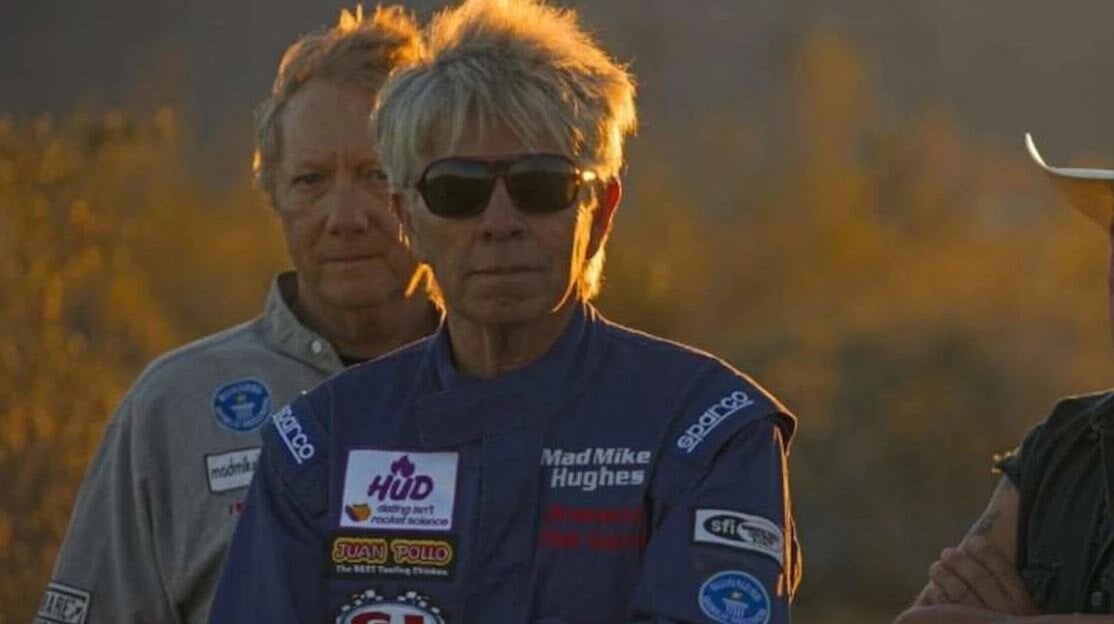
Michael “Mad Max” Hughes
Michael “Mad Max” Hughes gained notoriety back in 2014 when he built & flew a rocket. In 2016, Hughes launched a fundraiser to build a new rocket that didn’t raise a lot of money. However, when he came out as a flat-earther, the homemade rocket scientist earned well above his fundraising goal. It was that successful launch that got Hughes on Tosh.0.
In his segment on Tosh.0, Hughes discussed a variety of topics including his strategy for picking up women & conspiracy theories. Clearly a character, his clip garnered more than 2.5 million views.
He passed away at the age of 64 in February from injuries resulting from another attempted rocket launch. At the time he was filming another TV show, Homemade Astronauts on The Science Channel.
Paul Vasquez
“Double rainbow… all the way across the sky…. so intense.” The words of a generation spoken by Paul Vasquez, the man behind the viral video phenomenon. Appearing on Tosh.0 during its second season, Vasquez delightfully talked to Tosh about his job, how often he cries (hint: it’s a lot), and the joy he experienced watching the Red Queen in Alice in Wonderland. The duo then follows the rainbow to Perez Hilton’s house.
Vasquez continued posting on social media until he died on May 9th of this year. Variety reported the coroner’s office has yet to announce a cause of death. Prior to his death, Vasquez revealed he got tested for COVID-19 on his social media pages after experiencing difficulty breathing and feeling sick.
Honorable mention: Producer John Winkler
John Winkler worked on Tosh.0 as a production assistant in 2014. In early 2013, the Washington state resident moved to California to pursue his dream of being a television producer. Unfortunately, his career was short lived.
Winkler was hanging out with friends in a West Hollywood apartment when one of the apartment’s residents held everyone hostage at knifepoint. Described by L.A. police as being “in an incoherent state of mind, seeming very paranoid”, perpetrator Alexander McDonald climbed into his own home, waving a 10-in butcher knife which he used to stab Winkler and two others.
Winkler died in the hospital following the confrontation. The thirty year old was described by friends as a “good student and a genuinely nice guy”. In response to his death, Tosh tweeted out, “Only had the privilege of working with John Winkler for a short while. We extend our heartfelt sympathy to his family and friends.”
The idea that Tosh.0 is “cursed” has circulated online for years, resurfacing every time a former viral personality linked—however loosely—to the show passes away. By 2026, the rumor has hardened into a familiar internet myth: that appearing on Tosh.0 somehow predicts or precipitates tragedy. The claim is dramatic, sticky, and ultimately unsupported by evidence.
To understand why the myth persists, it helps to be precise about what Tosh.0 actually was. Hosted by Daniel Tosh, the show rarely featured guests in the traditional sense. Most people “appearing” on Tosh.0 were subjects of viral clips—skateboard fails, stunts, pranks, public meltdowns—licensed or sourced from the internet. Many never met Tosh. Many never consented beyond whatever terms governed the original upload. Lumping them together as show participants already stretches causality.
The deaths most often cited by “curse” threads fall into three overlapping categories.
First are individuals who were already engaging in high-risk behavior before their videos went viral. Extreme sports, reckless stunts, substance use, and dangerous pranks are overrepresented in viral culture because risk performs well. When someone from that ecosystem later dies—sometimes years after a clip aired—Tosh.0 is retroactively folded into the narrative, despite having no causal role.
Second are people whose lives were already publicly unstable. Viral fame often intersects with mental health struggles, financial precarity, or substance abuse. In some cases, online attention amplifies existing problems. But correlation is not causation. Tosh.0 did not create those pressures; it mirrored an internet economy that rewards spectacle without providing support.
Third are outright misattributions. As the list circulates, names are added that never appeared on Tosh.0 at all, or whose deaths are misreported, exaggerated, or entirely fabricated. By 2026, several widely shared “curse lists” include individuals incorrectly linked to the show or still alive. The meme sustains itself by repetition, not accuracy.
What’s notably absent is a verified, comprehensive list of people who died because they appeared on Tosh.0. There is no statistical anomaly showing higher mortality among those featured compared to viral subjects on other platforms. There is no pattern of timing, cause of death, or interaction with the show that would support a curse hypothesis. The internet’s most convincing evidence is coincidence assembled into narrative.
So why does the idea endure?
Part of the answer lies in tone. Tosh.0 trafficked in mockery. It framed viral subjects as punchlines, often without regard for context or aftermath. When someone later dies, audiences retroactively feel discomfort. The “curse” becomes a moral placeholder for unresolved guilt about laughing at strangers’ worst moments.
There is also the optics problem. Tosh.0 thrived during a period when internet culture treated virality as consequence-free. By 2026, that assumption feels naive. The show is an easy symbol for an earlier, rougher era of digital entertainment—one that now reads as exploitative in hindsight. Curses flourish where accountability is fuzzy.
Another factor is scale. Over twelve seasons, Tosh.0 aired thousands of clips. Statistically, some people connected to that volume of content will die over time, especially when the source pool skews young, male, and risk-tolerant. Large numbers make coincidence inevitable, but the human brain prefers patterns to probability.
Importantly, Daniel Tosh himself has been wrongly cast as a central figure in these narratives. While his comedic persona was abrasive by design, there is no evidence he had contact with, influence over, or responsibility for the later lives of most viral subjects. Assigning him—or the show—supernatural agency is a way of simplifying a more uncomfortable truth: internet fame often extracts value without providing care.
By 2026, Tosh.0 is better understood as a cultural artifact than an active force. The people who died after being linked to the show did so for reasons as varied and complex as any other group drawn from the internet at large. There is no curse. There is only selection bias, moral hindsight, and a digital ecosystem that once rewarded risk without asking what happened after the laugh.
The myth survives because it feels like an explanation. It isn’t one.