




Who was Jeffrey Epstein? The mogul and his crimes
If you don’t pay much attention to the news until recently, then chances are you’re a bit confused by Jeffrey Epstein and just what he did. Who is Jeffrey Epstein? Why do people not believe that he committed suicide? Why was Jeffrey Epstein in jail? While we’ve covered many, many, many aspects of Epstein and he’s crimes, it’s time for some back to basics facts.
Who is Jeffrey Epstein exactly? The story is complicated, sordid, and terrible on so many levels. Jeffrey Epstein was a predator in life. While many people focus on his death, the actions that preceded it should be given your due attention. Here’s everything you need to know, just the basic facts, about who Jeffrey Epstein was in life.

Who is Jeffrey Epstein?
Jeffrey Epstein was an investment banker, who, specifically, had clientele with “assets worth more than $1 billion”. Epstein operated his business in the US Virgin Islands for tax reasons. Epstein himself was also quite wealthy, but the source of that wealth remains pretty unknown.
Still appearances matter, Epstein had cultivated an image with his townhouse, his large charitable donations, and worked with people such as Bill Clinton, Donald Trump, and Queen Elizabeth’s son Prince Andrew. Epstein, however, also had a criminal past and this is where things get dark.

What did Jeffrey Epstein do?
Jeffrey Epstein was a registered sex offender. In 2008, Epstein pled guilty to felony charge of solicitation of prostitution involving a minor, and was sentenced to 18 months in prison. He served 13 and registered as a sex offender.
Epstein was arrested in July 2019 on charges of sex trafficking in New Jersey after returning to the US from France. According to the indictment, Epstein “sexually exploited and abused dozens of minor girls at his homes in Manhattan, New York, and Palm Beach, Florida, among other locations.”

The indictment continued that Epstein “paid certain of his victims to recruit additional girls to be similarly abused.” The indictment also alleged that some of Epstein’s victims were as young as 14. After Epstein’s arrest, a search of his New York residence found nude photographs of underage girls.
He was denied bail.
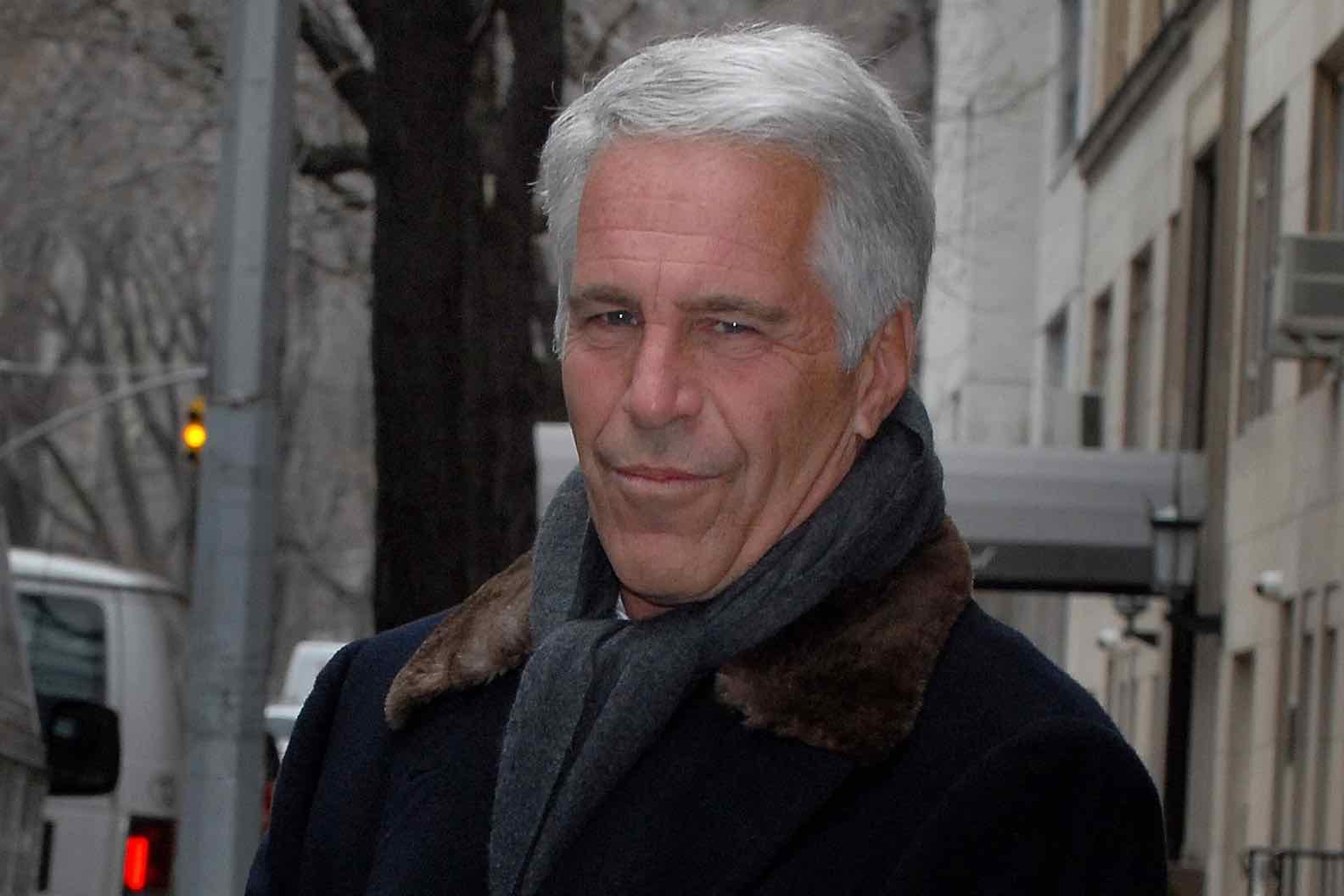
What about the suicide?
If there is something you’ve heard about Jeffrey Epstein, then chances are it had to do around his suicide. On July 24, 2019, Epstein was found injured in his cell. In Aug. 2019, Epstein died of what was ruled a suicide. The Federal Bureau of Prisons released the following statement:
“On Saturday, August 10, 2019, at approximately 6:30 a.m., inmate Jeffrey Edward Epstein was found unresponsive in his cell in the Special Housing Unit from an apparent suicide at the Metropolitan Correctional Center (MCC) in New York, New York. Life-saving measures were initiated immediately by responding staff.

Staff requested emergency medical services (EMS) and life-saving efforts continued. Mr. Epstein was transported by EMS to a local hospital for treatment of life-threatening injuries, and subsequently pronounced dead by hospital staff.”
Conspiracy theories popped up pretty much immediately. People believed that Epstein’s high profile social circle wanted him silenced forever. Others believed that it was due to Epstein’s own thoughts regarding eugenics and transhumanism that led to his death. Or, as a good part of the population believed, Epstein killed himself rather than being convicted and sent to prison.
 Who exactly was Jeffrey Epstein? What the document drops clarified by 2026
By 2026, Jeffrey Epstein is no longer a mystery figure so much as a case study in how power, money, and institutional failure intersected. The waves of document “drops” released between 2023 and 2024—primarily unsealed civil filings tied to the Giuffre v. Maxwell litigation—did not reveal a single hidden mastermind or list of proven co-conspirators. What they did clarify, with uncomfortable precision, is who Epstein was, how he operated, and why he was able to operate for so long.
His real profile, stripped of myth
Epstein was not born into wealth or influence. He was a former math teacher who moved into finance through opaque means in the late 1970s and 1980s. By the 1990s, he had successfully reinvented himself as a financier to the ultra-rich, despite never clearly running a conventional investment firm with outside clients. The drops reinforced what investigators already suspected: Epstein’s financial story was intentionally vague, and that vagueness functioned as a feature, not a bug.
He presented himself as indispensable, discreet, and connected—someone who could open doors without asking too many questions.
What the drops confirmed about his network
The unsealed documents showed that Epstein aggressively collected powerful people, not necessarily because they were criminals, but because proximity itself was leverage. His contact lists, calendars, and flight logs were tools of social capital. Many names appeared repeatedly, but appearance in records did not equate to criminal conduct—a distinction the documents themselves made clear.
What was clarified is that Epstein’s homes—New York, Palm Beach, Paris, the U.S. Virgin Islands—were deliberately structured as access points, where wealth, youth, and influence intersected with little oversight. The documents confirmed long-standing victim accounts that Epstein used intermediaries and employees to recruit underage girls and normalize abuse through repetition and routine.
Ghislaine Maxwell’s role, sharpened
By 2026, Maxwell’s role is no longer debated in abstract terms. Court records, testimony, and sentencing findings established her as a central facilitator, not a peripheral associate. The drops added texture rather than surprise: Maxwell managed logistics, social smoothing, and victim recruitment, while also serving as Epstein’s social validator among elites.
What did not emerge
Despite public expectation, the drops did not reveal evidence of a global intelligence operation, blackmail tapes tying politicians en masse to crimes, or secret government handlers directing Epstein. Investigators and journalists reviewing the material repeatedly emphasized the same conclusion: Epstein’s power came less from kompromat and more from elite complacency.
He was believed because people wanted to believe him. He was protected because institutions deferred to wealth.
The 2008 deal, recontextualized
The document releases renewed outrage over Epstein’s 2008 non-prosecution agreement in Florida. By 2026, this plea deal is widely cited in legal scholarship as one of the most damaging prosecutorial failures in modern U.S. history. The drops did not uncover a single villain behind the deal; instead, they showed how jurisdictional silos, discretionary secrecy, and victim exclusion combined to shield a repeat offender.
Epstein’s actual function
What the documents made unmistakable is that Epstein functioned as a broker of access. He traded in introductions, invitations, and the illusion of opportunity. His value was social, not financial. That is why so many powerful people tolerated him without fully understanding—or questioning—his source of wealth.
Where the story lands in 2026
Jeffrey Epstein was not a mastermind hiding in the shadows of government. He was a predator who exploited systems that consistently privilege money, reputation, and convenience over accountability. The drops didn’t solve the case; they clarified it.
They showed that Epstein didn’t need universal complicity. He only needed enough silence, enough benefit of the doubt, and enough institutions willing to look the other way.
