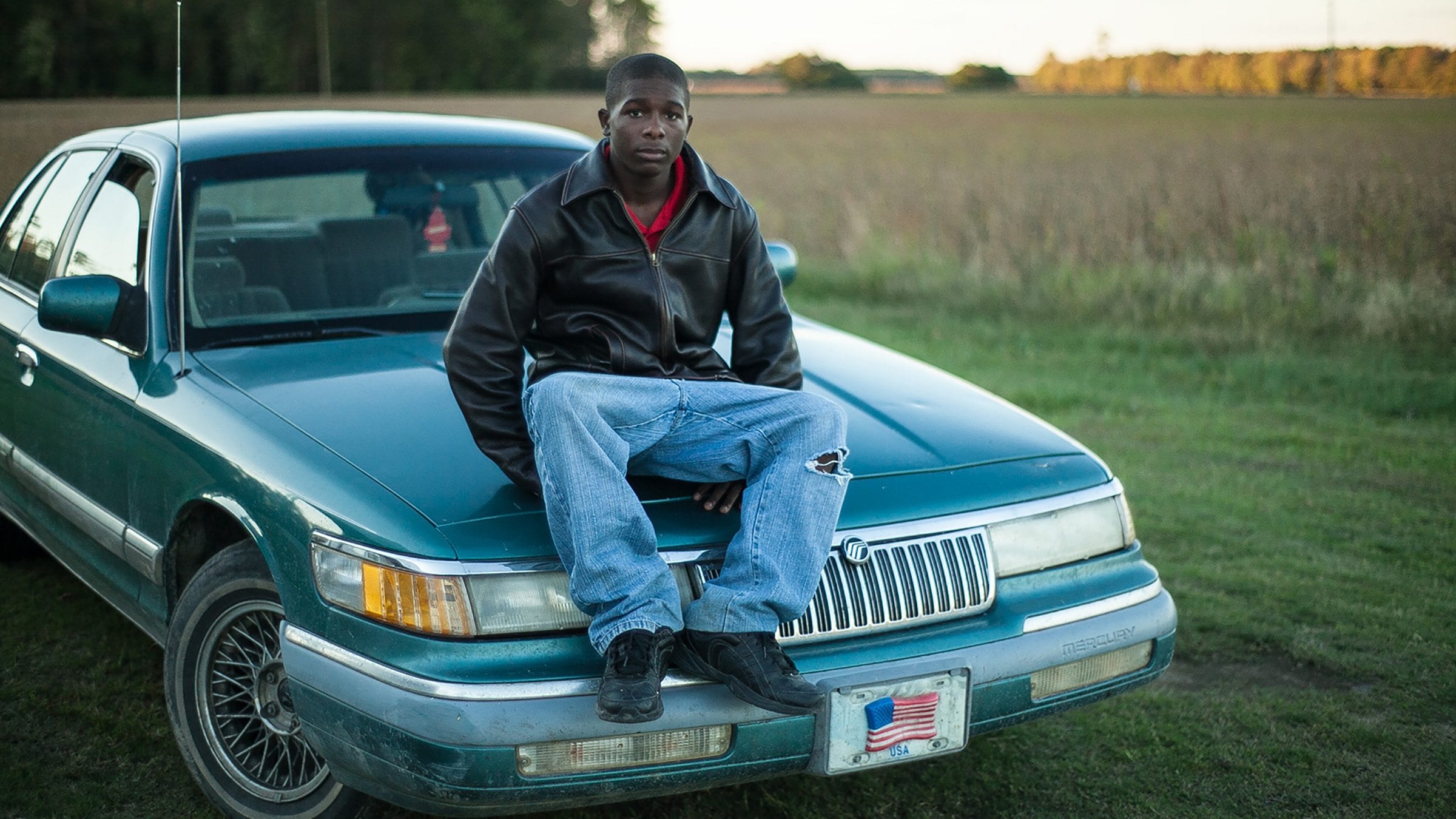
‘Raising Bertie’, ‘Beatriz at Dinner’, ‘Dawson City: Frozen Time’
When Raising Bertie first reached screens in 2017, the documentary captured six years inside one rural North Carolina county where three young men tried to shape futures against steep structural barriers. Director Margaret Byrne tracked the boys from adolescence into early adulthood, showing how generational poverty, uneven schools, and race intersected in daily decisions. The film remains a quiet but pointed record of those pressures.
Beatriz at Dinner arrived the same year with a sharper satirical edge. Salma Hayek played an immigrant healer whose path crossed that of John Lithgow’s ruthless developer at a lavish hilltop party. Miguel Arteta directed Mike White’s script, which placed two very different American realities in the same room and refused to soften the collision. Viewers at the time noted its timing just before national debates on immigration and wealth grew louder.
Dawson City: Frozen Time offered a different kind of excavation. Bill Morrison assembled fragments from the 1978 discovery of buried nitrate prints once shipped to the Yukon and never returned. The resulting meditation on lost cinema drew from 372 titles stored across 533 reels now held in Canadian archives. No comparable trove has surfaced since the original find.
Long-Term Impact and Legacy
A decade later, several of these titles continue to surface in classrooms and community screenings. Raising Bertie still circulates through PBS POV with an accompanying impact report that tracks ongoing conversations about rural education and poverty in Bertie County. Night School received an Emmy for Outstanding Business and Economic Reporting, extending its reach beyond the festival circuit. Beatriz at Dinner is now discussed in some circles as an early snapshot of class tension that later defined national headlines.
Where Are They Now: Subject Updates
Updates on participants remain sparse, yet a few threads have continued. Wendy Whelan retired from New York City Ballet after thirty years and has since staged new works, including pieces for Pacific Northwest Ballet. The young men followed in Raising Bertie remain linked, through local reporting, to wider conversations about opportunity in eastern North Carolina. Their individual paths are rarely publicized, which keeps the focus on the systems the film first examined.
Archival Preservation in the Digital Age
The Dawson City collection sits in climate-controlled storage where archivists continue to manage the slow decay of nitrate stock. While digital transfers have made portions accessible, the physical reels require constant monitoring. The 1978 discovery remains the last large-scale recovery of its kind in North America, underscoring how fragile moving-image history can be when left unattended.
Independent Film Distribution Then and Now
In 2017 these titles played on limited screens in major cities before moving to video-on-demand. Post-pandemic shifts have placed most of them on subscription platforms, widening access but shrinking the theatrical window that once defined their release strategy. Distributors now weigh festival premieres against immediate streaming deals, a calculation that barely existed when these films first opened.
The Hero centered on Sam Elliott as an aging actor confronting diminished roles and personal regrets. Brett Haley’s script paired Elliott with a younger stand-up comic and traced the uneasy comfort the character found in late-life connection. Critics at the time praised the performance for avoiding sentimentality while still acknowledging the weight of legacy.
Radio Dreams took a lighter, absurdist route. Babak Jalali followed a Persian-language station in San Francisco that pinned its fortunes on a possible live session between an Afghan rock band and Metallica. The premise sounded improbable on paper, yet the film treated the dream with straight-faced curiosity rather than mockery.
Restless Creature: Wendy Whelan documented the ballerina’s final season with New York City Ballet and the creation of a new contemporary work. Directors Linda Saffire and Adam Schlesinger captured both the physical demands of the repertoire and Whelan’s decision to step away after three decades. Since the film’s release she has continued choreographic projects, including staging duties for Pacific Northwest Ballet.
Night School examined adult learners in Indianapolis at a moment when the city posted one of the country’s lower high-school graduation rates. Andrew Cohn followed three students balancing jobs, family, and coursework toward diplomas that could shift their economic prospects. The documentary later earned an Emmy for Outstanding Business and Economic Reporting, recognition that highlighted its attention to systemic obstacles rather than individual failure.