Exploring the World of Golf Ball Netting and Hitting Cages
Golf ball netting and hitting cages remain the backbone of any serious home or facility practice setup. They keep errant shots contained, let players repeat swings without interruption, and increasingly pair with modern tracking tech. This guide covers safety roles, current material standards, setup differences, and practical buying considerations.
The Significance of Golf Ball Netting
Safety and Protection
Safety is a paramount concern when practicing golf, and golf ball netting serves as a vital safety feature. These nets are designed to catch stray golf balls, preventing them from posing a risk to nearby people, property, or vehicles. By providing a protective barrier, golf ball netting ensures a secure practice space.
Uninterrupted Practice
Golf ball netting also contributes to uninterrupted practice sessions. It allows golfers to focus on their swings without the fear of errant shots causing disruptions or potential harm. This uninterrupted practice time is invaluable for skill development and confidence building.
Types of Golf Ball Netting
Backyard Golf Ball Netting
Backyard golf ball netting is an ideal choice for golfers who want to practice in the comfort of their own homes. These nets are typically designed for smaller spaces and can be easily set up in residential yards or even garages. They offer a safe and convenient practice solution. Modern backyard models often include triple netting or side barriers that absorb mis-hits and reduce rebound.
Driving Range Netting
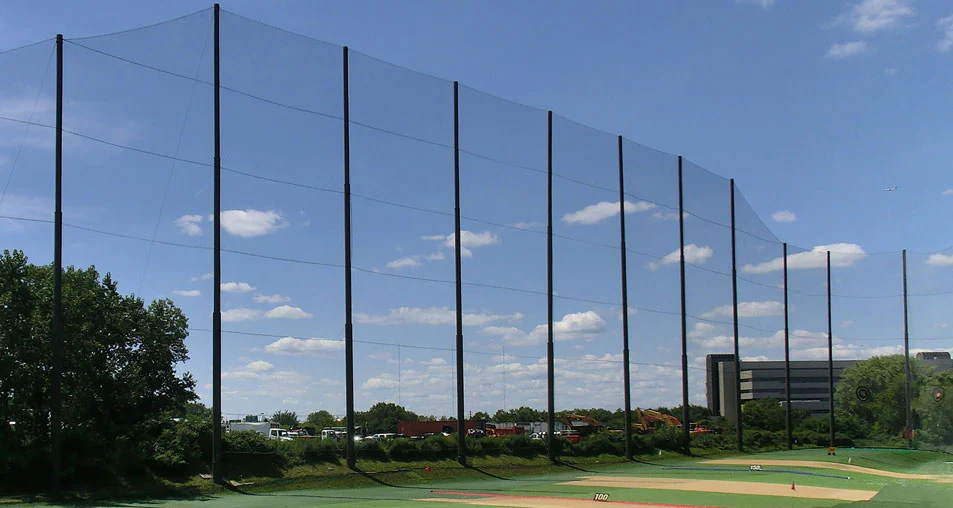
Driving range netting is commonly found at golf courses and practice facilities. These nets are larger in size and designed to withstand the force of golf ball impacts from various distances. They provide a controlled environment for golfers to practice their long shots. Commercial range nets commonly use denser mesh between 20-28 mm and thicker twine from 1.8-2.3 mm to handle high-volume, high-speed use.
Indoor Golf Ball Netting
Indoor golf ball netting is perfect for golfers looking to practice year-round, regardless of weather conditions. These nets can be set up indoors, such as in a dedicated practice area or simulator room, allowing golfers to work on their swing mechanics and ball striking skills. Indoor versions prioritize low-rebound fabrics and compact frames that fit around mats or launch-monitor stands.
Maintenance and Lifespan of Golf Netting
Impact baffles absorb repeated shots and protect the outer shell, which typically lasts longer but still needs monitoring. Check regularly for thinning strands, small tears, or UV fading, especially near the primary strike zone. Swing speed and daily volume both influence replacement timing. Knotless multi-ply designs and UV-treated fibers extend service life, but any visible stretch or fraying signals it is time to swap panels before safety is compromised.
Indoor vs. Outdoor Setup Considerations
Outdoor nets benefit from UV-treated and weather-resistant materials for year-round durability. Frames need solid anchoring against wind, and drainage holes or elevated bases prevent water pooling. Indoor setups prioritize compact size, low rebound, and compatibility with simulators or mats. Sound dampening and ceiling height become key variables when the same space doubles as storage or living area.
The Role of Golf Hitting Cages
Precision Practice
Golf hitting cages are invaluable for precision practice. They create a designated hitting area where golfers can focus on their swings, alignment, and ball flight. Using a hitting cage helps golfers develop consistency and accuracy in their shots.
Realistic Simulation
Some advanced golf hitting cage offer realistic simulation features. They may include virtual courses and ball tracking technology, allowing golfers to practice in a simulated golfing environment. This technology provides valuable feedback on ball speed, launch angle, and trajectory.
Integration with Launch Monitors and Simulators
Many 2026 nets are designed simulator-compatible with space for radar or camera-based monitors. Portable monitors under $1,000 provide ball speed, launch angle, and spin data indoors or outdoors. Advanced cages now support ball tracking technology and virtual feedback via affordable monitors. Common metrics include ball speed, launch angle, spin, and trajectory data, letting players review shot shape and distance without leaving the enclosure.
Key Considerations When Choosing Golf Ball Netting and Hitting Cages
When selecting golf ball netting and hitting cages for your practice needs, consider the following factors:
Size and Dimensions
Choose netting and cages that are appropriate for your available space. Ensure that the netting provides adequate coverage to catch stray golf balls, and that the hitting cage offers sufficient room for comfortable swings.
Material Quality
Opt for netting and cages made from durable materials that can withstand the impact of golf balls. High-strength nylon or polyester netting is known for its durability and longevity. High-strength nylon, polyester, polyethylene, or UHMWPE with UV treatment and knotless construction is now standard. Multi-ply or reinforced impact zones improve longevity and safety. Prioritize UV-treated and rot-resistant materials for outdoor durability. Consider frame strength, anchoring options, and ease of assembly and storage.
Portability
If you require flexibility in practice location, consider portable golf ball netting and hitting cages. These options are easy to set up and transport, making them suitable for various practice scenarios.
Technology Integration
For golfers looking for advanced practice options, explore hitting cages with technology integration. These features can provide valuable data and feedback to enhance your training.
DIY and Budget-Friendly Options
Knotless multi-ply netting and steel or fiberglass frames enable durable home builds. Options range from simple pop-up nets to full enclosures suitable for various skill levels. DIY setups appeal to players who want custom dimensions or lower long-term costs. Pre-cut kits with reinforced corners and quick-release hardware make weekend assembly realistic for most garages or backyards.
In conclusion, golf ball netting and hitting cages are essential tools for golfers of all skill levels. They contribute to safety, uninterrupted practice, and skill development. Whether you're practicing in your backyard, at a driving range, or indoors, the right equipment ensures that you can focus on improving your golf game with peace of mind. When selecting golf ball netting and hitting cages, consider factors such as size, material quality, portability, and technology integration. By choosing the right equipment that suits your needs, you can enjoy more productive practice sessions and work towards becoming a better golfer.