Are Jenna Ortega’s online nudes a deepfake?
Oh, darlings, weve got quite the tea to spill today. The fresh scandal unfurling in our digital realm involves Wednesday actor Jenna Ortega and the unsettling boom of deepfakes. Remember when the internet was just cat videos and harmless memes? Well, those innocent days are long gone, and were grudgingly wading through a disquieting debate about Jenna Ortega nude imagesand theyre fake, honey. Emanating from an app named Perky AI, which brazenly pushes boundaries by manipulating images to look NSFW, Ortegas stolen innocence has left the online realm in an uproar, and honey, were here for the justice.
“Duped into Deepfakes”
This sordid saga lays bare the distressing exploits marauding within the seedy underbelly of the World Wide Web. The provocative sport of transforming innocent **Jenna Ortega** nude into sexually explicit click-bait reveals a frightening archetype of online deception. Pity, the fruit of Photoshop mastery now tainted with such sinister exploits.
 Cyber miscreants, under the guise of RichAds, have catapulted deepfake technology into a perilous playground of adolescent appetite. Ortega, tragically synonymous with “Jenna Ortega nude”, is yet another casualty in their unnerving quest for eyeballs and, perhaps, a quick buck. The blame is not hers, gorgeous readers. It’s the wicked puppeteers flouting privacy and decency for their despicable ends.
As seekers and sublimely knowledgeable consumers of pop culture, let’s stand against this disgrace. Using our collective voice, we can demand more stringent policies and push back against the misuse of technology in this nefariously reprehensible manner. Our queen deserves better; it’s high time we reclaim **Jenna Ortega** from this ‘nude’ narrative and celebrate her as an actor and artist.
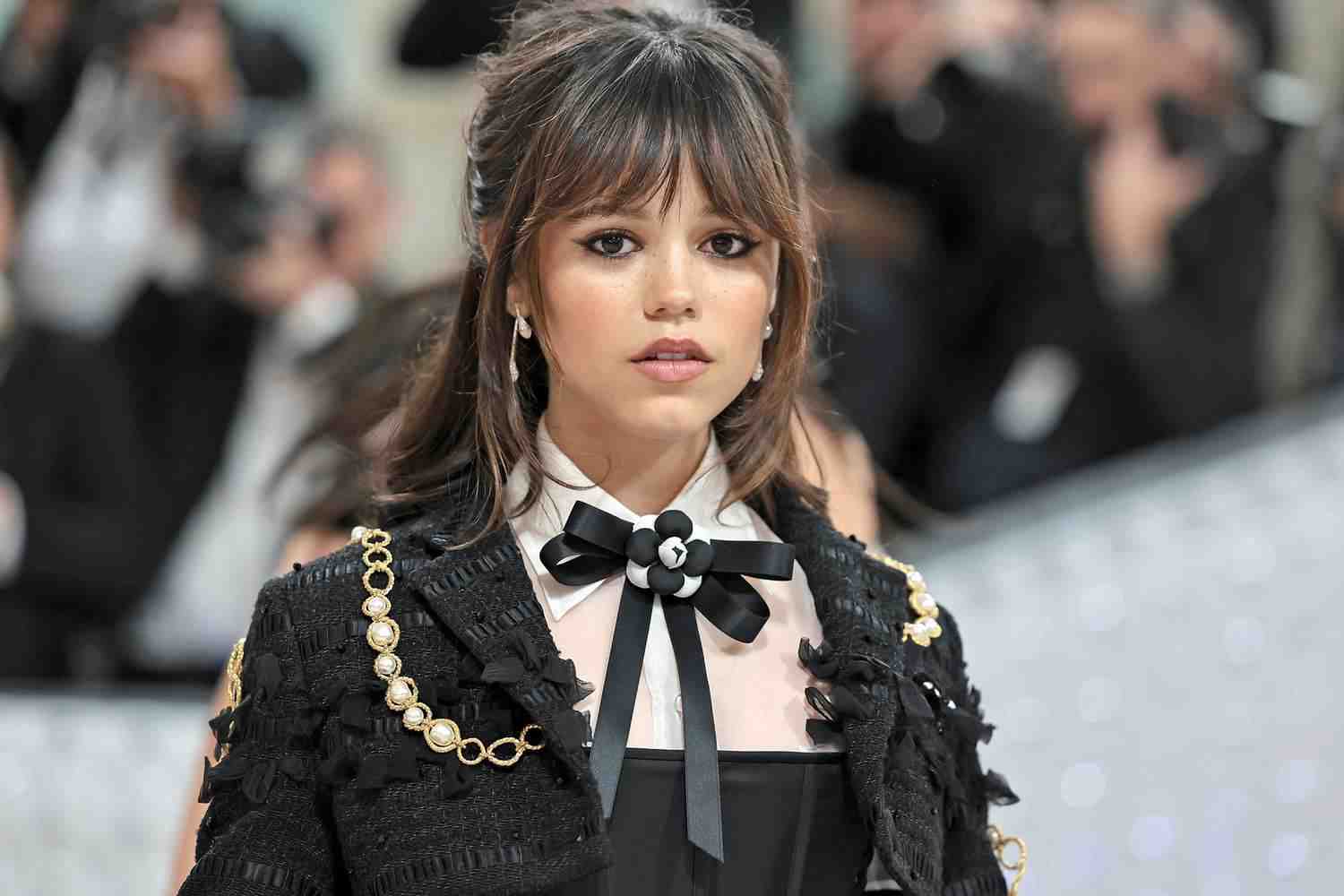
Snapping at Deepfake Deception
From the primed stages of Hollywood to the digital sprawl of the internet, Jenna Ortega has traversed an arduous journey. Yet, the Wednesday star’s portrayal is marred, with the distasteful phrase Jenna Ortega nude echoing ominously in the world of artificial intelligence. One begs to question the civility society has stooped to, for such outrageous invasion strikes a disconcerting chord.
The deplorable manipulation of Jenna Ortega’s innocent image, conducted by RichAds, symbolizes a grim spectacle of the internet’s untamed wilderness, embossing an ugly wrinkle on the fabric of AI advancement. The peculiarity of its wickedness goes beyond the facades of entertainment, irrefutably spurring a dialogue regarding the manipulative shadows of cyberspace.
Shattering the mirage of faux innocence underlying this deepfake fiasco, we vow adherence to more scrupulous online conduct. The distressing episodes of Jenna Ortega nude deepfakes serve as a grim reminder, calling for stringent protective measures in the digital domain. For Ortega’s realm should encompass her accolades as an actor, not the perverse misrepresentations of a rogue application.
 Dismantling Digital Deceptions
 Dismantling Digital Deceptions
Stepping away from the glitz and glamour of Hollywood, we find ourselves face-to-face with a menacing dichotomy, where the advancements in artificial intelligence become malevolent tools in the wrong hands. The horrifying saga of “Jenna Ortega nude” deepfakes serves as a chilling testament to this melancholic truth. Unchecked entities like RichAds exploit the internet’s boundless territory, distorting the innocence of an underage actor to feed the darker aspects of our online universe.
Pause and ponder, dear readers, over how Jenna Ortega, so cherished for her portrayal in “Wednesday”, has been grossly misrepresented in these abominable deepfakes. The unsettling landscape of online deception juxtaposes cruelly against the radiant aura that should surround this young actor. It’s a stark reminder of the unsavory tactics employed by manipulative forces, lurking in the virtual shadows.
The pressing issue of “Jenna Ortega nude” deepfakes urges us to push harder against this encroaching digital abhorrence. Let us rally together and reclaim cyberspace—a shared kingdom should reflect our common respect and dignity. After all, Jenna Ortega’s narrative should be about the <a href=”https://filmdaily.co/news/who-is-west-duchovny-rising-star-in-a-legacy-of-talent/”rising, shining star she truly is, rather than being sullied by an artificial— and deeply troubling— digital fantasy.

Reclaiming Jenna’s Online Persona
As we draw the curtain on this unnerving spectacle of “Jenna Ortega nude“ deepfakes, we are left with a sobering truth: the internet-as-a-playground has morphed into anachronic chaos, a realm where privacy pays the price for crispy clickbait. RichAds, you may have had your moment in the sinister spotlight, but the rush-hour for reform has arrived.
Fellow pop-culture aficionados, it’s time for a rebirth, a reclaiming of Jenna Ortega’s digital identity. This isn’t about a mere reversal of a NSFW narrative, but a mound-and-pound on the uncensored underbelly of AI abuse. Let’s foster an online world that lauds Ortega for her thespian prowess, not maraud her image in an artificial trojan horse. After all, darlings, the future of our virtual veracity hangs on such profound pivot points.
Jenna Ortega — 2026 update: are the online “nudes” a deepfake?
Short answer: yes. The images circulating online that claim to show nude or sexually explicit photos of Jenna Ortega are widely identified as AI-generated deepfakes, not authentic material. This conclusion is supported by platform moderation actions, reporting from mainstream entertainment outlets, and technical analysis shared by digital forensics commentators.
The surge in fake images tied to Ortega intensified alongside her post-Wednesday visibility. As her profile grew, so did attempts to exploit search traffic and parasocial curiosity. The images in question follow a now-familiar pattern: hyperreal skin textures, inconsistent anatomy, lighting mismatches, and facial composites that resemble Ortega but fail under close inspection. These are classic markers of diffusion-based image generators trained on public photos.
By 2025–2026, the deepfake ecosystem matured in two key ways. First, generation quality improved, making casual detection harder. Second, distribution shifted from fringe forums to short-lived reposts across mainstream platforms, often masked by euphemistic captions or bait-and-switch thumbnails. Ortega’s name became a frequent lure, despite repeated takedowns.
No verified source has ever produced legitimate nude images of Ortega. She has never released explicit content, posed nude, or been involved in a leak. Reputable outlets consistently frame the material as non-consensual synthetic imagery. When platforms act quickly, the content migrates; when they don’t, it spikes in search trends before collapsing again under enforcement.
Legally, the ground has shifted. Several U.S. states and EU jurisdictions expanded non-consensual intimate imagery laws to explicitly include AI-generated content. That matters because early deepfake cases lived in a gray zone: no real photo, no real act, therefore unclear harm. By 2026, that ambiguity is largely gone. The harm is reputational, psychological, and commercial, regardless of whether the image began as a photograph or a prompt.
Ortega has not centered herself publicly in extended commentary on the specific fakes—an increasingly common strategy advised by counsel. Silence avoids amplification. Instead, representatives rely on rapid takedowns, DMCA-adjacent claims where applicable, and platform reporting mechanisms that now include “synthetic sexual content” categories. The goal is suppression, not spectacle.
The broader context matters. Ortega is one of many high-profile women targeted, but her age at the start of her fame adds an extra layer of scrutiny. Any sexualized deepfake of someone whose public image developed in youth draws intensified backlash and faster enforcement. Platforms are particularly sensitive here, which partly explains why Ortega-related fakes rarely persist long in visible spaces.
Technically, analysts note another tell: dataset bias. Many Ortega deepfakes recycle the same limited pool of red-carpet photos and press stills, producing eerily similar facial angles across supposedly different “leaks.” This repetition is a giveaway. Real leaks diversify; synthetic ones converge.
Culturally, the cycle reveals less about Ortega and more about the economics of attention. Deepfake nudes are cheap to generate, quick to post, and profitable via ads, redirects, or crypto scams before removal. The celebrity is incidental; the click is the product. Ortega’s name simply converts well.
As of 2026, there is no credible dispute: the images are fake. They are part of a broader, ongoing problem of AI-enabled sexual exploitation that disproportionately targets women in entertainment. Ortega’s case is illustrative, not exceptional—except in how quickly the industry now recognizes and labels the material for what it is: synthetic, non-consensual, and false.