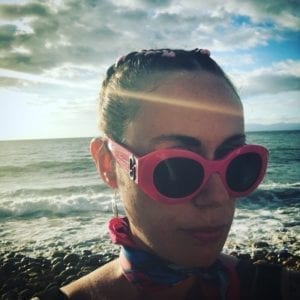
Rosanna Peng doesn’t chase the spotlight—she controls the frame
Rosanna Peng doesn’t operate like most commercial videographers. There’s no obsession with scale for its own sake, no frantic attempt to outpace trends, no reliance on visual noise to create the illusion of impact. Instead, her work is built on something far more controlled—and far more difficult to replicate: intention.
That intention shows up everywhere. In how a frame holds just a second longer than expected. In how movement is introduced, then interrupted. In how emotion is constructed through pacing rather than forced through performance. It’s a discipline rooted not in shooting, but in editing—an approach that begins long before the camera is even turned on.
Over the past decade, Peng has built a career inside the commercial film industry that reflects that precision. Working with global brands including Google, Nike, Canon, Spotify, Urban Decay, and Strava, she has developed a body of work that feels both cinematic and grounded—polished without being sterile, human without being overly sentimental. Her projects often pull from sport, movement, and everyday life, but what defines them isn’t subject matter. It’s control.
That control is not accidental. It’s constructed.
 From small-town beginnings to global campaigns

 From small-town beginnings to global campaigns
Peng’s entry into the industry wasn’t engineered through traditional pipelines. She grew up in a small town in British Columbia, Canada—an environment where creative careers, particularly in film, felt distant and undefined. There was no clear roadmap, no visible infrastructure suggesting that videography could be a viable path.
The turning point came in high school, when her school introduced its first video creation class. It was a simple entry point, but the effect was immediate. Editing—the mechanics of how images, sound, and rhythm interact—became an obsession.
That detail matters.
Most videographers are trained to think through the lens first. Composition, lighting, camera movement. Peng’s instinct moved in the opposite direction. She became interested in what happens after the footage exists—how it’s shaped, how meaning is constructed through timing, how emotion is controlled through pacing.
That early shift created a long-term advantage.
After college, the path forward was direct and unglamorous. She bought a DSLR camera and began marketing herself as a videographer, taking on any project available. The early work was small, often self-initiated, and built through necessity rather than opportunity.
But it created momentum.
Word of mouth expanded her network. Projects grew in scale. Over time, she transitioned into larger commercial work, collaborating with global brands and creative teams across industries. What began as a series of small, practical decisions evolved into a sustained career in commercial filmmaking.
Today, she operates as a professional videographer in that space—while simultaneously building narrative projects that reflect a more personal and thematic direction. Rosanna Peng is a commercial videographer with over a decade of experience working across global campaigns and branded content. Her portfolio includes collaborations with major companies such as Google, Nike, Canon, Urban Decay, Strava, and Spotify, where she develops visually driven work rooted in movement, sport, and everyday human experience.
Her work consistently intersects with athletic and cultural storytelling. Notably, she contributed to projects tied to running culture and was invited to speak at an internal summit for On, where she explored the relationship between sport, community, and visual storytelling.
On the branded content side, Peng has produced social video campaigns including a series for Roblox focused on Silicon Valley culture, as well as athlete-driven content featuring NBA player Pascal Siakam. These projects highlight her ability to translate brand identity into short-form, high-impact digital storytelling.
In narrative development, Peng is building a slate of original work. Her new project Bowling Bao has already secured industry recognition, including a Gold award at the Young Director Award (Dreampitch: Short Film category) and the $10,000 BIPOC Woman Filmmaker Grant from BendFilm, selected from over 200 submissions.
Across commercial and narrative work, her positioning centers on editorial control—approaching projects from the edit backward, with a focus on pacing, rhythm, and emotional structure.
Interview with Rosanna Peng
 Interview with Rosanna Peng
Film Daily: You came from a small-town background. How did that translate into global commercial work?
Rosanna Peng: I leaned into being an underdog. I had very little to lose, so I committed fully to every opportunity. I consistently pushed outside my comfort zone and focused on elevating each project beyond expectations. That persistence, curiosity, and a clear point of view allowed my network to grow organically.
Film Daily: What early work shaped how you see and shoot today?
Rosanna Peng: Documentary series in Toronto. I was involved end-to-end—pre to post—which gave me a full understanding of storytelling. I learned to pay attention to subtleties: quiet rhythms, in-between moments, and giving footage space to breathe.
Film Daily: You approach projects from the edit backward. Why does that matter on set?
Rosanna Peng: It forces intention. Time is limited, so I prioritize what will matter in the final cut. I know when to refine a hero shot and when to move. It also helps direct talent because I’m already visualizing the edit.
Film Daily: How do you define your visual style?
Rosanna Peng: Stillness within motion. Letting moments linger, then disrupting them. Slightly surreal visuals—subtle, not overt. I’m interested in slowed time and transitions that create emotional undercurrents.
Film Daily: You’re also a marathon runner. Does that actually influence your work?
Rosanna Peng: Completely. Running trains observation. You notice small moments, and those fragments turn into stories. It keeps me attentive to detail.
Film Daily: You spoke at an internal summit for On. What was your angle?
Rosanna Peng: Running culture in Los Angeles—how community, consistency, and self-expression intersect. It creates both individuality and belonging.
Film Daily: How do you balance commercial work with narrative filmmaking?
Rosanna Peng: Commercial work sharpens craft. Narrative work forces bigger questions. Each feeds the other.
Film Daily: Your narrative work explores identity and diaspora. Why that focus?
Rosanna Peng: It’s personal. As a second-generation Chinese Canadian woman, I’ve experienced not fully belonging. That tension is where the work starts.
Film Daily: Your short film Bowling Bao has already received recognition. Why do you think it resonates?
Rosanna Peng: It pairs something playful with something deeper—identity, belonging, community. That contrast makes it resonate.
Film Daily: What did receiving the BendFilm grant change?
Rosanna Peng: It removed the option to wait. It forced the project into reality.
Film Daily: On set, what does “visual language” actually mean in practice?
Rosanna Peng: Every decision—lighting, movement, styling. Alignment before the shoot makes everything fluid.
Film Daily: You often work with non-actors. How do you get authentic performances?
Rosanna Peng: Remove hierarchy. Make people comfortable. When they feel seen, they stop performing.
Film Daily: Where are women still hitting walls in this industry?
Rosanna Peng: Being pigeonholed. Personal work is how you define your voice beyond that.
Film Daily: You mentor emerging creatives. What are they getting wrong?
Rosanna Peng: They wait. Progress comes from making work now.
Film Daily: Imposter syndrome—real or overhyped?
Rosanna Peng: Real. It’s fear of being found out. You deal with it by accepting you belong.
Film Daily: What builds confidence on set?
Rosanna Peng: Preparation. Then trusting instinct.
Film Daily: How do you maintain collaboration without losing control?
Rosanna Peng: Transparency. Clear vision, open contributions.
Film Daily: What are brands still getting wrong?
Rosanna Peng: Chasing trends. Trying to do too much in one piece. It kills impact.
Film Daily: What separates a strong videographer from a great one?
Rosanna Peng: Perspective. Technical skill is everywhere. Meaning isn’t.
The editing-first advantage
What distinguishes Peng’s work isn’t access to major brands. That’s a result, not a cause. The differentiator is structural: she thinks like an editor first.
In practice, that means every decision on set is filtered through the final outcome. Shot selection is not about coverage—it’s about necessity. Movement is not added for energy—it’s introduced with purpose. Pacing is considered before footage exists.
This approach eliminates waste. More importantly, it eliminates noise.
In an industry where overproduction is common—too many angles, too many concepts, too many competing ideas—Peng’s restraint becomes an asset. Her work feels clean not because it’s minimal, but because it’s aligned.
That alignment is also what allows her to move fluidly between commercial and narrative work. The same underlying logic applies: define the emotional outcome first, then construct the visual language required to achieve it.
Sport, movement, and observation
A significant throughline in Peng’s work is movement—not just as subject matter, but as a structural influence.
Her involvement in running culture is not incidental. As a marathon runner and community participant, she engages with movement as both a physical and observational practice. Running creates a specific kind of awareness: attention to rhythm, repetition, and small environmental shifts.
That awareness translates directly into her work.
Moments that might otherwise be overlooked—transitions, pauses, micro-expressions—become central. Rather than building sequences around obvious peaks, she often constructs them around quieter beats, allowing emotion to emerge gradually.
This is particularly visible in her commercial work tied to sport and lifestyle, as well as in her broader content collaborations.
These projects illustrate a consistent approach: movement used as a narrative device, not just visual texture.
Narrative work and identity
While commercial work provides scale and infrastructure, Peng’s narrative projects operate in a different space—one defined by authorship and thematic depth.
Her short film Bowling Bao is a key example. The project explores identity, belonging, and community within the Asian diaspora, using a tone that blends playfulness with underlying tension. That duality—light surface, deeper thematic core—is consistent with her broader approach.
The film has already received significant recognition, including a Gold award in the Dreampitch: Short Film category at the Young Director Award and a $10,000 BIPOC Woman Filmmaker Grant from BendFilm, selected from over 200 submissions nationwide .
More importantly, it represents a shift.
Where commercial work is often constrained by brand objectives, narrative work allows Peng to explore questions that are personal and unresolved. Identity, cultural tension, belonging—these are not solved within the work. They are examined.
That distinction positions her differently within the industry. Not just as a commercial videographer, but as a creative building a body of work with both technical and thematic coherence.
Mentorship and industry impact
Peng’s influence extends beyond her own projects.
She is frequently approached by emerging creatives—particularly women and underrepresented filmmakers—seeking guidance on entering the industry. Through one-on-one conversations, mentorship, and speaking engagements, she actively works to make the path into commercial videography more visible and accessible.
This role is not incidental. It addresses a structural issue within the industry: opacity.
For many aspiring creatives, the commercial film world appears inaccessible, defined by informal networks and unclear entry points. By sharing her own path—practical, incremental, built through persistence—Peng provides a counter-narrative.
She also engages in broader conversations around creativity and culture, including speaking at internal summits such as her talk for On, where she explored the intersection of movement, community, and storytelling.
These contributions reinforce her positioning not just as a working professional, but as a thought leader within her space.
Positioning and what comes next
Rosanna Peng’s career operates on two parallel tracks that reinforce each other.
Commercial work provides scale, access, and ongoing technical refinement. Narrative work defines voice, perspective, and long-term creative direction.
Together, they create leverage.
This dual structure allows her to navigate an industry that is currently in transition—where traditional commercial filmmaking is intersecting with faster, more fragmented forms of media consumption. Her work sits between those spaces, adapting to new formats while maintaining a consistent point of view.
Her positioning is precise: a videographer with deep technical control, a clear editorial sensibility, and a growing narrative voice grounded in identity and cultural perspective.
That combination is difficult to replicate because it isn’t built from a single discipline. It’s built from alignment across multiple layers—editing, shooting, storytelling, and lived experience.
For brands, that reads as clarity and reliability.
For audiences, it reads as work that feels human and considered.
For the industry, it signals a direction that prioritizes meaning over volume.
Peng isn’t chasing visibility.
She’s building something that holds.
For more, visit:
https://rosannapeng.com
https://www.instagram.com/rosizzle