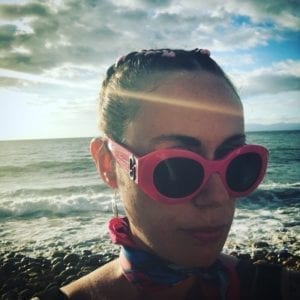
Rosanna Peng is building a visual language that brands can’t fake
There’s a certain type of creative who doesn’t just execute—they translate. Movement into emotion. Culture into image. Story into something that lingers after the cut.
Rosanna Peng sits in that category.
A commercial videographer with over a decade in the field, Peng has worked with global brands including Google, Nike, Canon, Spotify, Urban Decay, and Strava—building a body of work that feels precise, human, and quietly distinctive. Her approach isn’t driven by scale or spectacle. It’s driven by control.
Master the craft before the camera
And that control starts long before the camera rolls.
Raised in a small town in British Columbia, Peng didn’t grow up with a roadmap into the film industry. The entry point was simple: a high school video class. The effect wasn’t. Editing—how rhythm, sound, and image collide—became the foundation of everything that followed.
From there, the path was practical. Buy a DSLR. Take whatever work exists. Build through repetition. Let word of mouth do its job.
Repetition reveals her hidden impact
The difference is what she did with that repetition.
Interview with rosanna peng
Film Daily: You came from a small-town background. How did that translate into global commercial work? Rosanna Peng: I leaned into being an underdog. I had very little to lose, so I committed fully to every opportunity. I consistently pushed outside my comfort zone and focused on elevating each project beyond expectations. That persistence, curiosity, and a clear point of view allowed my network to grow organically.
Film Daily: What early work actually shaped how you see and shoot today? Rosanna Peng: Documentary series in Toronto. I was involved end-to-end—pre to post—which gave me a full understanding of storytelling. I learned to pay attention to subtleties: quiet rhythms, in-between moments, and giving footage space to breathe.
Film Daily: You talk a lot about editing-first thinking. Why does that matter on set? Rosanna Peng: It forces intention. Time is limited, so I prioritize what will matter in the final cut. I know when to refine a hero shot and when to move. It also helps direct talent because I’m already visualizing the edit.
Stillness in motion sparks surprise
Film Daily: Your work feels controlled but emotional. How do you define your style? Rosanna Peng: Stillness within motion. Letting moments linger, then disrupting them. Slightly surreal visuals—subtle, not overt. I’m interested in slowed time and transitions that create emotional undercurrents.
Film Daily: You’re also a marathon runner. Does that actually impact your work? Rosanna Peng: Completely. Running trains observation. You notice small moments, and those fragments turn into stories. It keeps me attentive to detail.
Film Daily: You spoke at the On summit. What was your angle? Rosanna Peng: Running culture in LA—how community, consistency, and self-expression intersect. It creates both individuality and belonging.
Identity and craft fuse through storytelling
Film Daily: How do you balance commercial and narrative work without losing your voice? Rosanna Peng: Commercial work sharpens craft. Narrative work forces bigger questions. Each feeds the other.
Film Daily: Your film work leans into identity and diaspora. Why there? Rosanna Peng: It’s personal. As a second-generation Chinese Canadian woman, I’ve experienced not fully belonging. That tension is where the work starts.
Film Daily: Bowling Bao hit hard. Why did it connect? Rosanna Peng: It pairs something playful with something deeper—identity, belonging, community. That contrast makes it resonate.
Make it real on set today
Film Daily: What did winning the BendFilm grant actually change? Rosanna Peng: It removed the option to wait. It forced the project into reality.
Film Daily: On set, what does “visual language” actually mean in practice? Rosanna Peng: Every decision—lighting, movement, styling. Alignment before the shoot makes everything fluid.
Film Daily: You often work with non-actors. How do you get real performances? Rosanna Peng: Remove hierarchy. Make people comfortable. When they feel seen, they stop performing.
Break through walls by making work
Film Daily: Where are women still hitting walls in this space? Rosanna Peng: Being pigeonholed. Personal work is how you define your voice beyond that.
Film Daily: You mentor a lot. What do emerging creatives get wrong? Rosanna Peng: They wait. Progress comes from making work now.
Film Daily: Imposter syndrome—real problem or overhyped? Rosanna Peng: Real. It’s fear of being found out. You deal with it by accepting you belong.
Preparation breeds trust and bold impact
Film Daily: What builds confidence on set? Rosanna Peng: Preparation. Then trusting instinct.
Film Daily: How do you run a collaborative set without losing control? Rosanna Peng: Transparency. Clear vision, open contributions.
Film Daily: Brands—what are they still getting wrong? Rosanna Peng: Chasing trends. Trying to do too much in one piece. It kills impact.
Emotional truth powers storytelling
Film Daily: Commercial work can feel hollow. How do you avoid that? Rosanna Peng: Anchor everything in emotional truth.
Film Daily: Culture seems embedded in your work. Intentional? Rosanna Peng: Always. It shapes how I see and tell stories.
Film Daily: How do you choose projects now? Rosanna Peng: Instinct. You feel alignment.
Audience centered storytelling reshapes modern videography
Film Daily: What separates a strong videographer from a great one today? Rosanna Peng: Perspective. Technical skill is everywhere. Meaning isn’t.
Film Daily: Where do you sit in the industry right now? Rosanna Peng: Between traditional commercial work and modern media. I’m focused on adapting storytelling to how people actually watch now.
the positioning play
Rosanna Peng’s work operates in a space most commercial videography struggles to reach: credibility.
Not the surface-level version—credits, logos, brand names. Those are table stakes. The deeper version. The kind that shows up in how a frame holds, how a moment breathes, how a piece resists the urge to over-explain.
That’s coming from an editing brain first. From designing the outcome before capturing the footage. From understanding that pacing is narrative, not decoration.
Discipline reveals brand voice through endurance
It’s also coming from discipline outside the industry. Marathon running isn’t branding—it’s process. Repetition, observation, endurance. The same mechanics show up in her work: patience, restraint, control of tempo.
There’s a second layer that matters just as much: positioning.
Peng isn’t treating commercial work as an endpoint. It’s infrastructure. A way to build relationships with brands like Nike, Google, and Spotify while refining execution at scale. At the same time, narrative projects like Bowling Bao are doing something different—defining voice, expanding thematic range, and anchoring her work in identity and cultural perspective.
Dual tracks unlock her next move
That dual track matters for one reason: it compounds.
Commercial brings access. Narrative builds meaning. Together, they create leverage.
And that leverage is exactly what defines her next move.
Creative voice bridging film and media
Not just as a working videographer, but as a creative voice with a clear lane—one that sits between traditional commercial filmmaking and the evolving, faster, more fragmented world of modern media.
For audiences, it reads as work that feels human.
For brands, it reads as work that connects.
Hard to copy point of view
For the industry, it reads as something harder to replicate: a point of view.