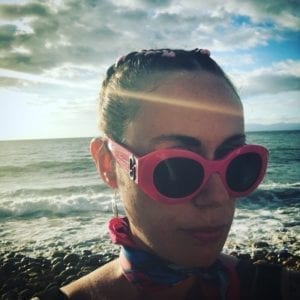
Molly Vandermeer and the ethics of care in contemporary directing
At a moment when the film and television industry is being forced to reckon with how stories are told—and how the people telling them are treated—Molly Vandermeer has quietly built a body of work that answers both questions at once. Her films are intimate without being invasive. Politically and socially alert without being didactic. Formally precise, emotionally grounded, and driven by a belief that care is not a limitation on creativity, but its precondition.
 Vandermeer’s emergence as a director did not come from a single breakthrough but from accumulation: years spent acting, working backstage, moving through development offices, camera departments, and assistant directing roles, learning how power and pressure actually operate on a set. That breadth is now central to her authority. She understands not only how a scene should feel, but how long it takes to change a lens, what an actor needs before a difficult take, and why a project must be protected well past the shoot. Directing, for her, is not a position—it’s stewardship
 Her debut drama Twelve made that ethos impossible to ignore. Set almost entirely within an Eating Disorders Anonymous meeting, the film unfolds in extended, uninterrupted takes that borrow more from theatre than conventional screen language. The choice is disarming. Performances are given space rather than shaped by coverage. The camera listens. What could have been sensationalized instead becomes quietly devastating—and deeply recognizable to audiences who had rarely seen eating disorders portrayed without distortion. The film’s reach was immediate and international, earning festival selections across Europe and North America, multiple Best Director awards, and coverage from outlets including Variety and the BBC. More importantly, it became a reference point in conversations about responsible mental-health representation on screen.

Photo credit: Louise Rose Photography
Honest filmmaking that honors vulnerability
That responsibility was not theoretical. Twelve was developed and produced in collaboration with NHS psychiatrist Dr. Parvinder Shergill, who also appears in the film. Cast and crew donated their fees to support eating-disorder charities. Mental health first aiders were present on set. Vandermeer’s psychotherapy training—ongoing alongside her directing career—shaped both the storytelling and the working environment. The result is a film that refuses harm without sacrificing honesty
Vandermeer’s approach to actors is inseparable from her own early experience as a performer. She speaks openly about understanding vulnerability from the inside and about the necessity of honoring individual process. Preparation happens long before the camera rolls: one-to-one conversations, boundary-setting, shared language. On set, authority is calm and decisive, not performative. Collaboration does not dilute leadership; it sharpens it. That philosophy has become a throughline across her work.
In documentary, that same trust-building becomes the engine of intimacy. Uncaged, which follows musician Sam (El Sam) as he reconciles faith, sexuality, and displacement after fleeing Syria as a teenager, was built over months of conversation before filming began. Vandermeer assembled a crew chosen as much for emotional intelligence as technical skill. The film went on to win Best Director at multiple international festivals and drew significant BBC coverage, not because it chased revelation, but because it earned it.
 Quietly bold cinema reshapes storytelling
 Quietly bold cinema reshapes storytelling
Her quieter drama Pops—a study of grief and isolation—leans into restraint at a time when speed and spectacle dominate. Vandermeer has spoken about how poorly grief is understood culturally, how silence often compounds loss. The film’s success on the festival circuit, including a Best Drama win at the BIFA-qualifying Sunrise Film Festival, suggests audiences are hungry for that space to reflect.
Notably, Vandermeer has also stepped outside her established tonal range. 420 Save It, an action-comedy written and produced by Bella Glanville, required a different kind of precision: timing, choreography, and physical comedy. Working with fight-trained actors, Vandermeer treated the genre shift not as a detour but as an expansion—proof that her discipline travels across form.
Underlying all of this is a leadership model shaped by lived experience. Vandermeer speaks candidly about navigating the industry as a young female director, about learning when to assert authority and when to listen, and about rejecting the scarcity logic that pits creatives against one another. Collaboration, for her, is not branding; it is strategy. Neurodiversity, including a recent ADHD diagnosis, is framed not as an obstacle but as a creative asset—fueling adaptability, focus, and a capacity to hold multiple threads at once.
Directing with empathy shapes future cinema
 Directing with empathy shapes future cinema
As Twelve moves into discussions for long-form development and Vandermeer looks increasingly toward international work, her trajectory is becoming clearer. She is part of a generation of directors redefining what professionalism looks like on set and what ethical ambition looks like on screen. Her films argue—quietly but insistently—that empathy and rigor are not opposites, and that the future of storytelling depends on treating people, on both sides of the camera, as fully human.
What moment first made you realize directing—not performing—was your true vocation?
The moment I truly realized directing was my vocation came during a directing course. I was struck by how all-encompassing the role is; you’re able to see and shape the entire process from start to finish. I loved working on the visuals, collaborating closely with actors, and engaging with every department of the crew, all in service of storytelling. That sense of overseeing and unifying all those elements felt completely natural to me.
My first hands-on directing experience cemented it. The excitement and clarity I felt then hasn’t faded, I’m still just as energized going to work today as I was on that very first course.
How did your early acting and stage experience shape the way you now work with actors?
My early acting and stage experience gave me a deep respect for actors and their process. Having been on the other side, I understand how vulnerable and demanding the work can be, and that awareness strongly informs how I direct today. I strive to honor each actor’s individual process as much as possible, because that’s where the strongest, most truthful performances come from and where the work becomes genuinely enjoyable.
I continue to invest in that understanding by reading widely on acting theories and regularly taking acting classes myself, including improv training in Los Angeles. I also share the same excitement actors have in crafting a character from scratch. Before production, I always aim to spend one-on-one time with each actor to deeply explore their character, motivations, and personal approach. That foundation of trust and collaboration allows us to do our best work together on set.
What did working with Michael Winterbottom teach you about seeing a project through end-to-end?
Working with Michael Winterbottom taught me the true importance of seeing a project through from conception to completion. I witnessed firsthand how a film can evolve from a simple initial idea into a fully realized, polished project through rigorous research, openness, and constant collaboration. Nothing existed in isolation, every creative choice was informed by story, context, and the people involved in bringing it to life.
Vision grows through collaborative storytelling
What stayed with me most was the emphasis on collaboration across every stage of the process. From early development and research through production, post, and final delivery, each phase builds on the last. I learned that directing isn’t just about what happens on set; it’s about maintaining clarity of vision while remaining flexible, listening deeply to collaborators, and protecting the story all the way through Development, Production, Post and final release. That end-to-end mindset has become central to how I approach every project I direct, on projects that aren’t my own scripts/ideas I still like to be heavily involved from the development stage.
Why did directing “click” for you after exploring development, camera, and AD roles?
Directing truly clicked for me after working across development, camera, and AD roles because I was given invaluable advice early on by a mentor: if you want to be a director, you should experience as many roles as possible. That approach gave me a much deeper understanding of how the entire filmmaking process functions, not just creatively but practically.
Early in my career, I also made documentaries where I did everything myself: camera, lighting, sound, editing, grading, and directing. That was an incredibly formative experience. It clarified where my strengths lie, exposed my weaknesses, and reinforced just how essential collaboration is. Filmmaking is profoundly collaborative; every role, no matter how small it may seem, contributes meaningfully to the final project. You simply can’t make a film without every cog in the system working together, and that gave me a genuine appreciation for every member of the crew.
Working as an AD further sharpened that perspective. Understanding scheduling knowing, for example, how long a lens change takes because I’ve worked as an AC, has been invaluable when I’m directing. It allows me to communicate more effectively and respect the realities of the set. I love working as an AD, and ADs I’ve collaborated with have often commented that I’m a strong director to work with because I understand timing, logistics, and pressure from their side as well. Having seen the process from multiple angles is ultimately what made directing feel like the place where everything came together for me.
Twelve has had unusual reach and impact—what do you think audiences are responding to most?
I think audiences are responding most strongly to the raw authenticity of Twelve. The film unfolds largely in real time within Eating Disorders Anonymous sessions, and structurally it plays almost like theatre, some takes running 20 to 30 minutes, giving the performances space to exist without interruption. That immediacy creates a level of honesty that audiences can really feel.
There’s also a sense of familiarity in the format. Viewers are used to seeing AA or NA meetings portrayed in film and television, but eating disorders are far less explored on screen – particularly the reality of an Eating Disorders Anonymous meeting. Many people don’t even know these groups exist, so the setting itself felt both recognizable and revelatory.
Another key factor was our approach to casting and representation. Eating disorders and other mental health conditions have historically been portrayed in narrow, often negative or unrealistic ways. We were very intentional about challenging that. Informed by working mental health professionals, we wanted to show the reality that people who suffer from eating disorders look like real people and experience a wide range of illnesses, not just the stereotypical portrayals, such as dancers with anorexia. The film also introduces a relatively lesser-known eating disorder, orthorexia, broadening the conversation around how these conditions actually present.
The cast itself helped extend the film’s reach. A mix of well-known actors and emerging talent brought in different audiences; fans of performers like Leslie Ash discovered new voices, while newer viewers engaged with more familiar faces. Beyond that, every member of the cast and crew had a personal connection to the themes of the film: eating disorders, mental health, and loss. That lived experience and collective commitment are deeply embedded in the work. In a BBC interview, Duncan James spoke about the loss of his friend Nikki Grahame following her battle with anorexia, and moments like that resonated strongly with audiences.
We were also committed to responsible storytelling. Working with real NHS psychiatrist Dr. Parvinder Shergill, who both Produced and appeared in the film, helped ground the project in clinical truth. The fact that the cast and crew donated their fees so we could support eating disorder charities further reflects how personally invested everyone was.
Finally, with heightened awareness of eating disorders and mental health during and after the pandemic, Twelve arrived at a moment when people were actively seeking more honest, compassionate representations. I think audiences recognize that the film comes from lived experience, care, and responsibility, and that’s ultimately what’s driven its unusual reach and impact.
How do you balance sensitivity with honesty when portraying eating disorders on screen?
Balancing sensitivity with honesty was central to how we approached the film, and having it produced in collaboration with NHS psychiatrist Dr. Parvinder Shergill was crucial in allowing us to tread that line responsibly. Her involvement ensured that everything we portrayed was clinically informed, truthful, and rooted in real-world experience.
The format of the film played a significant role as well. By setting the story entirely within an Eating Disorders Anonymous meeting, we were able to explore the very real emotional and psychological impact of eating disorders without resorting to potentially triggering imagery, such as explicit portrayals of food restriction or behaviors. That structure allowed for honesty through conversation, reflection, and shared experience rather than sensationalism.
We also felt it was important to acknowledge the wider mental health landscape that often accompanies eating disorders, including addiction and alcoholism. Presenting those intersections added depth and realism while avoiding oversimplification.
It’s a difficult balance to strike, but we felt a responsibility to audiences, not just to inform and represent, but to do so without triggering, falsifying experiences, or contributing to the long history of irresponsible portrayals of eating disorders on screen. The goal was to create something that felt truthful, respectful, and safe.
Finally, every actor involved had a personal connection to the subject matter, each of them had known someone close to them who had struggled with an eating disorder. That shared lived experience brought an added layer of honesty, authenticity, and commitment to the project, which I think audiences can feel throughout the film.
What responsibility do filmmakers have when representing mental health?
Filmmakers have a huge responsibility when representing mental health, particularly because of the impact film can have on audiences. Even when dealing with difficult subject matter, the goal should always be to affect people in a positive, constructive way, especially as films often stay with viewers long after they leave the cinema or turn off their TV. I want audiences to come away feeling represented, seen, and understood. Or for those who have no experience of the subject matter, I would hope they come away feeling empathy, wanting to learn and understand more or having changed their perspective for the better. Film can be a powerful tool for helping people process experiences, emotions, or feelings they may not yet have the language to articulate.
There’s also a responsibility to avoid harm. With subjects like eating disorders, addiction, and self-harm, it’s vital not to trigger viewers or sensationalize suffering. Sadly, there’s a long history in film and television of mental health being portrayed in negative, inaccurate ways that perpetuate stereotypes and misinformation. Those portrayals can contribute to stigma and bias against people living with mental health conditions, which is something we have a duty to actively challenge.
That responsibility extends beyond the screen to the people making the work. Filmmakers also have a duty of care to their cast and crew. On Twelve, we ensured mental health first aiders were present on set, and having a producer who works as a psychiatrist helped create a safe, informed environment throughout the process.
Ultimately, responsible mental health representation means approaching stories with empathy, research, and care, understanding that the way these experiences are shown can genuinely shape how people see themselves and others.
How did your psychotherapy training concretely change your directing process?
My psychotherapy training had a very concrete impact on my directing process, particularly on Twelve. It gave me a deeper understanding of mental health conditions and treatment pathways, which was essential when working with such sensitive subject matter. That knowledge helped inform everything from character development to tone, ensuring the film remained truthful and responsible.
Beyond the work on screen, the training reinforced the importance of mental wellbeing for both cast and crew. It gave me the awareness to recognize when someone might be struggling and the tools to respond appropriately, helping to create a safer, more supportive working environment.
Directing, at its core, is about understanding the human experience and emotion. My psychotherapy training has been invaluable in that regard, especially when working closely with actors. It’s strengthened my ability to actively listen, to engage deeply with their process, and to collaborate with them when crafting complex characters and emotionally challenging stories. Ultimately, it’s allowed me to approach difficult material with greater empathy, clarity, and care—both creatively and practically.
What does a “psychologically safe” film set look like in practice?
A psychologically safe film set starts with trust, clarity, and care. In practice, that means creating an environment where cast and crew feel respected, listened to, and able to speak up without fear of judgment or repercussions. From the outset, it’s about setting clear expectations, open communication, and a shared understanding that wellbeing matters as much as the work itself.
On a practical level, that includes having mental health first aiders available on set, making sure support structures are visible rather than reactive, and allowing space for people to step away if material becomes overwhelming; especially when working with emotionally challenging subject matter. It also means checking in regularly, not just pushing through because of time or budget pressures.
For actors specifically, psychological safety comes from preparation and consent. I prioritise one-to-one conversations before production to discuss boundaries, triggers, and process, so nothing feels unexpected or unsafe on the day. On set, it’s about active listening, collaboration, and giving actors agency in how emotionally demanding scenes are approached.
More broadly, a psychologically safe set is one where every role is valued, hierarchy doesn’t silence people, and kindness isn’t mistaken for weakness. When people feel safe, they do their best work—and that safety ultimately translates onto the screen.
What creative advantages has your ADHD diagnosis given you as a director?
My ADHD has been a surprising creative advantage as a director. It fuels my creativity and curiosity, giving me a keen interest in every aspect of filmmaking, from development to post-production, which helps me stay engaged with the project as a whole. It also allows me to juggle multiple tasks at once, which is invaluable when coordinating the many moving parts of a set.
The intense focus ADHD can bring means I can dive deeply into scenes, visuals, and performances, while my heightened empathy and understanding have been particularly helpful in working with actors, allowing me to connect with and support them through complex emotional material.
Ultimately, it’s given me adaptability and a broader perspective, helping me navigate challenges, respond to unexpected situations on set, and see opportunities others might miss. It’s not just a trait; it’s a creative tool that shapes the way I approach storytelling and collaboration.
You work across drama and documentary—what does each form give you that the other cannot?
Early in my career, I was often told I’d have to choose between scripted and non-scripted work. Working with Michael Winterbottom helped me realize that you don’t have to and that each form can deeply inform the other. Documentary has taught me the value of trust and authenticity. Building real relationships with people on camera translates directly to working with actors, helping them feel safe, understood, and supported, which allows for more honest performances. Working with real-life stories also ensures that even scripted work is grounded in lived experience, adding depth and realism to narrative projects.
Drama, on the other hand, has sharpened my sense of narrative structure, pacing, and character arcs, which I’ve found invaluable when crafting documentary stories. Knowing how to shape a narrative without compromising truth allows the story to resonate emotionally while remaining authentic.
The two forms also complement each other in terms of adaptability. Documentary teaches you to respond to unexpected moments and embrace the unplanned, while drama instills discipline and clarity in visual storytelling and preparation. Working across both genres has given me a broader creative toolkit, enabling me to blend observation with design, spontaneity with structure, and emotional honesty with crafted storytelling.
Taken together, Vandermeer’s work positions her as a director operating at the intersection of craft, ethics, and authorship. With multiple Best Director wins for Twelve and Uncaged, international festival recognition across Europe and North America, and coverage from outlets including Variety and the BBC, her trajectory reflects both industry confidence and cultural relevance. As Twelve moves toward long-form development and her practice expands internationally, Vandermeer represents a new model of leadership in film—one grounded in end-to-end creative fluency, psychologically safe production environments, and stories that widen, rather than flatten, how mental health and human complexity are represented on screen.