Watch it now! – ‘The Good Catholic’, ‘Unrest’, ‘Indivisible’
Three films from the tail end of the last decade still hold their own when the mood calls for something off the usual circuit. Their loglines alone hint at the different corners of independent cinema they occupy, and their verdicts remain useful guides for anyone hunting down smart, distinctive work rather than the obvious studio product.
The Good Catholic
Logline: “Don't let your love turn to hate / Right now we got to / Keep the faith / Keep the faith / Keep the faith / Lord, we got to keep the faith”
Verdict: Over the past couple decades, certain filmmakers have tried to get rich by appealing to the faithful. To Paul Shoulberg’s credit, his debut The Good Catholic is more entertaining and well-crafted than pretty much all of those efforts. Nonetheless, it’s still bogged down by the flat, lifeless style that plagues these kinds of films, right down to the waste of veteran actors like Danny Glover (Lethal Weapon) and John C. McGinley (Platoon). If you’re looking for some pre-midnight mass entertainment, by all means partake – otherwise avoid.
Current Availability and Viewing Options
The Good Catholic continues to surface on Prime Video, which keeps the original invitation to watch it now straightforward rather than archival. The other two titles rotate through festival platforms and occasional arthouse streaming windows, though none have landed on the big subscription services in a permanent way. Checking current listings before settling in saves the usual disappointment of a title that has slipped out of reach.
Unrest
Logline: An exploration of Chronic Fatigue Syndrome through the eyes of its victims.
Verdict: Film is often spoken of as a therapeutic medium, but director Jennifer Brea takes that further than most with Unrest. This intimate documentary initially gets much of its power from the juxtaposition of Brea’s life before and after she started suffering from the little understood ailment Chronic Fatigue Syndrome. But it’s at its most riveting when she’s sharing her platform with scores of others who suffer from something many doctors refuse to believe is anything more than psychosomatic. Brea’s film may be somewhat unpolished in parts, but that rawness only makes the message more powerful.
Updates on ME/CFS Recognition and Terminology
The preferred clinical term is now ME/CFS, combining myalgic encephalomyelitis with chronic fatigue syndrome. Using the older shorthand alone can carry a dismissive edge that many patients and clinicians have worked to retire. Brea herself has spoken about entering remission after medical interventions following the film’s release, which adds a quiet coda to the urgency captured on screen without rewriting the documentary’s central argument.
The Fontana Twins' Careers Post-Indivisible
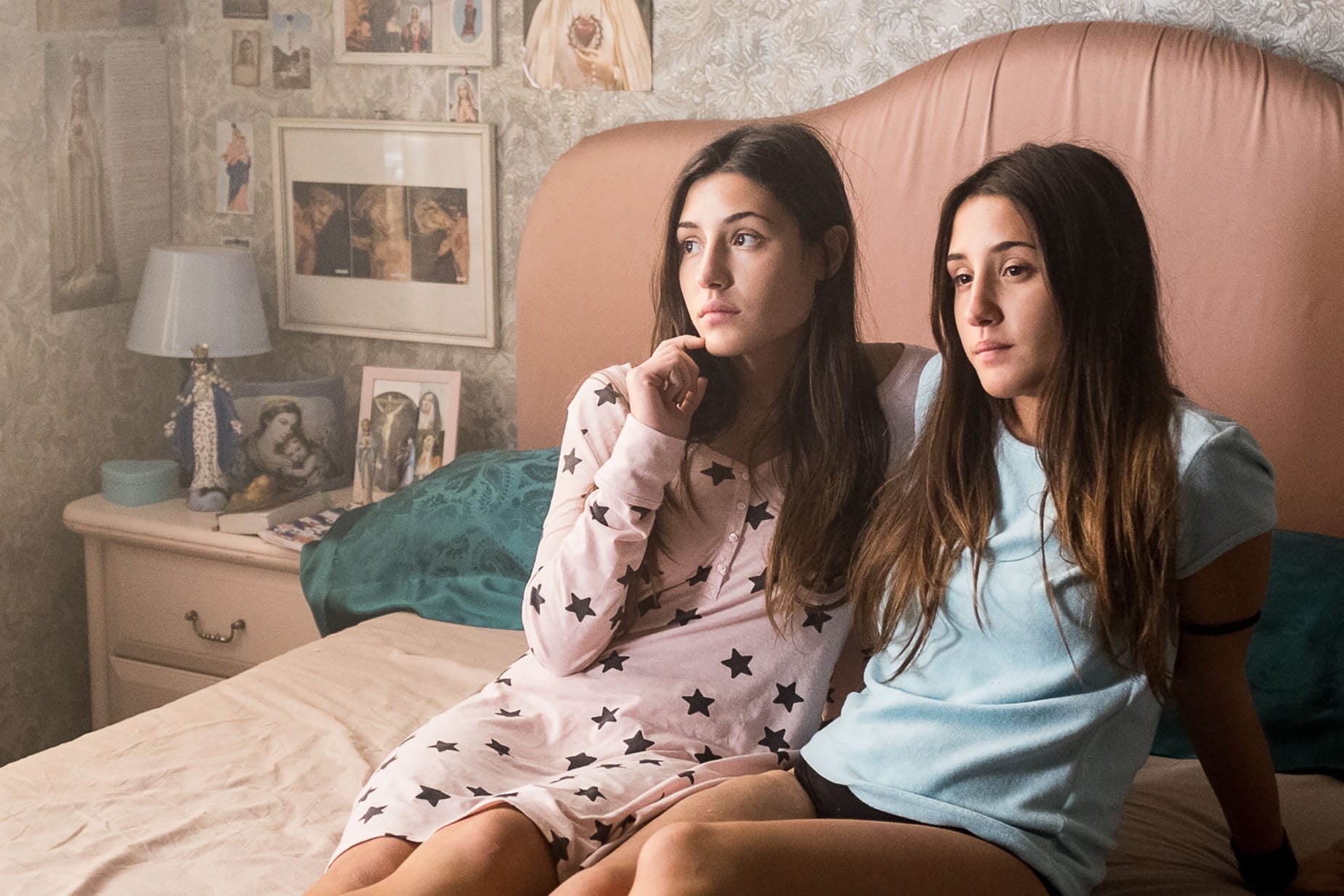
Real-life identical twins Angela and Marianna Fontana anchored the film with performances that drew immediate notice at Venice. In the years since, both have fielded separate casting conversations and occasional music opportunities, though their joint visibility remains tied to this project. That trajectory mirrors the film’s own tension between unity and independence without forcing later work into the same frame.
Indivisible
Logline: Life is better together – or is it?
Verdict: Conjoined twins must decide if they’d rather stick together or be apart. If the stars align, Indivisible very well could propel Edoardo De Angelis (Perez) to the top of the arthouse scene in much the same way Dogtooth cemented Yorgos Lanthimos’ visionary status. The two films share a focus on extremely odd family dynamics – but where Dogtooth frames that oddness as a kind of hyper domestic fascism, Indivisible presents it and the film’s captivating leads (real-life identical twins Angela & Marianna Fontana) as romantic, nearly magical forces, giving it an ethereal texture. That serves to make the film’s central conflict, over whether the girls should go through with a surgery to separate them, feel like a mythological dilemma on par with the Judgment of Solomon.
Legacy of Director Edoardo De Angelis
De Angelis has continued working in the Italian independent space, yet Indivisible still functions as the clearest early marker of his interest in stories that sit between the clinical and the mythic. Later projects have not displaced it from festival retrospectives or academic discussion, which suggests the film’s particular balance of intimacy and scale remains the director’s most resonant calling card.
Together the three titles sketch a small map of late-2010s independent cinema that still rewards attention. One leans on familiar faith-based comedy beats with mixed results, another turns personal illness into collective testimony, and the last treats bodily connection as something closer to fable. None of them require prior homework, and each keeps its own temperature without chasing the season’s prevailing tone.