‘A Boy Called Po’: Cloying, cliched magical autism
Hollywood studios love to treat autism as a condition rife with not only difficulties but magical abilities, usually of the mathematical sort. Filmmakers rarely have real experience with autism, and it’s easier for people ascribe a fantastical narrative to what is actually a complicated and abstruse condition. All that makes a film like A Boy Called Po even more unfortunate, directed as it by John Asher (Tooken), a man with an autistic son of his own. A Boy Called Po might have the best of intentions, and Asher clearly meant well with it, but that doesn’t cure its cloying and saccharine tone, falling prey as it does to the same old autism fiction tropes.
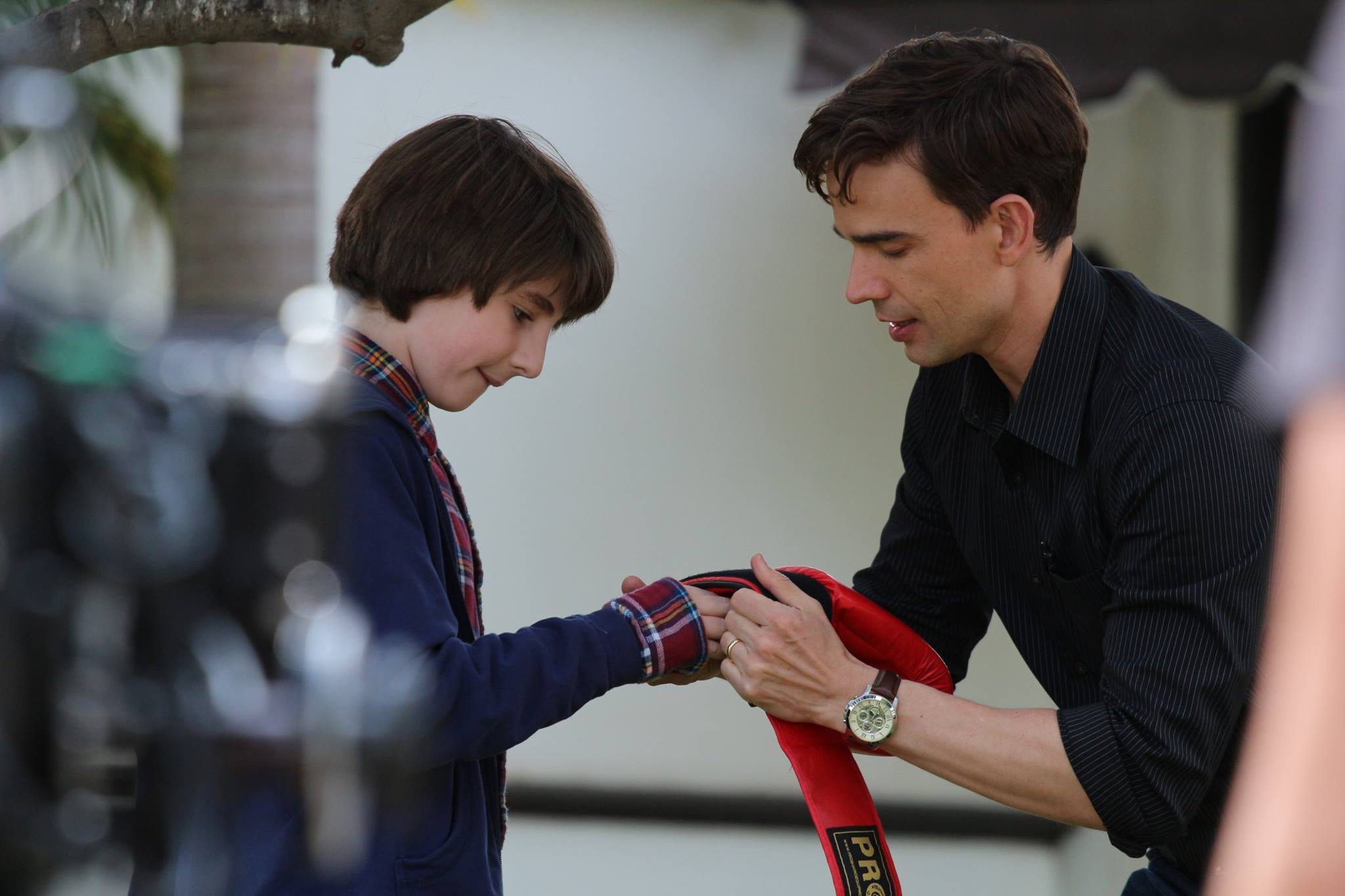
Shot and structured as a movie of the week, A Boy Called Po explores the relationship between Po (Julian Feder) and his father David (Christopher Gorham), as the former begins to “drift” into his thoughts after the death of his mother. Asher’s most notable directing credit before A Boy Called Po was One Tree Hill – and that shows, not just in the stale, flat visual style, but also in the approach to story and acting.
The story basically hits all the expected beats of a CW series. Po gets bullied at school, while David struggles at work, as he is too proud to listen to school administrators who try to make him understand they can’t provide the help and care Po needs. Many scenes even end with fades, as though Asher was told to plan for commercial breaks. Between those invisible commercials, the incessant Burt Bacharach (Forest Gump) muzak score, and the wooden dialogue, A Boy Called Po would be laughable if it wasn’t so sincere.
Persistence of the Autistic Savant Trope
Contemporary research confirms the trope remains prevalent and problematic a decade after the film’s release. 2026 studies show the savant portrayal creates unrealistic expectations among viewers. Prevalence of savant skills is approximately 10% or less among autistic individuals. The movie leans on these shortcuts without pause, turning Po into a walking spreadsheet whenever the plot needs a jolt of wonder. That choice keeps the film stuck in the same narrow lane it claims to critique.
Evolution of Autism Portrayals Since 2016
Recent systematic reviews indicate gradual shifts in some media away from stereotypes, offering contrast to the film’s approach. Reviews note increased nuance in certain novels, picture books, and series. Persistent focus on high-support-needs and repetitive behaviors across mediums still dominates, yet the contrast shows how dated the scarfland sequences feel now. Viewers who caught newer projects first will notice the gap immediately.
Director John Asher’s Subsequent Work
Provides a brief career update relevant to the personal motivation behind the film. Asher directed A Love Like This in 2025/2026. Continued emphasis on character-driven emotional stories marks his later output. The same impulse that shaped A Boy Called Po clearly carried forward, even if the execution stayed conventional.
Streaming and Accessibility Today
Notes current availability, relevant for readers encountering the refreshed review. Available on Amazon Prime Video and ad-supported platforms like The Roku Channel. The film sits in those queues without fanfare, ready for anyone curious about its place in the catalog of well-meaning misfires.
Everything in A Boy Called Po is depressingly unsurprising, right down to its deus ex autisma ending. It’s not even right to say A Boy Called Po is a disappointment, because as much as Hollywood likes to tell autism stories, it never manages to tell them with anything resembling care and inventiveness. The disappointment here is that Asher’s personal experiences with autism haven’t prevented the same clichés Hollywood always falls back on with this subject matter, resulting in a film that reduces its namesake to nothing more than a living, breathing McGuffin.