Politicians involved with Jeffrey Epstein: Donald Trump, Bill Clinton (2026)
Donald Trump may have been associated with Jeffrey Epstein but were there other politicians? Here’s everything you need to know.
Jeffrey Epstein didn’t lurk on the fringes of power. He moved comfortably through it. Presidents, prime ministers, cabinet officials, senators, donors, and elite attorneys appear throughout his documented contacts. None of this is accidental. Epstein cultivated proximity deliberately, and the political class—across parties and borders—largely treated him as an acceptable risk.
What follows is not speculation. It is a consolidation of documented associations, confirmed travel, financial ties, and publicly acknowledged relationships—with a clear distinction between contact and criminality. The discomfort lies not in proven crimes by politicians, but in how normal Epstein was allowed to become.
 Bill Clinton: Frequent Flyer, Permanent Footnote
 Bill Clinton: Frequent Flyer, Permanent Footnote
Bill Clinton remains the most documented political figure in Epstein’s orbit. Flight records show Clinton traveled on Epstein’s private jet multiple times in the early 2000s, including international trips to Europe and Africa. Clinton denies ever visiting Little St. James and denies any knowledge of Epstein’s crimes. No evidence has placed him on the island, and no criminal allegations against him have been substantiated in court.
Still, the volume of contact matters. Epstein didn’t provide transportation as a courtesy; access was his currency. Clinton’s post-presidency influence—through foundations, diplomacy, and global networking—was precisely the kind of soft power Epstein sought to be near.
Among the many images that continue to haunt the Epstein archive, few have proven as durable—or as uncomfortable—as the photographs of Bill Clinton relaxing by a pool with Ghislaine Maxwell. The setting is casual, almost banal: swimsuits, smiles, leisure. That ordinariness is precisely the problem.
The photos, taken during the early 2000s at an Epstein-owned property, show a former U.S. president at ease in the company of the woman who would later be convicted of sex trafficking minors on Epstein’s behalf. Clinton has never denied knowing Maxwell. He has insisted, repeatedly, that he was unaware of Epstein’s criminal activity and that his interactions were limited to legitimate travel and philanthropy-related contexts.
Nothing in the photographs proves criminal behavior. That point is often stressed, and correctly. But the images contradict a softer narrative Clinton’s defenders have leaned on for years—that Epstein was peripheral, a convenience, a donor-adjacent nuisance rather than a social constant. Pools are not conference rooms. They are spaces of trust.
What unsettles critics is not the implication of sexual misconduct, but the ease of the relationship. Maxwell was not an obscure assistant. She was Epstein’s fixer, gatekeeper, and social engineer. By the time these photos were taken, Epstein’s reputation was already murky within elite circles. Yet Clinton appears unguarded, relaxed, and socially aligned with her.
Clinton’s camp has argued that proximity is not knowledge, and that guilt cannot be inferred from association. That remains legally true. Politically and ethically, the question is different. Why was a former president comfortable enough with Epstein’s inner circle to lounge poolside? Why was no distance created once rumors became persistent?
The pool photos endure because they collapse plausible deniability into a single frame. They show Epstein’s world not as shadowy or secretive, but as normalized—welcoming even. Clinton did not look trapped, coerced, or misled. He looked at home.
In the Epstein story, that is often the most damning detail of all.
Donald Trump: Social Proximity, Strategic Distance
 Donald Trump: Social Proximity, Strategic Distance
Donald Trump’s relationship with Jeffrey Epstein is often minimized as brief, social, and ultimately inconsequential. The documented record suggests something more sustained—and more uncomfortable—before it was retroactively rewritten.
Throughout the 1990s and early 2000s, Epstein was a regular presence in Trump’s Palm Beach world. He attended parties at Mar-a-Lago, socialized openly with Trump, and moved easily through Trump’s club. This was not a hidden relationship. Trump himself acknowledged it publicly in a 2002 New York magazine interview, calling Epstein a “terrific guy” who enjoyed the company of “beautiful women… many of them on the younger side.” At the time, the comment barely registered. In hindsight, it reads less like ignorance and more like indifference.
There is no evidence Trump flew on Epstein’s private jets or visited ittle St. James, a point his defenders emphasize—and correctly. But Epstein did not need Trump on a plane. He needed access, legitimacy, and environments that offered a steady supply of young, economically vulnerable people. Mar-a-Lago provided all of that.
One of the most serious and persistent allegations is that Epstein recruited young women directly from Mar-a-Lago staff. Multiple accounts claim Epstein met and targeted employees working at the club during the 1990s. The allegation is not that Trump personally facilitated this behavior, but that Epstein used Trump’s property as a recruitment pool. That distinction matters, but it does not erase responsibility for the environment itself. If Epstein was able to recruit from Mar-a-Lago, then Trump’s space was not merely social—it was operational.
Trump has claimed that Epstein was eventually banned from Mar-a-Lago. The timing and reason for that ban remain disputed, and no contemporaneous documentation has ever been produced. What is clear is that Trump’s distancing narrative only solidified after Epstein’s legal exposure became public and politically costly. Like many others in Epstein’s orbit, Trump did not preemptively sever ties—he recalibrated once association became inconvenient.
That recalibration coincides with the alleged falling out between the two men. According to reporting, Trump and Epstein clashed in the mid-2000s over a Palm Beach mansion both were attempting to purchase. Trump ultimately won the property. Shortly thereafter, the relationship appears to have cooled. Notably, the break aligns with a business dispute, not a moral reckoning.
Then there is the birthday card.
In 2019, The New York Times reported on a leather-bound birthday album prepared for Epstein’s 50th birthday in 2003, allegedly organized by Ghislaine Maxwell. One entry attributed to Trump reportedly included a hand-drawn outline of a nude woman and a typewritten message ending with, “Happy Birthday — and may every day be another wonderful secret.” Trump has denied writing or sending the card, called the report false, and threatened legal action. The original card has not been publicly released, and the allegation remains contested.
Still, the episode matters less as proof than as pattern. Even disputed, the card reflects the tone of Epstein’s relationships at the time—jokey, transactional, and insulated from consequence. Epstein was not treated as a liability. He was treated as entertainment.
Taken together—repeated visits, social familiarity, staff recruitment allegations, the property dispute, and the abruptly revised origin story of their “falling out”—the Trump–Epstein relationship follows the same arc seen across Epstein’s network. Epstein was tolerated, indulged, and useful until scrutiny made him radioactive. At that point, distance became rhetorical, memory became selective, and proximity was reframed as meaningless.
The Trump–Epstein story is not one of proven criminal partnership. It is a case study in elite tolerance. Epstein didn’t need protection from Trump. He needed permission to exist nearby. For years, he had it.
Prince Andrew: Institutional Damage Made Permanent
 Prince Andrew: Institutional Damage Made Permanent
Prince Andrew represents the most consequential political-adjacent collapse tied to Epstein. His relationship with Epstein extended well beyond casual acquaintance, culminating in a civil lawsuit by Virginia Giuffre. Andrew settled in 2022 without admitting guilt, but the outcome was decisive: permanent removal from royal duties and lasting reputational damage.
The case demonstrated a key truth of the Epstein saga—formal guilt is no longer required to destroy institutional credibility. Proximity alone is enough.
Prince Andrew and Sarah Ferguson: Access, Debt, and the Cost of Proximity
 Prince Andrew and Sarah Ferguson: Access, Debt, and the Cost of Proximity
No political-adjacent chapter of the Epstein saga did more visible damage than the one involving Prince Andrew—and no secondary figure raises more unresolved questions than Sarah Ferguson. Together, they form the clearest example of how Epstein translated money into access, and access into institutional credibility.
Prince Andrew’s relationship with Epstein was not fleeting. It persisted after Epstein’s 2008 conviction, at a moment when any serious institution should have treated Epstein as radioactive. Instead, Andrew was photographed with him in New York, stayed at Epstein’s residences, and maintained personal contact well into the period when Epstein’s reputation was publicly toxic. This was not ignorance. It was choice.
Andrew has repeatedly denied wrongdoing and denied knowledge of Epstein’s criminal conduct. Those denials did not survive contact with reality. His 2019 BBC Newsnight interview—meant to quell scrutiny—had the opposite effect, exposing evasions, implausible explanations, and a startling inability to grasp public accountability. By 2022, Andrew settled a civil lawsuit brought by Virginia Giuffre, without admitting guilt. The settlement ended legal exposure but destroyed any remaining public standing. He remains permanently sidelined, a reputational write-off for the British monarchy.
Sarah Ferguson’s role is more indirect, but no less instructive. By the late 2000s, Ferguson was heavily indebted, facing mounting financial pressure from a lifestyle no longer subsidized by royal duties. During this period, Epstein reportedly paid off a significant portion of her debts—widely cited in reporting as approximately £15,000—funneled through intermediaries. Ferguson later acknowledged receiving money connected to Epstein, characterizing it as assistance arranged by Andrew and denying any improper intent.
The allegation—repeated by journalists, former associates, and victims’ advocates—is not that Ferguson participated in abuse, but that Epstein used financial relief as a lever. Debt relief buys gratitude. Gratitude buys access. Access to a disgraced but still-connected royal family member carried enormous symbolic value for Epstein, especially after his conviction. It signaled rehabilitation without accountability.
Critically, this alleged debt payment coincided with Epstein’s continued presence in royal-adjacent social space. Andrew’s association with Epstein did not end Epstein’s isolation; it ended his exclusion. The royal connection functioned as reputational laundering, whether or not that was the conscious intent of everyone involved.
Ferguson has denied facilitating access or introductions in exchange for money. No criminal charges have been brought against her. But the optics are damning because they fit Epstein’s established pattern precisely. He repeatedly targeted financially stressed individuals with social capital—academics, politicians, socialites, and donors—offering relief, funding, or opportunity in exchange for proximity. The royal family was not an outlier. It was a prize.
What makes the Andrew–Ferguson episode uniquely damaging is that it exposed how brittle institutional guardrails really were. Epstein did not breach the monarchy. He was welcomed near it. There is no evidence that senior royal officials approved or facilitated Epstein’s presence. There is also no evidence that anyone effectively stopped it.
By the time Epstein was arrested again in 2019, the damage was irreversible. Andrew’s continued denials became irrelevant. Ferguson’s explanations became beside the point. The public conclusion was already formed: Epstein had succeeded in buying legitimacy where scrutiny should have been automatic.
This episode matters because it collapses the comforting fiction that Epstein’s power came from secrets alone. It didn’t. It came from elite institutions repeatedly choosing discretion over distance. The royal family did not protect Epstein knowingly—but it failed to protect itself by treating association as harmless long after it wasn’t.
In the Epstein story, Prince Andrew is not just a disgraced individual. He is proof of concept. Sarah Ferguson is not a villain, but she illustrates the vulnerability Epstein exploited: financial stress plus social access equals leverage. Together, they show how easily power can be rented—and how expensively institutions pay when they pretend that money never buys entry.
William Barr: Structural, Not Social
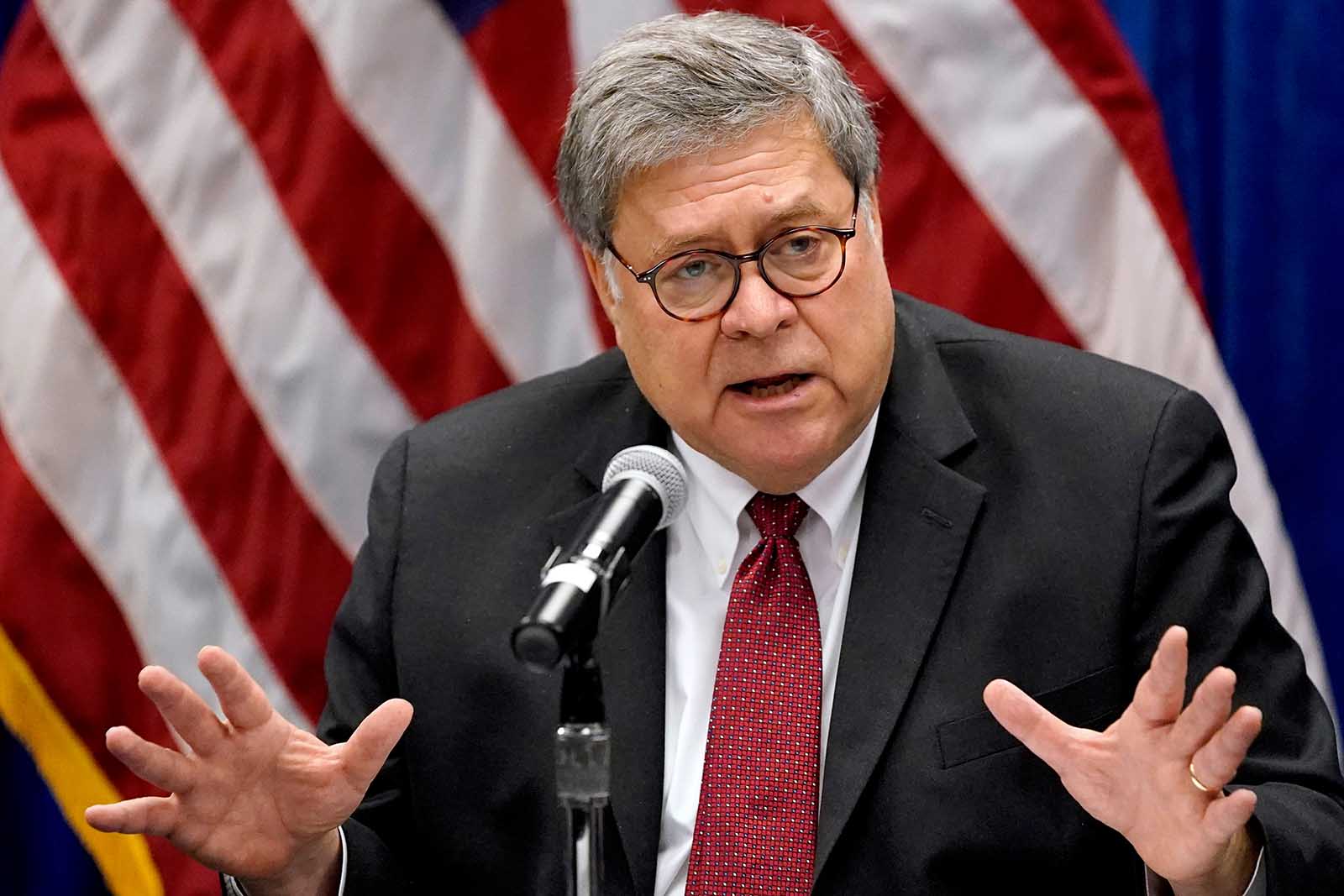 William Barr: Structural, Not Social
William Barr’s connection to Epstein is notable because it spans generations and institutions. Barr’s father, Donald Barr, helped Epstein secure a teaching position at the Dalton School despite Epstein lacking qualifications. Years later, William Barr became Attorney General during Epstein’s final prosecution.
Barr had prior connections to Epstein’s 2007 legal defense network and recused himself from certain aspects of oversight. While no evidence suggests wrongdoing by Barr himself, the optics reinforced a perception of systemic protection rather than accountability.

Alan Dershowitz arrives at the Manhattan Federal Court in New York, U.S., September 24, 2019. REUTERS/Jefferson Siegel
Alan Dershowitz: Legal Power as Shield
Alan Dershowitz served as Epstein’s attorney during the 2007 Florida case and later defended Ghislaine Maxwell publicly. Multiple Epstein victims have accused Dershowitz of abuse; he denies all allegations and has not been criminally charged.
Dershowitz’s role illustrates how elite legal defense didn’t merely protect Epstein—it stabilized his position within polite society long after credible warnings existed.
Political Figures Named in Records, Not Charged
George Mitchell
Bill Richardson
Ehud Barak
These figures appeared in Epstein-related documents, contact records, or testimony. All denied wrongdoing. None were charged. Their inclusion reinforces the breadth of Epstein’s reach rather than evidencing criminal conduct. Epstein targeted diplomats and political intermediaries because they conferred legitimacy and access across borders.
Campaign Donations: Influence Without Intimacy
Chuck Schumer
Stacey Plaskett
George H. W. Bush
Epstein donated to multiple political campaigns. There is no evidence of personal relationships or wrongdoing tied to these donations. Still, Epstein did not give money randomly. Political contributions bought proximity, protection from scrutiny, and credibility by association.
International and Academic Power Centers
Larry Summers
Les Wexner
Jean-Luc Brunel
Epstein embedded himself in financial, academic, and international policy circles. His relationship with Wexner was foundational to his wealth. His academic affiliations provided legitimacy. His European connections expanded his reach beyond U.S. jurisdiction.
Hollywood and Media: Silent Beneficiaries
 Hollywood and Media: Silent Beneficiaries
Kevin Spacey
Chris Tucker
Woody Allen
Several celebrities traveled with Epstein or attended events alongside political figures. No criminal charges followed. What did follow was silence—an absence of inquiry that contrasted sharply with public-facing accountability movements.
Epstein’s Inner Circle: The Only Convictions
Ghislaine Maxwell
Sarah Kellen
Nadia Marcinkova
Lesley Groff
Only Epstein’s operational circle has faced legal consequences. Maxwell’s conviction underscored a persistent pattern: enforcement stops where power begins.
Confirmed Political and Power Figures Linked to Epstein (Non-Exhaustive)
-
Bill Clinton
-
Donald Trump
-
Prince Andrew
-
William Barr
-
Alan Dershowitz
-
George Mitchell
-
Bill Richardson
-
Ehud Barak
-
Chuck Schumer
-
Stacey Plaskett
-
George H. W. Bush
-
Larry Summers
-
Les Wexner
The Unresolved Core Problem
 The Unresolved Core Problem
By 2026, the Epstein case is no longer about secret lists or hidden codes. It is about institutional tolerance. Epstein thrived not because everyone was complicit, but because no one felt responsible. The political class did not protect Epstein directly; it simply declined to confront him.
That silence—polite, procedural, and bipartisan—remains the most damning evidence of all.