All the racist Florida Man headlines that make us want to avoid the state
Since the “Florida Man” meme took hold around 2013, headlines from the state have piled up in a way that often reads like fiction. The phrase has become shorthand for the bizarre and the reckless, yet it never stood in for every resident. Florida remains a large and varied place.
The pattern shifts when the incidents involve overt racial animus. In those cases the tone moves from amused disbelief to straightforward condemnation. The cases below track documented episodes that crossed that line, from recorded rants to coordinated threats and physical assaults. None of them define the state, yet each one shows how the meme can mask something more corrosive.
Florida Man's racist rant at California bartender
Jason Wood, identified as a Florida resident and head of Actionable Insights, was recorded inside a Fresno taproom in 2020 after staff cut him off for intoxication. He directed slurs at bartender Rebecca Hernandez, calling her “Saudi Arabia” and a “dark-haired dumbass.” Hernandez posted the footage, and Wood’s company site and social accounts disappeared within hours. He later blamed alcohol. The episode left no ambiguity about the language used or the professional fallout that followed.
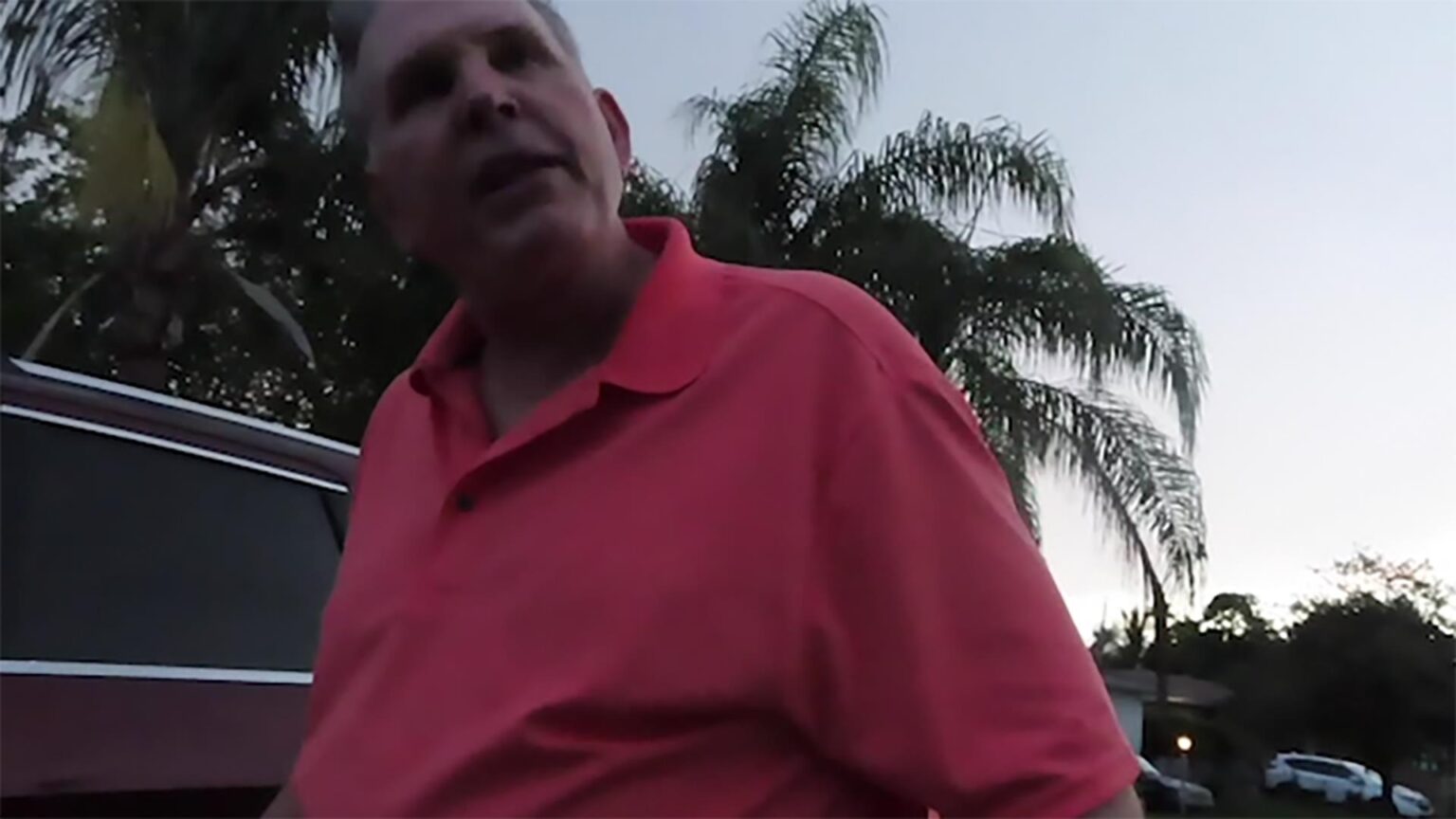
Florida Man points gun and yells racist comments
Joseph Max Fucheck, a convicted felon, approached neighbor Dwayne Wynn outside a Florida home after placing a business card in Wynn’s mailbox. When Wynn removed the card, Fucheck accused him of theft, denied that Wynn owned the property, and used the n-word while stating “this is why you people get shot.” Authorities charged the case as a hate crime and held Fucheck without bond on aggravated assault with a firearm. The confrontation lasted minutes yet produced charges that carried enhanced penalties under state law.
Florida Man accidentally broadcasts racial slurs on Facebook
Scott Bethmann and his wife were recorded live on Facebook while watching news coverage of Black Lives Matter protests. The camera pointed at a couch, but the audio captured repeated slurs. Bethmann served on the Naval Academy Alumni Association Board of Trustees; he resigned the same week the clip circulated. The account was removed, and the episode illustrated how an unmonitored stream can turn private conversation into public record.
Florida Man pleads guilty to racist threats, cyberstalking
Daniel McMahon used anonymous accounts to harass a Black activist running for city council in Charlottesville, Virginia. The messages included racial threats and continued until the candidate withdrew. Federal prosecutors charged McMahon with cyberstalking and bias-motivated interference. In August 2020 he received a sentence of 41 months in prison followed by three years of supervised release that restricted his access to internet-connected devices. The case closed the legal chapter that the original reports had left open.
Florida Man threatening to shoot up a Walmart is simply white nationalist
Richard Clayton posted a Facebook message counting down the days until he could retrieve an AR-15, warning people to avoid Walmart. He used an alias to post racist content and described himself as a white nationalist rather than a Nazi. Police arrested him on threats charges and imposed a geographic restriction barring him from any Walmart location. The post mixed personal grievance with ideological language that federal investigators treat as indicators of targeted risk.
Florida Man charged in racist threats against Cory Booker and Rashida Tlaib
John Kless left voicemails for Senator Cory Booker and Representative Rashida Tlaib. One message opened with “Hey Taliban” and accused Tlaib’s community of involvement in the 2001 attacks. Another called Booker a disgrace and included direct threats. Kless was arrested on interstate transmission of threats charges, fitted with a GPS monitor, and placed under curfew. The case showed how traditional phone lines can still carry the same pattern of bias that appears on newer platforms.
Florida Man Indicted for Planning Livestreamed Racially Motivated Attack
In December 2025 federal authorities indicted a Sarasota man on charges that he planned a racially motivated attack meant to be streamed live. The complaint described pipe bombs, firearms, and references to Nazi propaganda alongside Columbine imagery and Atomwaffen Division materials. Prosecutors stated the plot remained in the planning stage when investigators intervened. The indictment marked a shift from spontaneous outbursts to premeditated violence with an explicit ideological frame.
Florida Man Sentenced for Racially Motivated Attacks on Black Women
Department of Justice records show that a Florida man received sentencing in April 2024 after pleading guilty to racially motivated physical attacks on two Black women. The case moved through federal court on civil-rights violations rather than state misdemeanor charges. The sentence reflected the pattern of targeted violence that investigators tracked across multiple jurisdictions. Public records list the outcome without ambiguity about the racial motivation element.
Viral Beach Confrontation Captures Racial Slurs on Camera
A June 2026 video recorded at Jensen Public Beach showed an argument between a fisherman and another beachgoer that escalated into repeated racial slurs. The clip spread quickly across local social accounts and news outlets. Witnesses described the exchange as lasting several minutes before bystanders intervened. The incident fit the older meme template of public confrontation yet carried the added element of documented language that authorities can review for possible bias-motivated charges.
Armed Florida Man Confronts Young Entrepreneurs in Neighborhood
In July 2026 a video surfaced of an armed resident in a Florida neighborhood stopping three young men who were promoting a car-detailing service door to door. The men stated they felt singled out by the confrontation. The clip prompted online discussion about the resident’s stated reasons and the visible presence of the firearm. Local reporting noted that no shots were fired and that police responded after the fact to document the encounter. The episode illustrated how routine commercial activity can become the setting for an armed standoff when bias enters the interaction.
These cases span a decade and move from bar rants to planned attacks and recorded public arguments. Each one carries its own legal resolution or ongoing process. Florida’s size and population mean that individual actions, however visible, sit alongside the conduct of millions of other residents who never appear in headlines. The meme persists because the stories keep arriving, yet the record also shows that courts, employers, and communities have responded with documented consequences when the conduct crosses into documented racial harm.