Shut up and play the hits: Concert movies you’ll want to turn up to 11
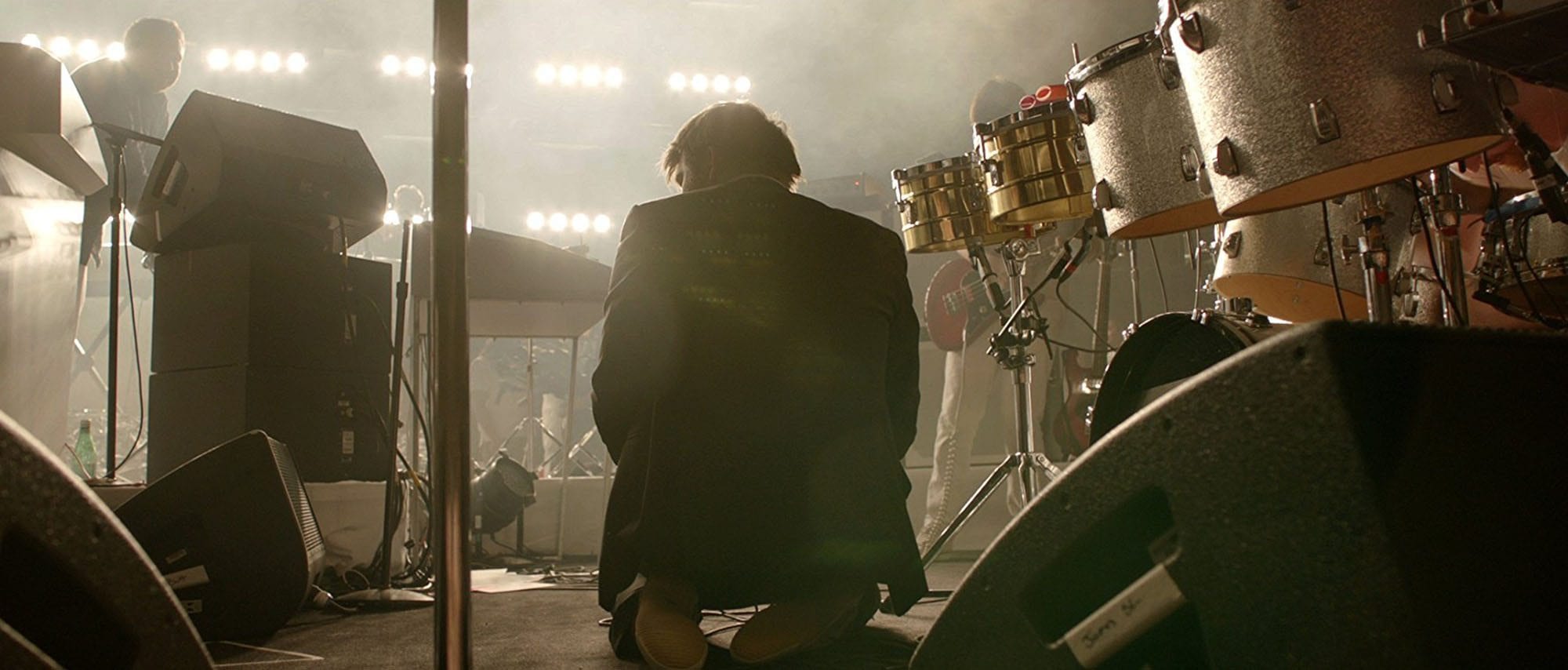
Concert movies still deliver the same jolt they always have: the lights hit, the crowd surges, and the music cuts straight through the screen. The genre keeps evolving, yet the core thrill remains unchanged. Will Lovelace and Dylan Southern’s 2012 portrait of LCD Soundsystem at Madison Square Garden still stands as a benchmark, even if the film now surfaces mainly through occasional theatrical revivals rather than any steady streaming berth.
That mix of backstage tension and final-night adrenaline keeps drawing audiences back. The ten titles below trace the same line from raw stage energy to cultural moment, each one capturing something distinct about what happens when performers and crowds lock into the same frequency.
Stop Making Sense (1984)
Jonathan Demme’s film caught Talking Heads at their sharpest, turning the Hollywood Pantages stage into a laboratory of rhythm and light. The spare white backdrop and gradual band build still look radical decades later. A24’s 4K restoration premiered around the 40th anniversary, bringing the original cut and an extended version to new audiences through theatrical runs and collector editions that preserve every drum fill and lighting cue.
Madonna: Truth or Dare (1991)
The Blonde Ambition tour pushed pop spectacle into new territory, and the documentary caught every calculated risk. Backstage footage revealed the machinery behind the provocation, while the stage numbers, including the simulated masturbation sequence that nearly drew an onstage arrest, showed exactly why the tour became legend. The film still functions as both tour diary and cultural time capsule.
The Last Waltz (1978)
Martin Scorsese documented The Band’s farewell show with the precision of a studio session. Guests from Joni Mitchell to Van Morrison, Neil Young, and Emmylou Harris moved through the Winterland Ballroom in tight succession. The performances remain the draw, yet the film’s crisp sound mix and controlled camera work keep it ahead of most later concert documents.
Dave Chappelle’s Block Party (2005)
Michel Gondry turned a Brooklyn block into the site of Chappelle’s dream bill. The comedian handed out tickets like golden passes, and the resulting crowd felt as central as the artists on stage. Kanye West, The Fugees, Mos Def, Erykah Badu, and Dead Prez delivered sets that still circulate in highlight reels, but the film’s real subject is the shared electricity between performers and neighbors.
Woodstock (1970)
Michael Wadleigh’s documentary preserved the scale and contradictions of the 1969 festival. Jimi Hendrix, Janis Joplin, and Jefferson Airplane supplied the headline moments, while footage of food drops and interviews with blissed-out attendees filled the gaps between songs. The film remains essential for anyone tracing how a single weekend became shorthand for an era.
Awesome: I F***in’ Shot That! (2006)
Adam Yauch handed fifty cameras to Beastie Boys fans before a sold-out Madison Square Garden show. The resulting patchwork captured sweat, signage, and crowd reactions from every angle. What once felt like an experiment now reads as an early chapter in a much larger story: fan-shot videos have since proliferated across every platform, turning the 2006 project into a clear predecessor rather than an outlier.
Gimme Shelter (1970)
Four months after Woodstock, the Rolling Stones staged a free concert at Altamont Speedway. The Hells Angels hired for security clashed with the crowd, and the film records the descent into violence with unsettling clarity. The final frames still land as a stark counterpoint to the peace-and-love narrative that had dominated festival coverage.
Ziggy Stardust and the Spiders From Mars (1973)
D.A. Pennebaker caught David Bowie’s final night as Ziggy at the Hammersmith Odeon. The theatrical flourishes and band interplay remain the center of the picture. A 2023 4K remaster and 50th-anniversary edition restored previously omitted performances, including Jeff Beck’s guest spots, and returned the expanded cut to theaters and home screens.
Heima (2007)
Dean DeBlois followed Sigur Rós back to Iceland for a series of unannounced concerts. The band played in abandoned buildings and open fields, letting the landscape shape the sound. The film stays close to the performances while still conveying the quiet awe of playing for home crowds in unexpected spaces.
Bob Dylan: Dont Look Back (1967)
D.A. Pennebaker shadowed Bob Dylan through the 1965 UK tour. The live footage alternates with hotel-room exchanges that reveal Dylan’s quick wit and sharper edges. The film treats both the stage and the offstage commentary as equally revealing, and the result still feels like the template for every rock-doc that followed.
Taylor Swift: The Eras Tour (2023)
Sam Wrench’s film stitched together multiple stadium dates from the record-breaking tour. The production scaled the full spectacle of costume changes, lighting rigs, and 70-plus-song setlists into a single theatrical event. Worldwide grosses topped $267 million, confirming that concert movies could still open like blockbuster releases when the artist and the moment aligned.
Renaissance: A Film by Beyoncé (2023)
Beyoncé’s Renaissance World Tour became the backbone of a visually dense concert film that mixed new choreography with career-spanning references. The movie played theatrically before moving to streaming, preserving the precision of the stage design and the communal energy of the audiences who filled the venues night after night.
Billie Eilish: Hit Me Hard and Soft – The Tour (Live in 3D) (2026)
James Cameron’s involvement in the upcoming 3D concert film signals a deliberate push toward technological upgrades in the format. The project captures dates from the Hit Me Hard and Soft tour with an emphasis on depth and spatial audio. A 2026 theatrical release is planned, positioning the film as a test case for how immersive tools might reshape the concert-movie experience.
Gaga Chromatica Ball (2024)
Lady Gaga’s stadium-scale show at Dodger Stadium drew 52,000 fans, and the resulting film preserves the full scope of the Chromatica-era production. Released the same year, the movie balances large-scale spectacle with close-up performance detail, adding another recent entry to the list of concert films that translate arena energy to the screen without losing scale.
Each of these titles, old and new, shows how concert movies keep finding fresh ways to frame the same basic exchange between artist and audience. The format may shift with technology and distribution, yet the draw stays constant: the chance to watch a room, or a stadium, lock into the same frequency at the same time.