Black Pantherese: The made-up dialects in movie worlds
Calling all linguistic nerds – you’re in good company. Here at Film Daily we love decoding the invented tongues that directors build for their fictional worlds, and nothing has kept the conversation livelier than the Wakandan dialect that debuted in Ryan Coogler’s Black Panther. Movie languages continue to surface with fresh grammar, fresh sound palettes, and fresh reasons for viewers to pause the credits and replay a line. The focus keeps circling back to how filmmakers decide what a made-up dialect should sound like, how far it should stray from real-world roots, and who gets hired to shape it.
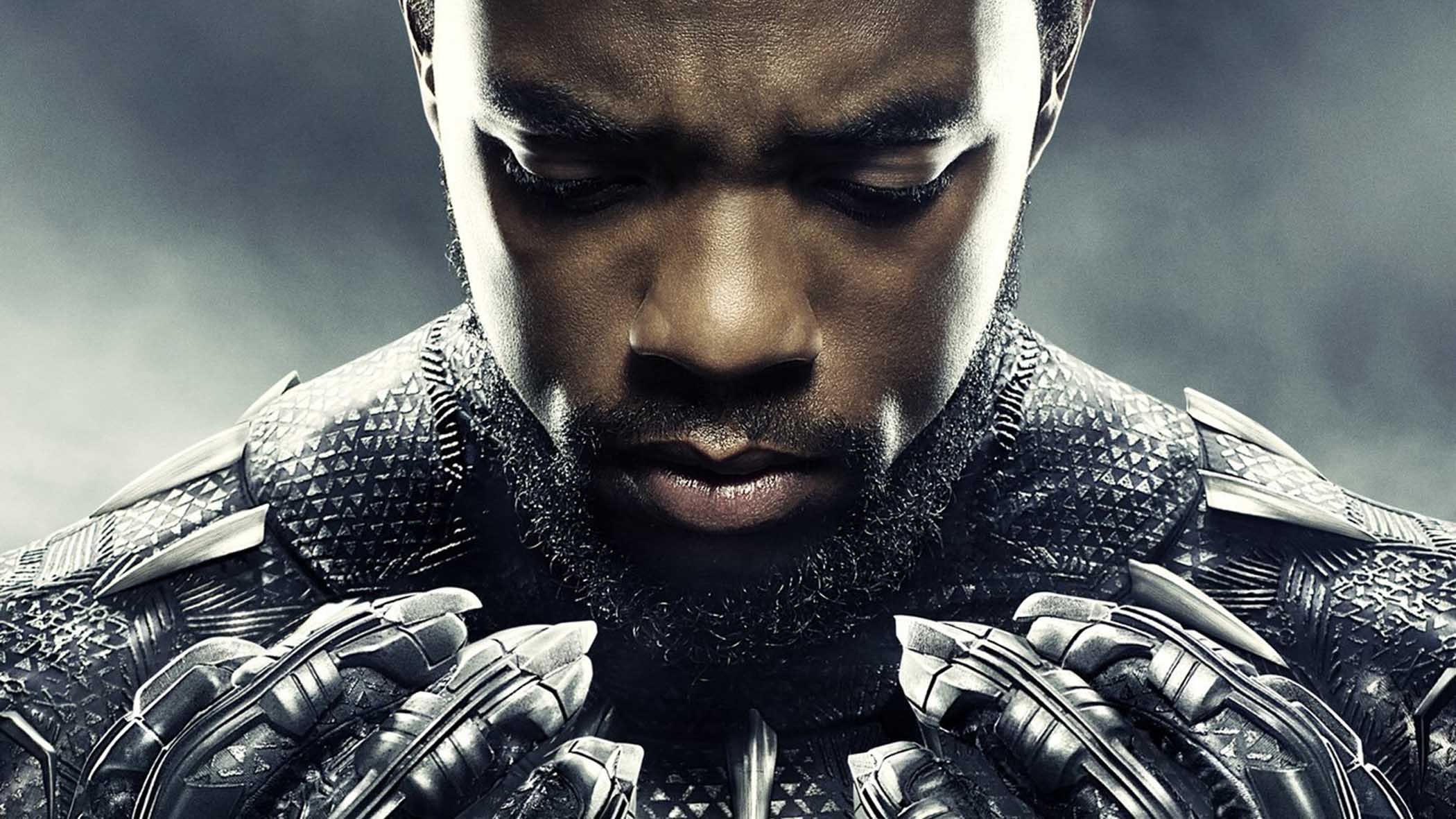
Black Panther (2018)
Language: Afrofuturistic Nsibidi Based on the ancient Nigerian language Nsibidi, production designer Hannah Beachler spent six months developing the linguistics of the fictional language featured in Black Panther. “It was a process of trying to pay homage to lost languages but also infusing the idea of Afrofuturism and reclaiming languages lost,” Beachler explained to IndieWire. “The language needed to evolve from the older hieroglyphs into a more modern version.”
Avatar (2009)
Language: Na’vi University of Southern California linguist Dr. Paul Frommer was enlisted to help create the Na’vi language of Avatar alongside director James Cameron. The resulting mixture of Ethiopian and New Zealand Māori languages was a lexicon of more than 1000 words, which Dr. Frommer has since continued to expand on. “It’s a process that took about six months for the basics,” Dr. Frommer explained to USC News. “When you create a language, you experience the joy of rolling sounds around in your mouth, hearing unusual sounds, playing with the sounds, and structural properties of language.” Frommer has kept curating and expanding Na’vi for the sequels and related media, and fans now use the language for genuine communication.
Star Trek: The Motion Picture (1979)
Language: Klingon Linguist Marc Okrand developed the aggressive and iconic language specifically for the 1979 movie. However, Klingon has since become a mainstay and has been expanded far beyond the initial words and phrases it started out as. Okrand even developed a Klingon dictionary in 1985 comprising grammar rules, pronunciation, and vocabulary. He also went on to create the Vulcan language for the series – but it’s notably less cool. Klingon has continued to be used and augmented in subsequent films and series, with Okrand creating additional dialogue including for other species.
Game of Thrones (2011 – )
Language: Dothraki Dothraki was developed by linguist David J. Peterson from George R. R. Martin’s fantasy novel series. It was reportedly developed by combining Spanish, Arabic, Swahili, and Estonian. There are currently around 4,000 Dothraki words and Emilia Clarke (who plays Daenerys Targaryen in the show, duh) appears to have a terrific grasp of all of them.
The Fifth Element (1997)
Language: Mondoshawan Director Luc Besson developed the language spoken by Leeloo (Milla Jovovich) in the sci-fi cult classic. Memorizing and refining the limited language meant Jovovich and Besson reportedly spoke in Mondoshawan to each other between takes. Fans of the movie discovered Mondoshawan is an odd concoction of just about every language Besson could pilfer from. Japanese, German, and French words are among some of the standout linguistic phrases used.
Futurama (1999 – 2013)
Language: Alienese I & II Used mainly as a background detail in graffiti and store signs, Alienese was developed by Futurama co-creator David X. Cohen to give the 31st century world more authenticity and depth. Presumably, he also knew fans of the sci-fi comedy would quickly recognize Alienese as a basic substitution cipher and decode all his hidden jokes. To keep fans on their toes, Futurama writers created a second alien language – Alienese II – which was more math based and tricky to figure out. However, a fan called Damien Reichel made this Alienese decoder so you don’t have to stress your pretty head about figuring any of it out on your own.
Star Wars: Return of the Jedi (1983)
Language: Huttese Developed by sound designer Ben Burtt, the Tatooine-based language is mostly spoken by Jabba the Hutt. Derived from an ancient Incan dialect called Quechua, the fictional language has become an ingrained part of pop culture.
A Clockwork Orange (1971)
Language: Nadsat Stanley Kubrick’s satisfyingly warped adaptation of Anthony Burgess’ A Clockwork Orange stays true to the fictional language the author created in his 1962 book. Used as slang by the horrifying teenage creeps of Alex and his Droogs, Burgess developed Nadsat to ensure the story never felt outdated. Based on Russian and other linguistic elements like Cockney rhyming slang, archaism, and compound words, the unique dialect only adds to the unnerving atmosphere, making the audience feel even more like outsiders looking in.
Despicable Me (2010)
Language: Minionese Easily one of the strangest (and cutest) fictional languages, Minionese is a babified variation of English. It has an affinity for b & p sounds, simple consonant-vowel syllables (ba-na-na), and a strategy of baby onomatopoeia like woof woof for dog or choo choo for train. Interestingly, Minionese also uses random phrases from an international bevy of languages. Speaking to the Los Angeles Daily News, director Pierre Coffin explained his slightly inelegant process. “I have my Indian or Chinese menu handy. I also know a little bit of Spanish, Italian, Indonesian, and Japanese. So I have all these sources of inspiration for their words. I just pick one that doesn’t express something by the meaning but rather the melody of the words.”
The Lord of the Rings trilogy (2001 – 2003)
Language: Elvish Author J.R.R. Tolkien developed Elvish long before he’d even written The Lord of the Rings. Quenya was developed for the High Elves of Eldamar while Sindarin was created for the Grey Elves of Telerin. Characters like Arwen (Liv Tyler) and Aragorn (Viggo Mortensen) spoke versions of Elvish in the movies, based loosely upon Finnish, Welsh, Greek, and Latin.
Dune (2021) and Dune: Part Two (2024)
Language: Chakobsa David J. Peterson and Jessie Peterson expanded Chakobsa with new vocabulary and grammar rules derived from Frank Herbert’s original terms. They deliberately distanced the language from heavy Arabic influences present in the books to reflect linguistic evolution over 20,000 years. Extensive translations were created even for background dialogue and to match lip movements.
Elemental (2023)
Language: Fire-element conlang The Petersons designed the language to evoke fire sounds like crackling and hissing. It fits the pattern of professional conlanging now common in major studio productions.
The Rise of Professional Conlangers in Hollywood
David J. Peterson has created languages for over 50 projects including Game of Thrones, Dune, and Elemental. Linguists now routinely build full grammars, vocabularies, and even coach actors on pronunciation and lip-sync.
Fan Communities and Language Learning
Na’vi has active fan sites, Soundcloud pronunciation resources, and real-world communication among enthusiasts. Klingon has dictionaries, courses, and ongoing use in Star Trek fandom.
The work of building dialects keeps evolving as studios chase both authenticity and spectacle. Each new project adds another layer to the conversation about how language shapes a world and how audiences respond once they can speak back.