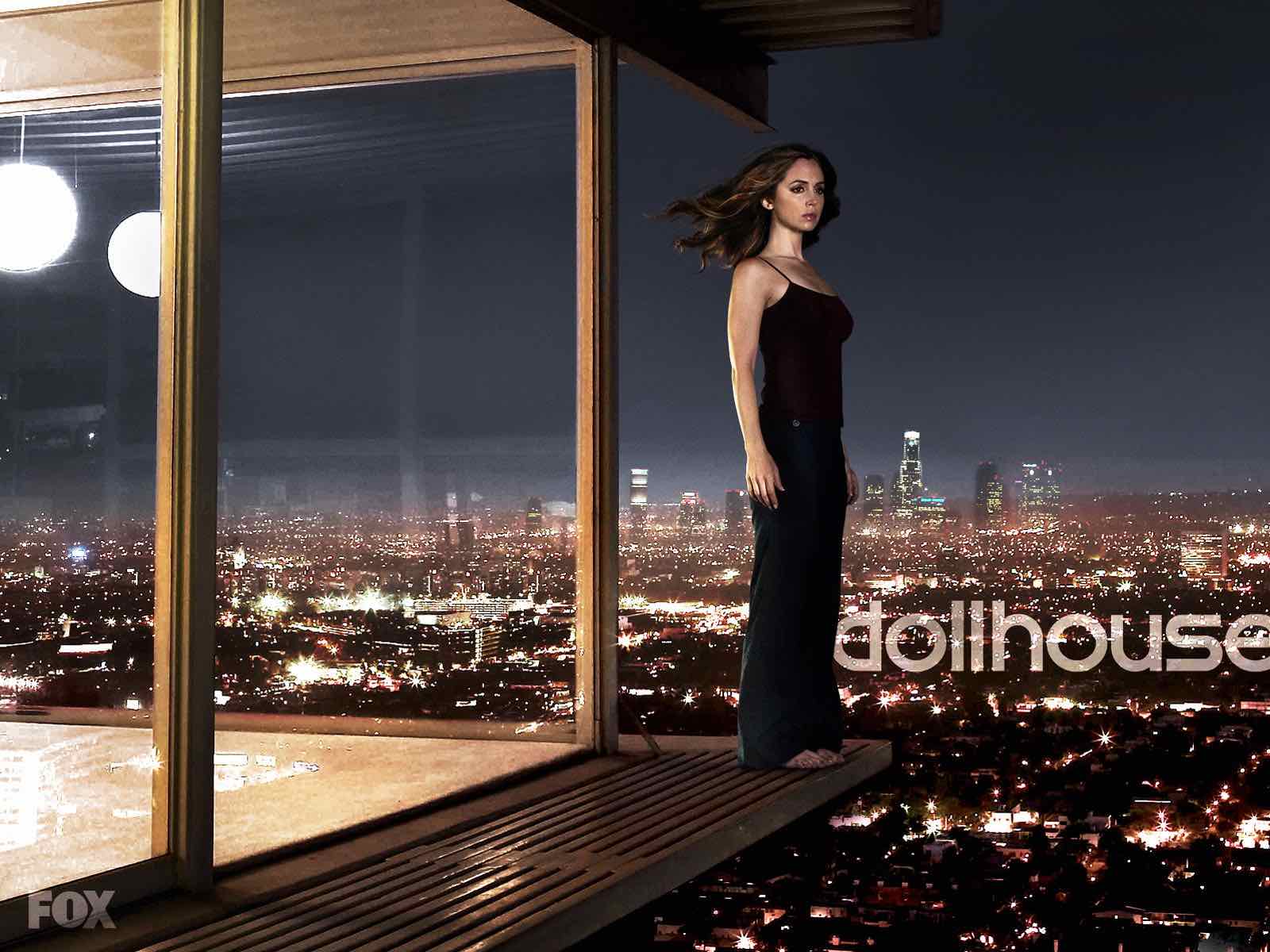
Program ‘Dollhouse’ for Best Cancelled Sci-Fi/Fantasy TV Show
Fox never gave Dollhouse the runway it needed. Joss Whedon arrived with Buffy and Angel already in the canon and Firefly still drawing new fans years after its cancellation, yet the network buried the series in a brutal time slot and offered almost no promotional push. The result was a show that felt hidden even while it aired.
Dollhouse follows the operations of a secretive Los Angeles facility that rents out programmable people known as Actives. Clients request specific skills, personalities, or tasks, and the Dollhouse wipes and reprograms its employees accordingly. The premise sits close to the ground, yet the story quickly expands into questions of consent, memory, and corporate power.
Eliza Dushku plays Echo, an Active who begins recovering fragments of her original identity. As Caroline, she had been working to expose the Rossum Corporation before the company captured her and turned her into property. Echo’s gradual awakening drives the series, turning personal survival into a larger fight against the system that created the Dollhouses.
Dollhouse has a rocky start, but it’s worth sticking out
Early episodes lean hard into procedural cases that keep the larger mythology at arm’s length. The tone feels uneven while the writers test how much the audience will accept. Season two was still ordered despite the shaky numbers, partly because of pressure from the same vocal Whedon fanbase that once campaigned for Firefly. The show received a full thirteen-episode order and then ended.
Once the series settles into its own rhythm, the plotting tightens and the performances deepen. By the back half of season two, Dollhouse was delivering the strongest hour of science fiction on network television in 2009. The cast had grown into an ensemble that could carry both the weekly missions and the expanding conspiracy.
The growth of Echo and her powers
Echo’s arc moves from blank slate to self-aware operative. After she recovers her memories of Caroline, she begins collecting every skill set the Dollhouse ever imprinted on her. The result is a character who can draw on combat training, languages, or technical expertise at will, yet still carries the emotional weight of each borrowed identity.
The story closes with a time jump to a 2020 post-apocalypse where the imprinting technology has escaped the Dollhouses and spread worldwide. Remote wipes and mass personality overrides have collapsed society. Echo’s final fight takes place inside that ruined future, where the personal stakes of autonomy have become global consequences.
Out of all Whedon’s shows, Dollhouse does moral ambiguity best
Every major character carries responsibility for the technology at the center of the story. The Actives commit crimes while under contract, yet they are also victims of coercion. Rossum executives pursue profit and control, but some employees later attempt to limit the damage. No one remains untouched.
The series never hands viewers a clean side to root for. Even the apparent heroes operate inside the same compromised system. That sustained gray area creates tension that feels earned rather than manufactured. Whedon’s later public controversies have complicated his legacy, yet the thematic questions Dollhouse raises about power and consent stand apart from any single creator’s reputation.
Topher Brink: Wittiest character on Dollhouse
Fran Kranz plays Topher, the brilliant but socially stunted programmer who designs the imprints. In a show built on exploitation and loss, Topher supplies most of the nervous humor. His quips land at the worst possible moments, yet they also reveal how casually the staff normalizes their work.
Topher eventually recognizes the technology’s potential for mass harm and joins the resistance. The shift does not erase his earlier complicity; it simply adds another layer to a character who was never allowed to remain a simple comic figure. His arc stays one of the most unsettling elements of the series precisely because the jokes never fully mask the damage he helped create.
Dollhouse's Enduring Relevance to Modern AI and Identity Debates
The show’s central technology—erasing and rewriting memory—now reads like an early warning about artificial intelligence and data ownership. Viewers in recent years have drawn direct lines between Dollhouse and later series such as Severance, noting the shared focus on fragmented selves and corporate control over consciousness. The questions have only grown sharper as deepfakes and algorithmic profiling move from speculation into daily life.
The Finale’s Apocalyptic Vision: 15+ Years Later
The two-part “Epitaph” episodes jump forward to 2020 and show the imprinting tech weaponized on a global scale. Remote wipes turn ordinary people into threats, and entire cities fall silent. What once felt like a grim hypothetical now sits uncomfortably close to current conversations about infrastructure vulnerability and the speed at which new technologies can be repurposed for control.
Where to Watch Dollhouse in 2026
The complete series remains available for digital purchase or rental on Apple TV and Amazon Video, along with several other transactional platforms. No major subscription service currently carries it for free streaming, so viewers who want to revisit or discover the show for the first time will need to rent or buy the episodes outright.
Legacy and Retrospectives in the Streaming Era
Paste Magazine and Collider have both published recent pieces that revisit the show’s abrupt end and the ambition packed into its final hours. These retrospectives treat Dollhouse as a case study in network interference rather than a simple failure of execution. The conversation continues because the series still feels unfinished, yet the two seasons that exist continue to reward rewatching for anyone willing to meet the show on its own difficult terms.
The combination of sharp writing, committed performances, and a premise that refuses easy answers keeps Dollhouse alive in fan discussions long after its cancellation. The show never received the sustained audience it needed while on the air, but its themes have aged into something sharper rather than softer. New viewers can still find the same uneasy questions about identity and power that made the series stand out in the first place.