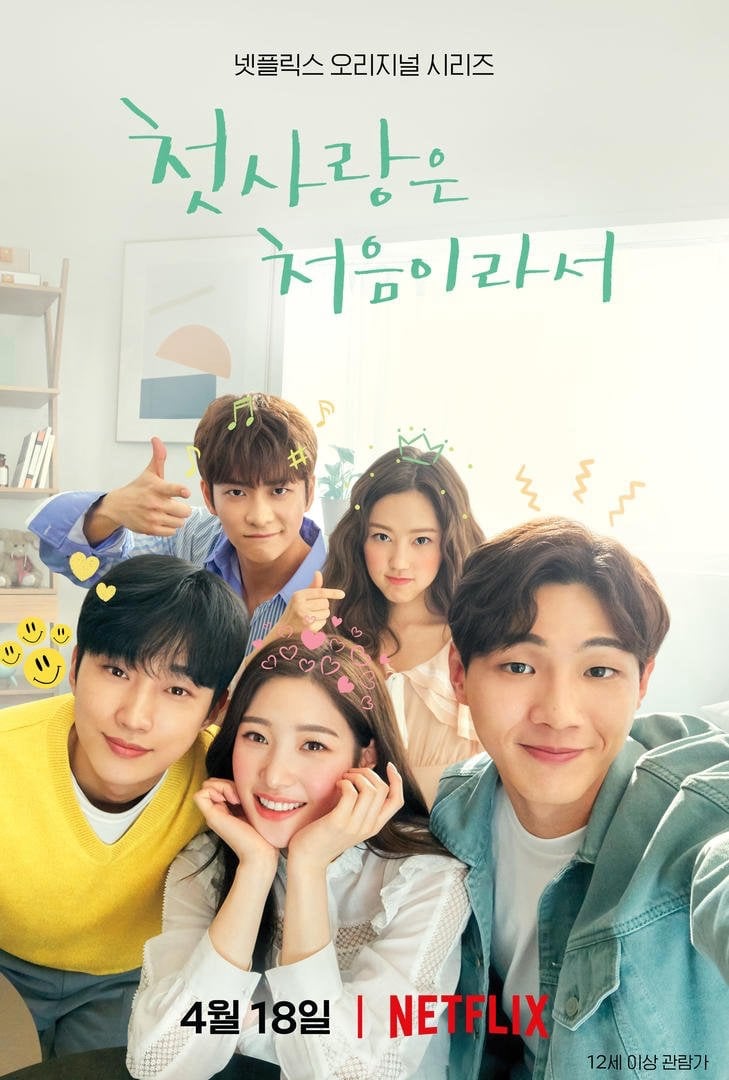
‘My First First Love’ is the coming-of-age K-drama you need now
Netflix still keeps My First First Love on its menu years after the 2019 premiere, and the show continues to draw fresh viewers who want a low-stakes, character-driven romance. The series follows five twenty-somethings who move into a Seoul house left to Yun Tae-o by his grandfather. They arrive with separate problems and slowly turn the shared space into their own version of a safety net. The result is a gentle two-season story that rewards patience and small gestures more than grand declarations.
Slow & sentimental
The pacing stays deliberate across the full sixteen episodes. Tae-o does not rush the new household into perfect harmony, and the writers let every relationship find its own rhythm. Song-i is still reeling from her father’s death and her mother’s abrupt departure. Hun has been cut off from family money while he chases a music career. These setbacks unfold at a measured clip so the audience can watch the characters absorb change instead of simply reacting to it. The slower tempo also lets quiet moments land: late-night kitchen talks, shared errands, and the first time someone leaves a light on for another roommate. Because nothing is forced, the affection that grows between the five friends feels earned rather than scripted.
A cast with chemistry
Ji Soo, Jung Chae-yeon, Jung Jin-young, Choi Ri, and Kang Tae-oh already looked comfortable together in the original press rounds, and that ease has held up in fan rewatches. Their off-screen friendships and shared idol backgrounds add an extra layer of believability to the on-screen group dynamic. Viewers still single out the same scenes years later: Tae-o’s silent glances at Song-i, Hun’s goofy attempts to lighten the mood, and the way Ga-rin quietly anchors the household. The chemistry never feels manufactured because the actors treat every interaction like an inside joke the audience is finally allowed to hear.
Heart-warming innocence
The series earns its title by focusing on first experiences without turning them into spectacle. Tae-o has carried a crush on Song-i since elementary school, yet he still stumbles through basic jealousy when she begins to notice someone else. The house rule that Tae-o cannot bring girls home is broken almost immediately, but the breach is treated as a nervous milestone rather than a rebellion. Every character is learning how to budget, how to apologize, and how to sit with disappointment. That inexperience keeps the tone light even when the stakes feel real, and it explains why the show still registers as comforting rather than dated.

Streaming legacy and rewatch value
Netflix continues to list the series in 2026, and algorithmic roundups frequently place it beside other idol-led titles. New subscribers discover it the same way longtime fans return to it: as a reliable comfort watch that does not require heavy emotional labor. The two completed seasons give the story a tidy arc, so viewers can finish both without waiting for further installments. That closed chapter status has helped the show settle into steady rotation among people who want a K-drama they can pause and pick up again months later.
Cast career updates since 2019
Jung Jin-young has kept a steady stream of acting roles while maintaining his work with B1A4. Jung Chae-yeon balanced further music releases with additional drama parts. Kang Tae-oh moved into higher-profile projects that expanded his range beyond the earnest roommate he played here. Each actor’s continued visibility has sent curious viewers back to My First First Love to trace early performances, and the original group dynamic now doubles as a time capsule of where these careers began.
Themes of found family and independence
The household premise gives the series its lasting hook. Five friends with uneven support systems decide to pool resources and emotional labor under one roof. Song-i confronts sudden financial pressure, Hun negotiates artistic ambition without family backing, and Tae-o learns that ownership of a house does not automatically confer authority over the people inside it. Their experiments in adulthood play out through shared chores, quiet arguments, and the occasional group meal that turns into an impromptu support session. The found-family angle resonates because the characters never fully outgrow their need for one another, even after individual storylines reach resolution.
K-pop idol crossovers in K-dramas
The cast’s idol credentials place My First First Love inside a recognizable Netflix lane. Jung Chae-yeon’s ties to I.O.I. and DIA, Jung Jin-young’s B1A4 tenure, and Kang Tae-oh’s 5urprise background are all referenced in the platform’s own idol-drama roundups. That crossover appeal widens the audience: music fans tune in for familiar faces, while drama viewers discover new artists. The trend shows no sign of slowing, and this series remains an early, low-pressure example of how idol casting can support rather than overshadow a story about ordinary growing pains.
My First First Love still functions as an accessible entry point for anyone curious about slow-burn K-dramas. Its focus on first apartments, first heartbreaks, and first attempts at independence keeps the narrative grounded even after multiple rewatches. Viewers who finish both seasons often cite the same quality: the show treats its characters with patience and never rushes the quiet work of becoming an adult.