Trending News
Jeffrey Epstein’s Little St. James, a tiny island off the coast of St. Thomas in the U.S. Virgin Islands. Here's what life was like on the island.

What was life on Jeffrey Epstein’s island like? Little St. James

Jeffrey Epstein’s Little St. James, a tiny island off the coast of St. Thomas in the U.S. Virgin Islands, was a private getaway for the rich & famous. Its little black book of guests included the likes of Jimmy Buffet, Courtney Love, and other prominent executives, politicians, and celebrities. 
Custom location

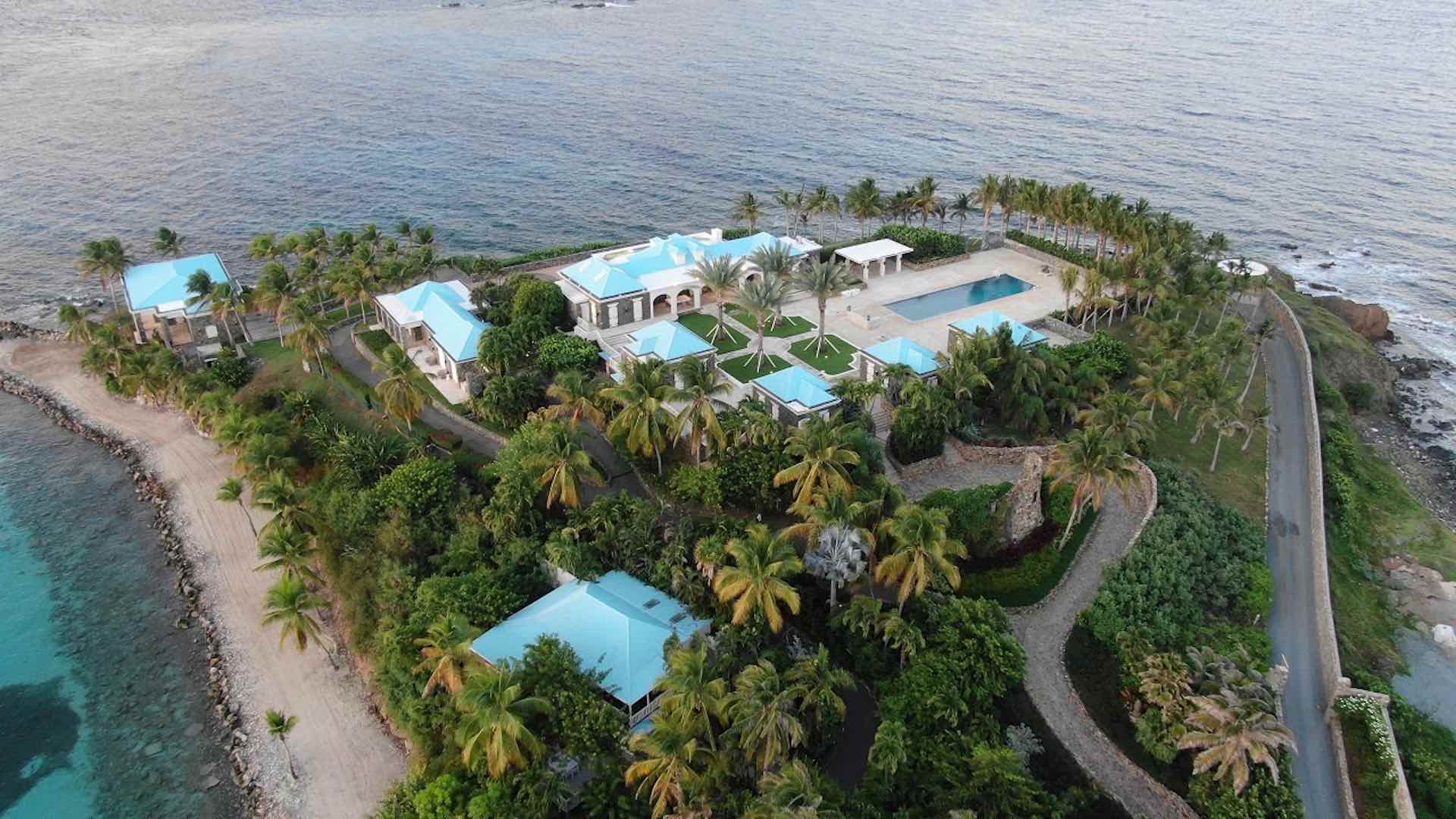
In 1996, Epstein paid $7.95 million for the seventy-five-acre property and had Ed Tuttle, an architect known for his work on luxury resorts, design the island compound. The primary residence was arranged in a “Danish style” layout: individual bedroom suites in discrete buildings surrounding a courtyard, including a pair of large cockatoo statues in the gardens. 

Now valued at over $63 million, Little St. James is a playground with a sauna, cabana, and bar. According to Steve Scully, former IT contractor for Epstein, recalled the financier wanting to change the name of the island from “Little St. James” to “Little Saint Jeff”. 

As of a 2008 New York Times report, Little St. James had a staff of seventy and five buildings including a villa-style compound, library, cinema, detached bathhouse, and cabanas. There was even a “flamingo-stocked lagoon”. In 2016, Epstein bought the larger Great St. James – a 165-acre island also off the coast of St. Thomas – for $17.5 million. Per the Virgin Islands Daily News, he was planning to build a complex there.
Lyrical lair

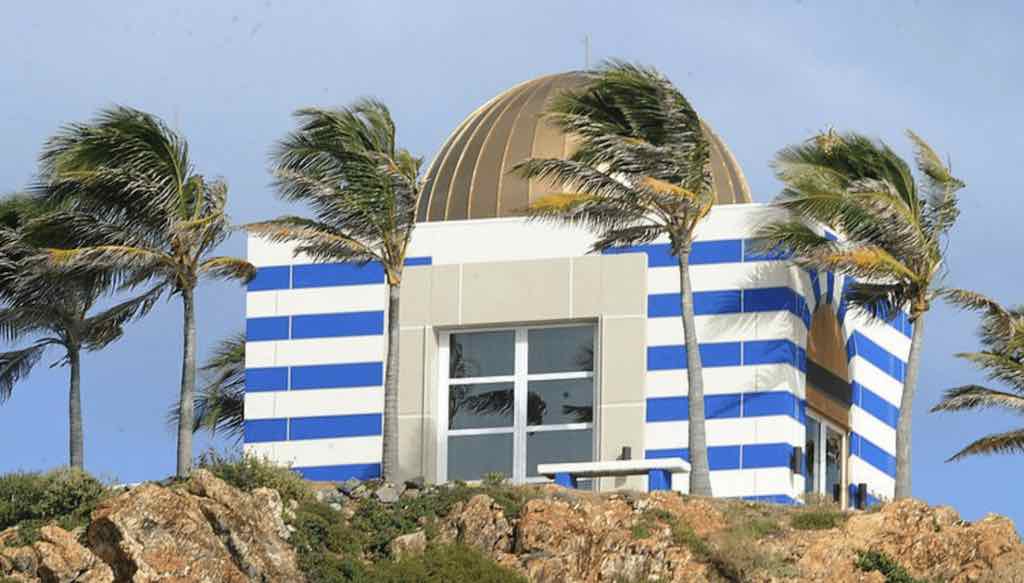
A colorful building some news reports have called the “temple” was actually a gym where Epstein worked out on Little St. James. Scully noted in an interview with ABC News that the gym had a memorable feature: a huge framed photo of a topless woman.

To understand the true purpose of the structure, a Business Insider reporter interviewed Patrick Baron, a piano tuner who had visited the two-floored building twice. Baron recalled seeing a black grand piano, bookshelves, a dark wood desk, and portrait of Epstein – or the Pope (he wasn’t sure which). He classified the structure as a “study” – or even a lair.

“I went in there knowing absolutely nothing about Epstein, except that he was wealthy,” Baron told Business Insider. “And after doing the job and talking to some of my other clients on St. Thomas, and they filled me in on the scandal, my perception of that room changed from a study to a lair.”

Gaggles of girls

Steve Scully said he ended his business relationship with Epstein over personal concerns about troupes of apparently unsupervised young women on Little St. James. Scully said his reluctance to continue working there was underlined by what he recalled was an extensive collection of photos of topless women displayed throughout the island’s compounds.

“There were photos of topless women everywhere,” reported Scully, a 69-year-old father of three girls who said he worked for Epstein for six years beginning in 1999. “On his desk, in his office, in his bedroom.” 
Shame-faced father

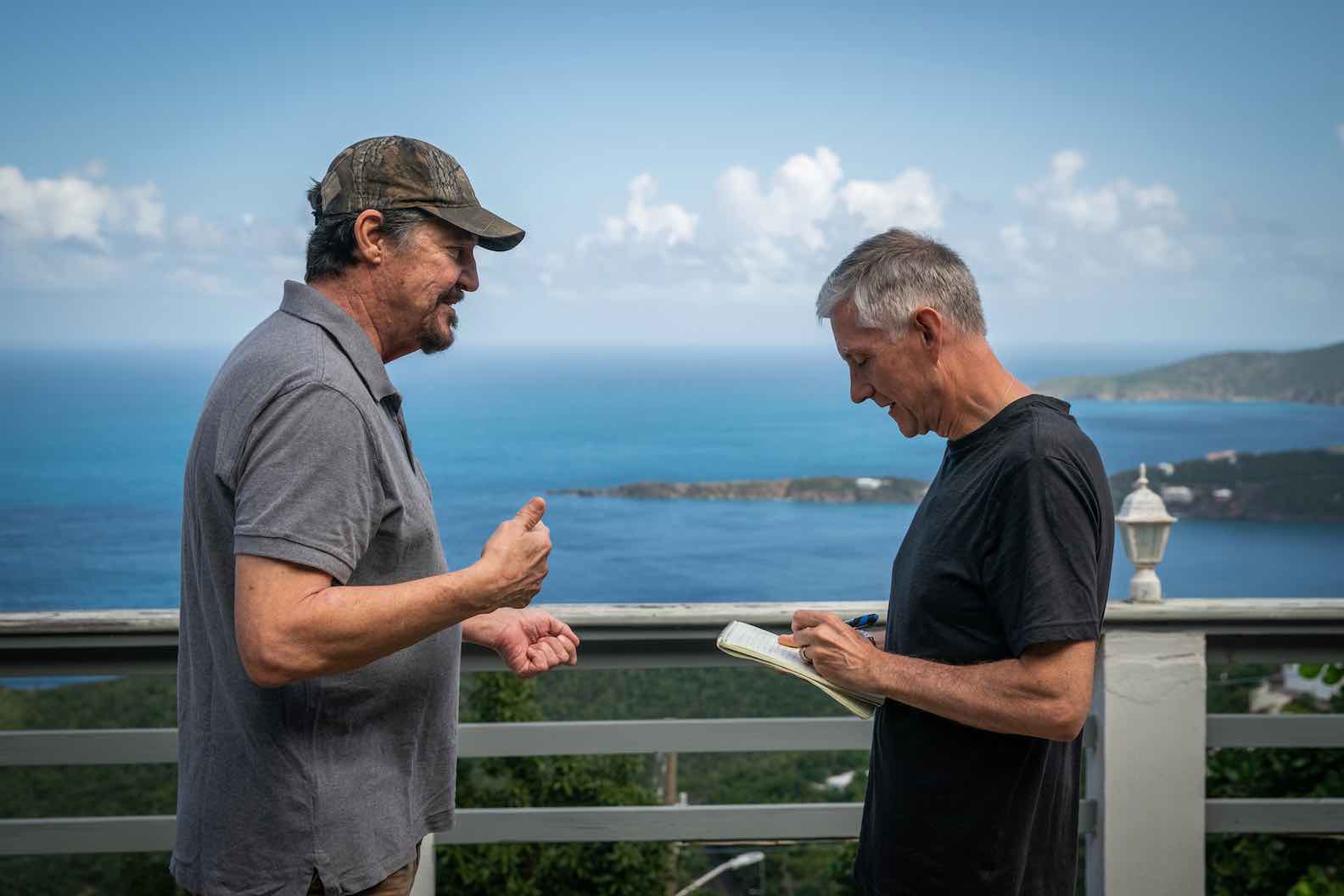
Scully told ABC News he was the chief owner & operator of a telecommunications business on the island of St. Thomas when he was contracted by Epstein to set up a communications network on Little St. James. While employed Scully estimates he visited the exclusive island more than 100 times.

“The truth is, I was there for six years,” Scully explained. “I really started seeing things weren’t normal in the first year. And I started . . . I wear shame and guilt. Because you know what? When you allow money to dictate your moral consciousness, you’ve lost all idea of moral consciousness. It’s not about the money. It can’t be.” 

ABC News reviewed invoices provided by Scully during the period of his employment, each billed to “Little St. James”, one of Epstein’s corporations. Scully estimated that he did about $400,000 worth of business with Epstein – something he now admits to regret. 

Celebrity receptions

According to the Miami Herald, Epstein’s “plane records show that during the time he was abusing young girls, he was flying former President Bill Clinton, Harvard professors and administrators, Nobel-prize winning scientists, actresses, actors, philanthropists and a who’s who of wealthy and powerful people to his island”.

“Bill Clinton has been on that island. I saw Bill Clinton sitting with Jeffrey on the living room porch,” claims Scully in the Netflix documentary Jeffrey Epstein: Filthy Rich.
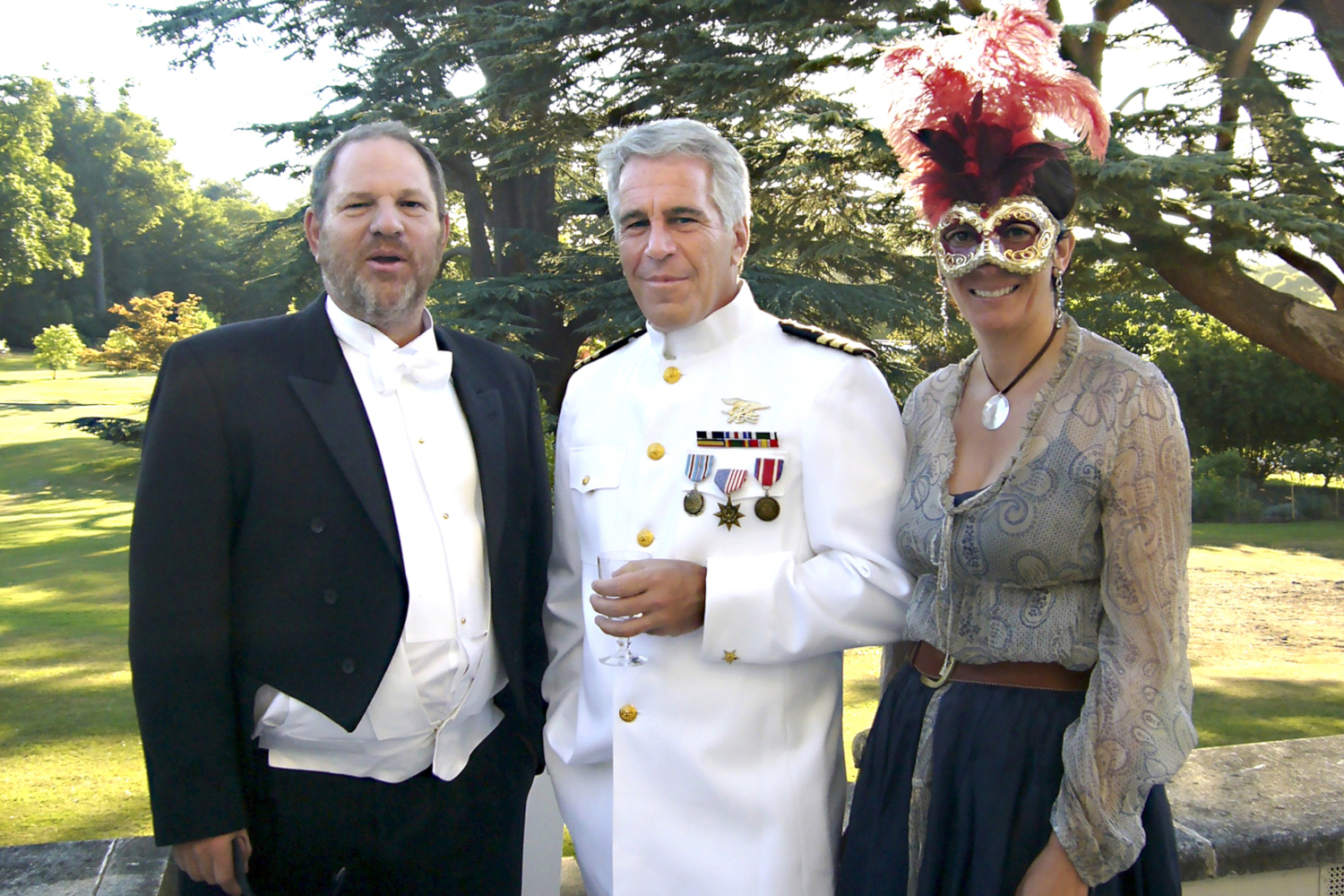
Virginia Roberts Giuffre, who accused Jeffrey Epstein of sexual abuse when she was a minor, also noted having seen Clinton on the island in Filthy Rich. “I remember having dinner with Clinton. He was there, and I never saw him do anything improper. I wish he would just come clean about ‘Yeah I was there, so what, who cares? I didn’t see anything going on.’”

Scully also alleges he saw the UK’s Prince Andrew groping Giuffre by the pool. Buckingham Palace has issued a number of statements refuting allegations that Prince Andrew behaved inappropriately.

Life on Jeffrey Epstein’s private Caribbean island, Little Saint James, was deliberately constructed to appear idyllic—luxurious, secluded, and untouchable. But behind the palm trees, private jets, and turquoise water, multiple investigations, court filings, and survivor testimonies paint a far darker picture.

Little Saint James, located in the U.S. Virgin Islands, was purchased by Epstein in 1998. Often referred to in the media as “Pedophile Island,” it functioned as both a retreat and a controlled environment where Epstein exercised near-total power. Access was tightly managed. Guests arrived by private plane or boat, staff signed strict non-disclosure agreements, and surveillance cameras were reportedly widespread.

On the surface, life on the island looked like billionaire leisure. There were luxury villas, tennis courts, beaches, and staff to cater to every need. High-profile visitors allegedly included politicians, scientists, financiers, and celebrities, though Epstein consistently claimed the island was simply a place for networking and relaxation. That narrative collapses under the weight of sworn testimony.

According to multiple victims, the island was one of several locations where Epstein trafficked underage girls. Survivors have described being flown to the island, isolated from the outside world, and coerced into sexual acts. The remoteness of Little Saint James made escape nearly impossible. There were no neighbors, limited cell service, and staff who answered directly to Epstein or his close associates.

Several victims reported a rigid hierarchy. Epstein was at the top, followed by enablers—most notably Ghislaine Maxwell—who recruited, groomed, and controlled girls. Staff, including pilots, housekeepers, and maintenance workers, often claimed ignorance, though court documents suggest some were aware something was wrong but felt powerless or incentivized to stay silent.

The island itself contained unsettling features. A blue-and-white striped temple structure drew particular scrutiny. Epstein offered varying explanations for it, including that it was a music room or meditation space. Survivors and investigators, however, have suggested it may have been used for abuse or surveillance. Epstein also reportedly had safes, locked rooms, and areas off-limits even to staff.

Surveillance played a key role in maintaining control. Victims have testified that encounters were filmed, and that Epstein used recordings as leverage. This aligns with broader allegations that Epstein collected compromising material on powerful individuals, though definitive proof of a systematic blackmail operation has not been publicly established.

After Epstein’s first conviction in 2008 for soliciting a minor—resulting in a controversial non-prosecution agreement—life on the island reportedly continued much the same. He traveled freely, hosted guests, and retained wealth and influence. The lack of meaningful oversight reinforced the sense that Little Saint James existed outside normal rules.

That illusion shattered in 2019, when Epstein was arrested on federal sex-trafficking charges. Following his death in custody, the island became a focal point for investigators, journalists, and the public. The FBI searched the property, removing evidence including computers, hard drives, and other materials.

Today, Little Saint James stands as a symbol of systemic failure. Life on the island was not just about one man’s crimes, but about the structures that enabled them: wealth without accountability, secrecy enforced by fear and contracts, and institutions that repeatedly looked the other way.

What we know about life on Epstein’s island comes largely from those who survived it. Their accounts reveal not a paradise, but a carefully engineered trap—one that functioned for decades in plain sight.

Confirmed presence on Little Saint James (publicly documented):

  • Prince Andrew — Acknowledged association with Epstein; photographed with Epstein and Virginia Giuffre; Giuffre testified she was trafficked to Epstein’s properties including the island. Andrew denies wrongdoing but his presence on Epstein properties, including the Virgin Islands, is established through testimony and reporting.

  • Stephen Hawking — Photographed on Little Saint James in 2006 during a scientific conference Epstein hosted in the U.S. Virgin Islands. No allegations of misconduct; attendance documented via photos and event records.

  • Bill Clinton — Appears on Epstein flight logs multiple times; photographed with Ghislaine Maxwell.

Not confirmed on the island (often misreported):

  • Leonardo DiCaprio — Attended a New York dinner with Epstein; no evidence of island travel.

  • Naomi Campbell — Photographed with Epstein in New York and elsewhere; no proof of island visit.

  • Kevin Spacey, Chris Tucker, Alan Dershowitz — Names appear in logs or social circles; no verified evidence of presence on the island.

Alleged but not proven:

  • Bill Richardson and others named in civil testimony by Virginia Giuffre — allegations only, denied by those named; no independent confirmation of island presence.

Bottom line:
Confirmed celebrity visits to Epstein’s island are extremely limited. Many high-profile names are linked via flights, social events, or allegations—but confirmation requires photos, admissions, or corroborated records placing them on Little Saint James itself.

Uncover the surprising link between Bill Clinton & Jeffrey Epstein with recent DOJ files—images and evidence challenging his claims. Find out what the new revelations reveal.Inside Epstein’s island: what recent drops reveal about life there

Recent document and image releases related to Jeffrey Epstein’s private island, Little Saint James, have added new detail to what life on the property likely looked like and who may have been present there. While much of the public narrative has focused on famous names, the latest material instead sharpens the picture of the island as a tightly controlled, highly curated environment designed for privacy, isolation, and power.

The lifestyle on the island appears to have blended extreme luxury with near-total secrecy. The compound included multiple villas, guest houses, pools, a helipad, and unusual standalone structures, all spread across an island accessible only by private aircraft or boat. Movement in and out was deliberate and monitored. Staff lived on-site or nearby, worked under strict instructions, and operated within a hierarchy that centered entirely on Epstein and his closest associates.

What stands out most from recent drops is how well the island functioned as a closed system. Visitors could be entertained, housed, and isolated without relying on the outside world. That isolation is critical to understanding who may have been living or staying there. Survivor accounts, reinforced by court filings, describe girls — many of them teenagers — being flown to the island, sometimes staying for days at a time. These girls were not tourists. They were reportedly housed, supervised, and controlled, with little ability to leave or communicate freely.

The documents do not suggest the girls lived there permanently, but they do indicate repeated, organized transport of young women and girls to and from the island. Some survivors described a routine: arrival, grooming, abuse, and removal, often followed by silence enforced through fear, money, or manipulation.

The recent drops reinforce a grim conclusion. Little Saint James was not just a vacation home. It was an intentionally designed space where wealth, remoteness, and authority converged to create an environment in which exploitation could occur repeatedly, quietly, and for years without interruption.

THE BILL CLINTON POOL PHOTO, THE FLIGHT LOGS, AND THE REAL QUESTION PEOPLE ARE ASKING

Let’s be honest about why the Bill Clinton pool photo hit a nerve. It’s not just the image itself — it’s the context around it. Clinton wasn’t a random acquaintance who crossed Epstein’s path once or twice. He appears on Epstein’s flight logs multiple times, across several years, traveling on the financier’s private jet. That alone doesn’t prove criminal behavior, but it does undermine the idea that this was a brief, inconsequential association.

The pool photo matters because it visually confirms proximity. It shows Clinton relaxed, social, and comfortable in Epstein’s inner circle, alongside Ghislaine Maxwell — now a convicted sex trafficker. Even without a date or location, the image contradicts attempts to minimize how close that relationship actually was. This wasn’t a handshake at a fundraiser. It was leisure time.

Clinton has repeatedly said he never visited Little Saint James. Technically, that may still be true. But the broader question many people are asking isn’t “Was he on the island?” It’s “Why was a former U.S. president repeatedly accepting private flights, hospitality, and access from a man who was already widely rumored to be predatory?”

By the early 2000s, Epstein’s reputation was not clean. His wealth was opaque. His lifestyle was excessive. His interest in young women was visible. Powerful people continued to associate with him anyway — and that’s where cynicism enters. At best, it suggests astonishingly poor judgment. At worst, it raises questions about what was ignored, tolerated, or quietly normalized in elite circles.

The pool photo doesn’t prove a crime. The flight logs don’t either. But together, they paint a picture that is hard to wave away as incidental. Epstein didn’t gain legitimacy by accident. He gained it because influential people kept showing up, getting on the plane, and enjoying the perks — even when the warning signs were already there.

What we learned from Jeffrey Epstein: Filthy Rich

  • This wasn’t a party island. It was operations.
    Virginia Giuffre describes a tightly run system: girls flown in, controlled, rotated through Epstein’s routine, with staff handling logistics and silence. Paraphrased from the series.

  • Recruitment was the con.
    Annie Farmer recounts being lured under false pretenses—work, opportunity—then realizing too late the world she’d entered ran on impunity, money, and connections. Paraphrased.

  • Homes as machines, not homes.
    Maria Farmer says Epstein’s properties functioned like systems: rules, schedules, enablers everywhere—designed to isolate victims and normalize abuse. Paraphrased.

  • Control beat spectacle.
    Survivors describe repetition, isolation, and normalization. Violence wasn’t the brand; routine was.

  • The island wasn’t unique—privacy was.
    New York. Palm Beach. New Mexico. Same playbook. The island just cut down witnesses.

  • Staff weren’t clueless.
    Multiple accounts point to drivers, house managers, assistants facilitating access and keeping the machine running. Paraphrased.

  • Protection was engineered.
    Brad Edwards, victims’ attorney, frames Epstein as building insulation into every layer—lawyers, fixers, staff—so consequences rarely landed. Paraphrased.

  • Institutions failed on repeat.
    Investigative journalists featured point to plea deals, non-prosecution decisions, and missed warnings that functioned like a hall pass for years. Paraphrased.

  • Luxury was camouflage.
    Jets, estates, exclusivity—status as a silencer.

  • Bottom line: Not excess. Design.

Share via: