‘Barry’ S2E5 “Ronny/Lily” recap: Perfect television
Barry’s second season had already proven it could pivot from comedy to carnage in a single scene, but “Ronny/Lily” took that shift and ran it straight into the suburbs at full speed. What began as a straightforward extraction job turned into a feral, almost dreamlike fight for survival, and the episode still stands out as one of the sharpest hours the series ever delivered.
The drama begins
The cold open drops us straight into Ronny Proxin’s driveway with no preamble. Ronny, played by Daniel Bernhardt, pulls up in a muscle car, grabs a six-pack, and settles in for a quiet night. The camera lingers on the empty rooms and the taekwondo trophies lining the walls, signaling that this house belongs to someone who trains hard and lives alone. Written by Alec Berg and Bill Hader and directed by Hader, the episode wastes no time establishing that Barry has arrived not to kill Ronny but to spirit him away to Chicago until the heat dies down. Ronny stays eerily cooperative while packing, and the silence makes every small sound feel like a warning.
Break the tension, already!
Barry keeps up nervous small talk in his black outfit and red balaclava while Ronny finishes his joint. The quiet finally snaps when Ronny delivers a sudden donkey kick that drops Barry cold. Once Barry wakes, the fight moves through the trophy room in a blur of precise strikes and improvised weapons. Barry manages to crush Ronny’s windpipe, yet the older fighter keeps coming until he finally collapses. Just as Barry thinks the job is done, Ronny’s daughter Lily appears in the doorway wearing her white martial-arts gi. The tone shifts from tense standoff to something far stranger.
True star of the episode
Lily, portrayed by Jessie Giacomazzi at roughly twelve years old, immediately takes over the screen. She growls, leaps across the kitchen island, and uses every surface as a weapon. Barry refuses to strike back, which only makes the scene more unsettling. Lily finally stabs him three times in the back before vanishing out the window and scaling fences like an animal. From that moment the episode stops feeling like standard Barry and starts operating in its own surreal register.
Casting and Performances
Daniel Bernhardt brought real martial-arts credibility to Ronny, turning the character’s physical threat into something believable rather than cartoonish. His background in fight choreography helped sell the extended hand-to-hand sequences without relying on quick cuts. Jessie Giacomazzi’s work as Lily gave the episode its wild-card energy; she played the feral child without tipping into parody, and her physical commitment made the kitchen fight and rooftop escape feel genuinely dangerous. The limited main-cast presence—only Hader and Stephen Root appear—kept the focus tight on these two guest performances and the Barry-Fuches dynamic.
Directorial Choices and Production
Hader directed the hour with a deliberate lack of score, letting ambient sounds and breathing carry the tension. The absence of music made Lily’s sudden attacks land harder and kept the suburban setting from feeling safe. Behind-the-scenes work included CG assistance for her tree-climbing escape and careful stunt coordination to protect the young performer during the kitchen brawl. These choices reinforced the episode’s horror-comedy blend and gave the action sequences a grounded, almost documentary quality.
A moment of calm
Barry staggers back to the car where Fuches waits, more worried about whether the job is finished than about Barry’s bleeding wounds. As Barry drifts in and out of consciousness, he dreams of running toward loved ones across a desert plain, only to see Fuches waiting at the end. The sequence quietly reframes their relationship as something inescapable. Fuches and Barry later spot Lily perched on a rooftop like a gargoyle; when she attacks again, Fuches begs Barry to shoot her, but Barry refuses. Lily escapes, leaving both men bloodied and shaken. The dream returns, underscoring that Fuches remains the one constant in Barry’s life, for better or worse.
Legacy and Critical Acclaim
At the time of its 2019 airing, the episode already felt like a turning point. In later rankings it has repeatedly landed at number one on “best Barry episodes” lists, cited for its surreal tone and its willingness to push the show’s blend of violence and absurdity. Critics have pointed to the Lily sequences as the moment the series fully embraced horror-comedy, and the lack of score has been credited with influencing later episodes that leaned into silence during set pieces. The episode’s cult status has only grown since the series ended.
I wouldn't want to clean this mess up
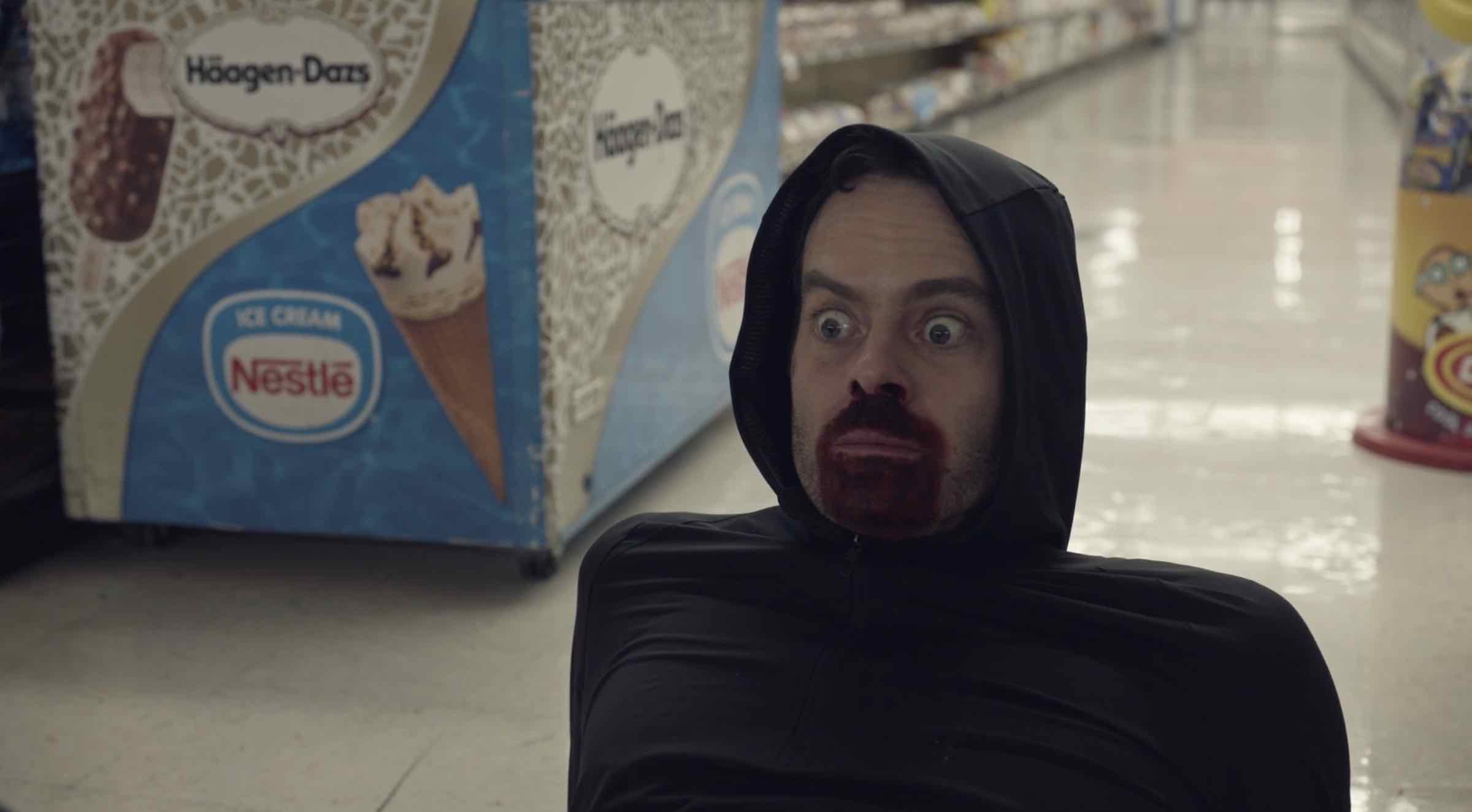
Barry and Fuches stop at a grocery store for supplies, where Ronny is also shopping for his injuries. Another brutal fight breaks out until Detective Loach arrives and shoots Ronny. Ronny still manages one final roundhouse before Loach is taken down in the crossfire. Barry slips away and reaches Fuches’s car, pausing before climbing in. The moment captures Barry’s ongoing choice between staying tied to Fuches or striking out alone. Ronny and Loach’s deaths closed that particular Season 2 thread, and the series itself concluded after Season 4 in 2023 with no revival announced. The events of “Ronny/Lily” continued to echo through Barry’s relationship with Fuches right up to the finale.
Series Context and Aftermath
By the time the show wrapped, the grocery-store standoff and the desert dream had become shorthand for Barry’s inability to escape his past. The episode’s events fed directly into later seasons’ exploration of whether Barry could ever separate himself from Fuches or from the violence that defined their partnership. With the series now complete, the hour stands as both a high point of Season 2 and a preview of the darker, stranger tone the show would fully embrace before signing off.