


Trending News
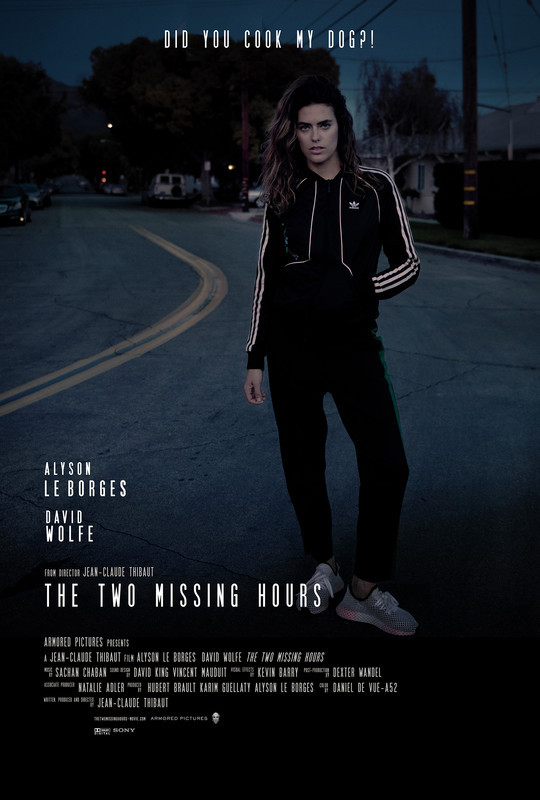
'The Two Missing Hours' is a new short by director Jean-Claude Thibaut. Learn about the film and its chilling premise.

Recover lost time with the indie film ‘The Two Missing Hours’

We all have moments in life where we feel out of sorts. We feel like the world around us is off balance, and we are seemingly the only one who notices. This sensation; this concerning, sometimes unsettling feeling is the basis of the chilling new short film The Two Missing Hours.

The film trails Lisa (Alyson Le Borges) as her father (David Wolfe) drives her back home from a mental facility. Before she’s able to get settled, however, Lisa discovers that two hours of her life have gone missing and she doesn’t remember what happened. Her quest to find out what happened during this two hour period leads her on a terrifying odyssey to discover the truth about herself and her father. The only piece of advice she has to go on is the chilling voice that states: “…if you find your lipstick, you’ll find your missing two hours.”

We don’t want to spoil what happens to Lisa or her father, but we will say that everything she sees and hears may not be what it seems. The film does a superb job of building tension and dispersing clues at the right times, and much of this superbness is due to writer/director Jean-Claude Thibaut. He takes full advantage of the psychological thriller genre in which he is playing, and uses every suspenseful trope to his advantage.

The Two Missing Hours manages to fit a lot of plot into a brief runtime, which is a testament to the strong construction of the screenplay. Thibaut knows when to pull back and when to go all out with the revelations, and it doesn’t hurt that he pulls great performances out of both Le Borges and Wolfe. The actors have chemistry together, which makes the uneasiness of their characters’ relationship all the more palatable. The viewer can sense something is wrong from the onset.
The meticulousness of Jean-Claude Thibaut’s direction is not accidental. The French artist likens himself to a watchmaker, in that every component of his films is planned and executed with precision. He started making 8mm shorts with his friends when he was a pre-teen, and by the time he was an adult, he had honed his sharp filmmaking skills. His 1994 short Lethal Wings featured an early score by Alexandre Desplat and played at over 70 film festivals around the world.

Thibaut’s detail-oriented style made him a natural fit for the ad world. The success of his second short, South, led to him landing an ad for Armani’s L’Oréal division in 2001. He’s since gone on to direct ads for other high end fashion clients, including Chanel, Hermes, Estée Lauder, Salvatore, Ferragamo, and Dior.

In 2008, Thibaut formed the Paris-based production company Advancedroom (renamed ARMORED), where he produced a number of short films for Armani. These shorts saw him collaborate with global stars like Megan Fox and Cristiano Rinaldo.

Jean-Claude Thibaut made The Two Missing Hours as a means of spreading awareness about trauma and cyclical abuse. “This short highlights the idea of serial killers being survivors of abuse themselves— often physical or sexual, within their families or close circle”, he explained. “The fictional character portrayed in my story walks you through the recreated circle of abuse, from childhood to present.”

Thibaut is donating all the proceeds from Two Missing Hours to Casa of Los Angeles, which is a community that volunteers to advocate for children who have experienced abuse and neglect.

Movie Review

The Two Missing Hours is the kind of indie film that sneaks up on you—quiet in its setup, deceptively simple in its premise, and gradually unsettling in the way it reframes time, memory, and personal responsibility. Compiled from critical reactions and audience responses circulating online, the consensus is clear: this is a small film punching well above its weight, less interested in spectacle than in the slow corrosion of certainty.

At its core, The Two Missing Hours revolves around a deceptively modest mystery. A gap in time—two unaccounted-for hours—becomes the fulcrum on which the entire story pivots. What initially plays like a restrained psychological puzzle soon reveals itself as something more existential. Reviewers frequently note that the film resists the urge to spoon-feed explanations, instead allowing unease to accumulate through implication, repetition, and emotional aftershocks rather than overt twists.

One of the most praised elements is the screenplay’s discipline. Many indie films dealing with time loss or fractured memory overcomplicate their mythology. Here, restraint is the weapon. The missing hours are never treated as a gimmick; they function as a narrative void, a negative space that characters—and viewers—are forced to confront. Critics have highlighted how this absence becomes more disturbing than any explicit event could have been. The film understands that what isn’t shown often lingers longer than what is.

Performance-wise, reactions consistently single out the lead actor for grounding the film’s conceptual ambitions in something human and tactile. The protagonist’s growing paranoia is portrayed not through melodrama but through micro-adjustments: hesitations in speech, a tightening jaw, a glance held just a second too long. Several reviews remark that the film’s emotional credibility hinges on this performance, and that it succeeds largely because the actor never plays “confused” as a single note. Instead, confusion mutates—into denial, anger, bargaining, and finally something closer to resignation.

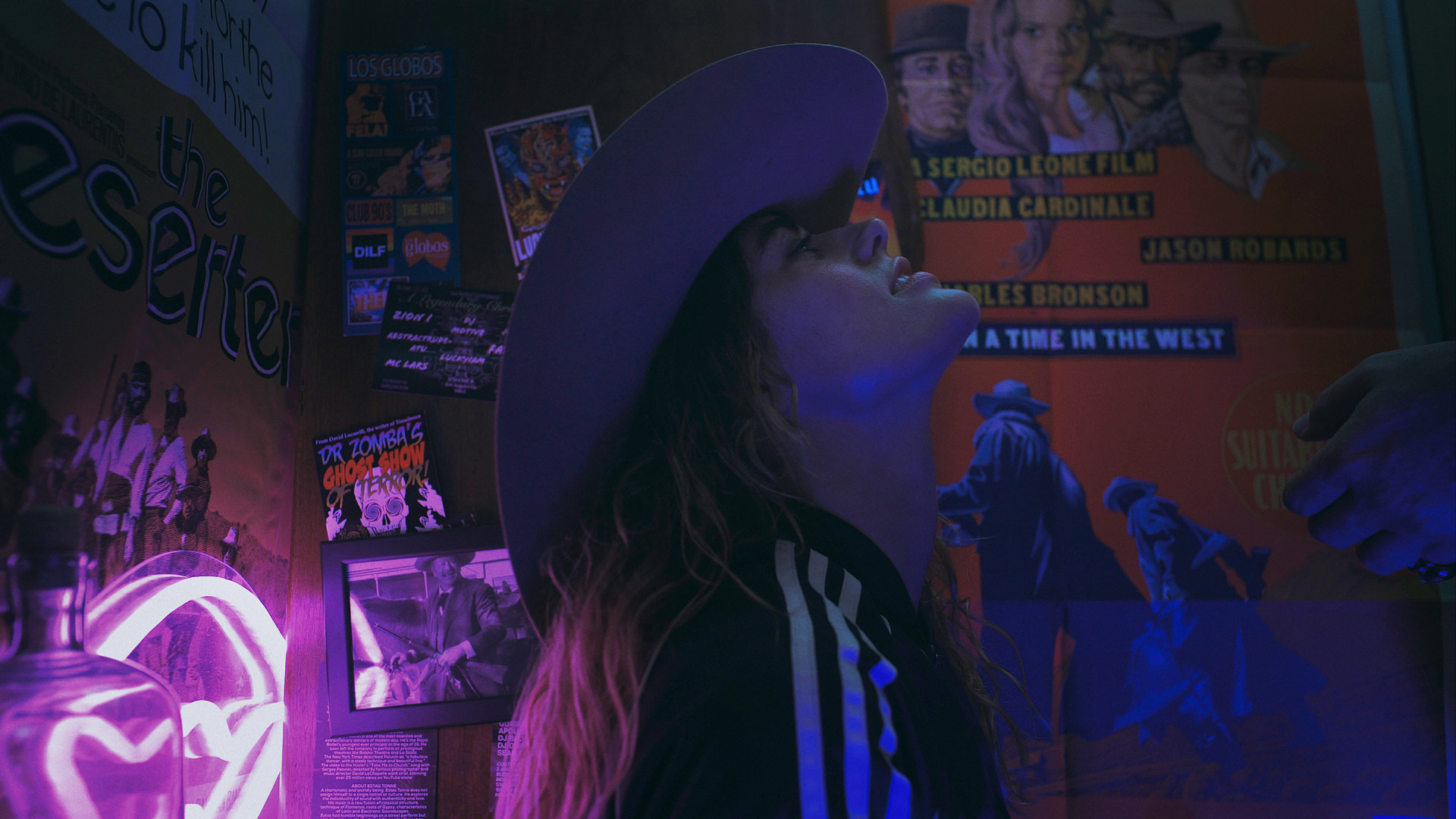
Visually, The Two Missing Hours leans into austerity. Cinematography is often described as clean, muted, and slightly oppressive, with a color palette that drains warmth as the narrative progresses. Reviewers point out the effective use of familiar spaces—apartments, streets, workplaces—that slowly begin to feel alien. The camera rarely calls attention to itself, but when it does, it’s purposeful: static frames that trap characters, or slow pushes that suggest inevitability rather than discovery.

Sound design and score receive quieter but consistent praise. The film reportedly avoids over-scoring emotional beats, opting instead for ambient sound and long stretches of near-silence. When music does appear, it’s sparse and textural, reinforcing disorientation rather than guiding emotion. Several critics note that the absence of sound during key moments is what makes those scenes linger longest after the credits roll.

Where opinions diverge slightly is in the film’s refusal to provide clean answers. Some viewers describe the ending as haunting and intellectually honest, arguing that ambiguity is the point—that the film is less about solving the mystery and more about living with what cannot be recovered. Others find this approach frustrating, feeling that the narrative withholds too much. Even among detractors, however, there’s acknowledgment that the choice is deliberate rather than careless.

Thematically, reviewers often connect The Two Missing Hours to contemporary anxieties: burnout, dissociation, the sense of time slipping away under modern pressures. The missing hours become a metaphor for emotional absenteeism, for moments lived on autopilot and later regretted. The film doesn’t moralize, but it does provoke an uncomfortable question echoed across multiple reviews: if you lose time without noticing, were you ever truly present to begin with?

As an indie project, the film has also been praised for its efficiency. Limited locations, a small cast, and a focused narrative are used not as constraints but as strengths. Critics frequently mention that the film feels confident in what it is—and, crucially, what it refuses to be. There’s no attempt to franchise the concept or inflate it beyond its emotional scope.

Taken as a whole, The Two Missing Hours earns its reputation as a thoughtful, unsettling piece of indie cinema. It’s not designed for passive viewing or easy reassurance. Instead, it rewards patience, attention, and a tolerance for discomfort. For audiences willing to sit with unresolved questions and reflect on their own lost time, the film doesn’t just recover two missing hours—it quietly steals a few more long after it’s over.

Share via:
Sponsored Post