Melbourne Documentary Film Festival: ‘Silent Forests’
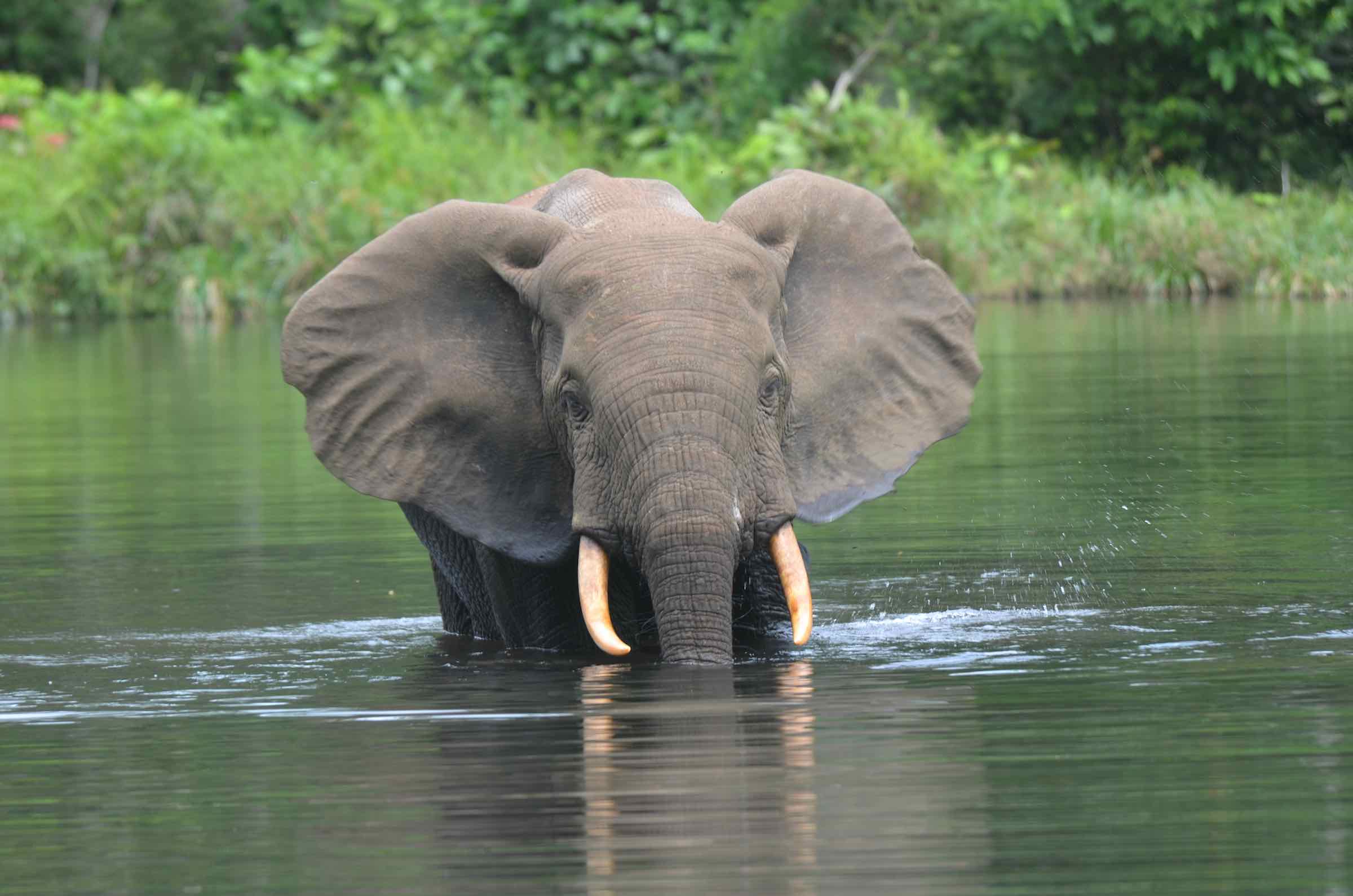
Today we’re profiling the 2019 documentary Silent Forests, which takes viewers to the front lines of central Africa’s battle to save forest elephants. After a study revealed that more than half of the Congo Basin forest elephant population had been lost to poaching in the previous decade, conservation groups launched coordinated efforts to protect those elephants that remained. Silent Forests explores this story through a range of dynamic subjects, including one of Cameroon’s first female eco-guards, a grassroots wildlife law enforcement group, a Congolese biologist studying elephant behavior, a reformed elephant poacher, and a team of anti-poaching sniffer dogs led by a Czech conservationist. As passionate and tenacious as these conservationists are, they’re up against huge institutional challenges like corruption and lack of funding that threaten to derail all their attempts to fight for the future of the forest elephant. We sat down with director, producer, and writer Mariah Wilson in advance of Silent Forests’s screening at Melbourne Documentary Film Festival.
Current Status of African Forest Elephants
The 2025 IUCN African Forest Elephant Status Report estimates roughly 135,690 surveyed individuals across known ranges, with an additional 7,728 to 10,990 in unsurveyed areas, bringing the total near 145,000. The species remains listed as Critically Endangered. Improved DNA-based survey methods explain the higher count compared with earlier undercounts, and 94 percent of current estimates now meet reliability standards versus just 53 percent in 2016. These updated figures replace the film’s original references to 40,000 elephants and a 60 percent loss over ten years. Historical declines exceeded 86 percent over 31 years through 2015, with a 62 percent drop recorded between 2002 and 2011. Better monitoring has not reversed the threat level, and the urgency captured in Silent Forests continues to apply.
Ongoing Conservation Efforts in the Congo Basin
Recent field reports document patrols covering more than 15,000 kilometers in Cameroon’s Dja-Nki complex, along with repeated seizures of ivory and expanded camera-trap networks. The largest remaining populations sit in Gabon, holding about 66 percent of the total, and the Republic of the Congo, holding roughly 19 percent. Active protection programs in both countries rely on the same mix of eco-guards, law-enforcement units, and detection dogs profiled in the film. Enforcement models pioneered by groups such as LAGA remain in use, and training continues for local rangers who face the same institutional pressures Wilson documented. The film’s focus on under-resourced zones therefore still maps directly onto current operations across the region.
Advances in Monitoring Technology
DNA analysis of dung samples has enabled the first comprehensive assessment of forest elephant numbers and raised data reliability across 22 previously unsurveyed populations. Trail cameras now feed real-time alerts into patrol planning, while acoustic sensors track elephant movement through dense canopy. These tools build on the fieldwork shown in Silent Forests and allow conservation teams to target poaching hotspots more precisely. The shift from sparse ground counts to systematic genetic and camera monitoring gives today’s rangers clearer evidence when they press governments for sustained funding and anti-corruption measures.
Wilson completed her short documentary Kaziranga in 2015 and set out to direct a feature on poaching that would cover an under-reported angle. She had seen extensive coverage of savanna elephants in eastern and southern Africa but far less attention paid to forest elephants in Central Africa. Forest elephants shape the forest ecosystem and are vital to its health and existence, yet their population was being hit hard by poaching for ivory trafficking. Wilson had already read about Sidonie Asseme, the female eco-guard in Cameroon, in a WWF newsletter and realized she was working in the same area where these threatened elephants lived. She then began reading about other bold conservation efforts in the region, including LAGA’s Wildlife Law Enforcement model and Arthur Sniegon’s sniffer dog team. This was the under-resourced region she wanted to focus on and the overlooked species she wanted to highlight.
Research and development began in late 2014, with the first shoot in early 2015 in Cameroon. Additional shoots took place in 2016 in Cameroon and 2017 in Congo Brazzaville, each lasting about four weeks. Between shoots the team reviewed footage, transcribed interviews, and edited trailers to support fundraising. Post-production started in early 2017 and finished in late 2018, so the whole project took about four years. Much of the footage came from what they shot on location, though archival photos and material helped tell the backstories of each conservationist. Wilson licensed a few forest elephant shots from Pond 5 for royalty-free stock footage.
Wilson attended Melbourne Documentary Film Festival in 2017 with her short film Eeya, which was a partner film to Silent Forests. She had a fantastic time at the festival and in Melbourne in general. Lyndon and his team were really good about linking filmmakers up together and making sure to promote each of the selected films as much as possible. It was a really friendly festival run by a wonderful group of people, and she was happy to see MDFF continuing to grow and bring great docs to audiences across Melbourne. When she attended, she could really feel the passion for docs emanating from audiences there. Melbourne is a great cultural center with many cinemas and event spaces, and she sensed a major artistic and creative energy coming out of Australia at the time.
Right now Wilson is working on a couple of other documentaries as a co-producer, helping directors push films forward and apply for grants. One of those films is End of the Line, a look at the NYC subway system and challenges with crumbling public transit infrastructure in the United States. She is also actively developing and pitching new story ideas in the same genre of wildlife conservation.
Silent Forests remains available through Journeyman Pictures and other distributors and streaming services. See Silent Forests at its Australian premiere at Melbourne Documentary Film Festival, July 21st at Cinema Nova at 4:15 PM. Follow the movie on Facebook to keep up with screening dates close to your area.