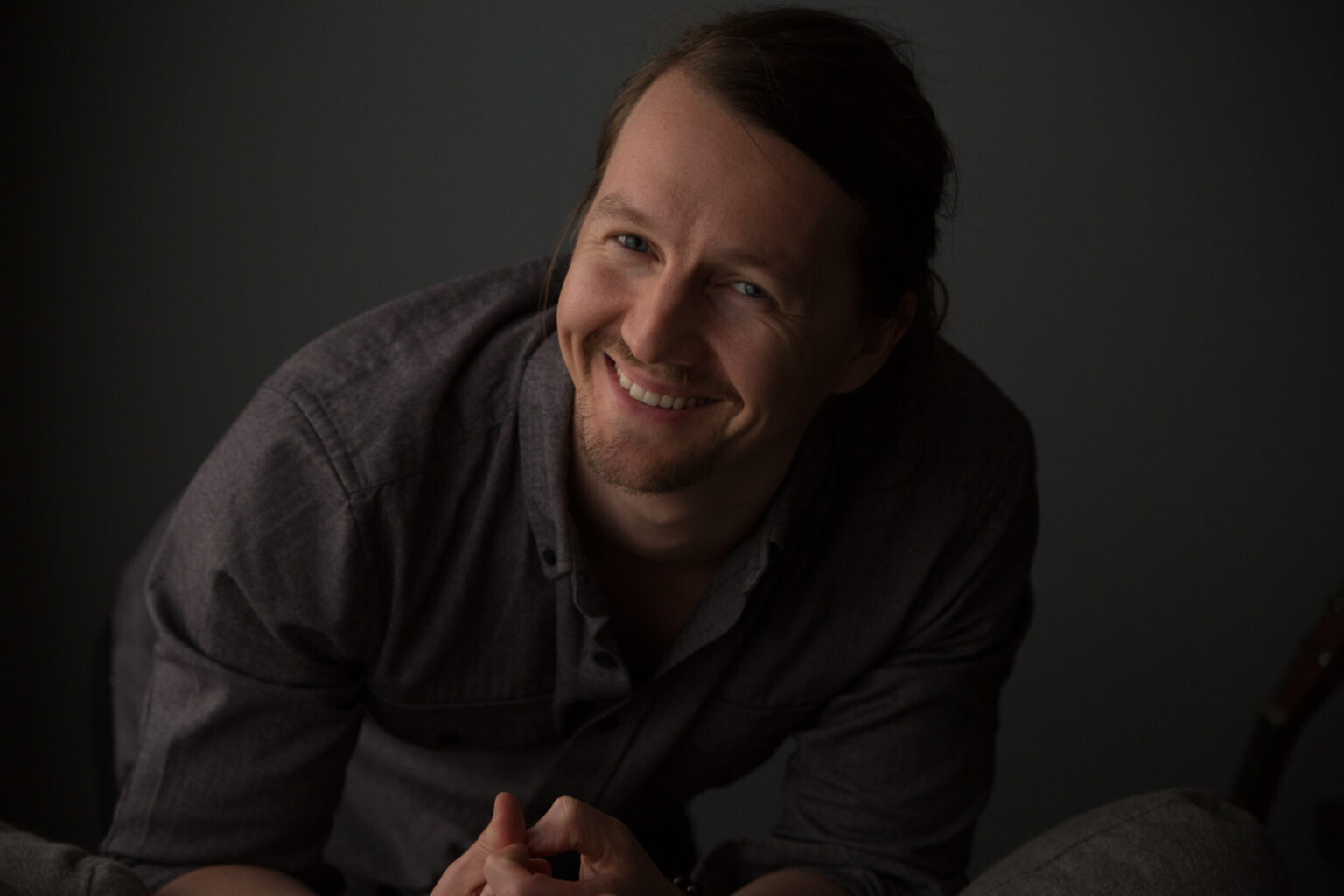
Musical fusion: Get to know ‘Eat Wheaties!’ composer Kevin Krouglow
Kevin Krouglow is here to inspire musical fusion. The Canadian composer has made a career out of blending electronic experimentation, sound design, world music, and rock & roll into unconventional and memorable film scores. He studied Theory and Composition as a piano major at the University of Western Ontario, and he’s used his extensive knowledge to great effect on shows like Backstage and The Next Step and video games like Skies of Fury: DX.
Krouglow recently composed the score for the award-winning film Eat Wheaties! starring Tony Hale and Paul Walter Hauser. Soundtrack available for streaming and purchase on iTunes, Amazon, Spotify, and more. The score allowed to flash his musical prowess, which includes proficiency on guitar, piano, cello, violin, and clarinet among countless others. Film Daily had the pleasure of talking with Kevin Krouglow about his eclectic influences, his songwriting process on Eat Wheaties! and his plans for the future. Here’s what he had to say:
Tell us about your journey into composing. What did you do before becoming a composer?
I actually knew I wanted to be a film composer since I was 15 years old, so I didn’t do a whole ton before that! Haha. Before that I actually wanted to be a graphic designer, video game developer or programmer, as I used to love drawing and playing video games, but when I got a guitar at the age of 13, I fell in love with it and that quickly took over all of my free time. I started writing my own themes and compositions back then, and also started teaching myself piano when I was about 15.
My sister heard what I was writing on the piano, and told me it sounded like it would work well in films or games. She asked whether I had considered being a film composer, and that’s when it really clicked for me! I loved film and game scores, but I hadn’t thought of it as a career until that moment.
I decided I wanted to study classical music and managed to get into the University of Western Ontario as a piano major, after having only been playing piano for 2 years at the time. In my first year of University, I saw an article in our local newspaper about a few student filmmakers looking for funding for their film dealing with Alzheimer’s. I took a shot and reached out to see if they had a composer on board already, and offered up my services to them for free. At first they weren’t sure if they were even going to have music in their film, but when I followed up a month later, I got the gig!
It was called Last Stage, and it ended up being very well received by their film program and the program coordinator Jean Desormeaux (of Sheridan College), who I kept in touch with afterwards. He recommended me to other students in the following years, which is how I started building up my experience and credits writing music for films. I ended up playing in a few bands out of University and also dabbled in acting, all while continuing to score student and independent films during my early twenties.
I didn’t get my real break into this career until I was 24 when I got a job at Grayson Matthews, an award-winning audio house here in Toronto. I worked as a second composer on the Family Channel TV show The Next Step, along with Ryan McLarnon, and later was hired full-time, primarily in the long-format division. During my time there I was composing on shows such as Disney Channel’s Backstage, the second and third seasons of The Next Step, the pilot for Dark Haven High, as well as feature films such as Trench 11 starring Rossif Sutherland and Full Out starring Ana Golja, plus quite a lot of commercials.
I worked at Grayson Matthews for just under 4 years, before switching back to freelance. Since then I’ve continued composing on films, wrote the music to the Skies of Fury: DX video game for the Nintendo Switch, and still pitch on commercials as a freelancer with different audio houses both here in Toronto and internationally.
Was there any particular movie or TV show soundtracks that inspired you to become a composer?
There wasn’t a specific movie or TV show that inspired me to become a composer, but I really loved a lot of Hans Zimmer’s scores growing up. The Rock, The Last Samurai, and Gladiator which he collaborated with Lisa Gerrard on. Braveheart by the late James Horner was another one I really liked, as well as The Last of the Mohicans by Randy Edelman and Trevor Jones. I was also a big fan of Nobuo Uematsu and his work on the Final Fantasy video games. At some point it hit me that a lot of the movies that really moved me were also the ones who’s scores I loved.
When I look back on the days before I knew I wanted to be a composer, I realize that I used to listen to the music from movies and games quite a lot, and was really drawn to it. My sister and I would try and play different themes by ear, and would comment on the music in the different games and movies we’d watch. Looking back on those early days now, and how much impact film music had on me, it makes a lot of sense that this is what I decided to do.
What was the first project you worked on, and what did you learn from the experience?
The very first project I worked on was the student short film I mentioned earlier called Last Stage. Compared to how I work now, it was a bit of an unusual experience since I wrote the entire score to the script, visualizing the scenes unfolding in my head, and playing back the music I was writing while reading along with the script. When we slotted in the music to the cut of the picture, it surprisingly flowed rather well and everyone was happy with how it fit, so I didn’t have to change anything.
I’m not sure how much of it was them not wanting to ask me to do more work though since it was all for free haha! I didn’t ever actually end up composing any footage on that project, and that’s something that’s rather rare. Also, at the time I didn’t have access to a midi keyboard, so I had to write the music on a piano and then enter each note manually into the midi sequencer on the computer, which was a great lesson in making the best of the tools you have access to.
As it was my first “commissioned” project, and my first time writing to a deadline, I quickly realized the challenges that come with that. You can’t wait for inspiration to strike, you have to start working and trust that the inspiration will come along the way. You’ll have some good days and some bad days, some ideas will work and others won’t, and that’s just part of the process. This is something I tend to keep learning over and over again.
It’s not about being able to come up with the perfect piece of music right away, but rather to keep working at it until it feels right. Ultimately though, I think the fact that it was a positive experience overall and that everyone told me they really liked the music gave me the confidence to feel that I could do this as a career, and confirmed to me that I was on the right path.
What are five movie scores you think everyone should listen to?
There’s so many great scores out there, but I haven’t really been listening to scores on their own as much in recent years as I used to when I was younger. There’s also so many composers that I’ve heard cues by and seen their films, and am completely blown away, including Terence Blanchard and Nicholas Britell, but I haven’t listened to the soundtrack albums on their own – I need to get on that! I’m sure I’ll want to change this answer a few weeks from now as I remember a score that I missed, but I’ll do my best to pick 5 right now!
Gladiator by Hans Zimmer and Lisa Gerrard is a fantastic score and film, and probably the one that made the biggest impact on me in my early days. It’s really powerful, and has these very visceral and astonishingly beautiful moments. I used to listen to that score on loop as a teenager – I remember working on many assignments and papers with The Battle playing in the background. Definitely added some intensity and excitement to the process haha!
For my second recommendation, I think most people should already be very familiar with it, but if by some chance you haven’t heard John Williams’ masterful score to the Star Wars series, you’re missing out on an essential part of film scoring history. He built an entire universe with just the music alone. Another score I absolutely love is American Beauty by Thomas Newman. Thomas Newman is definitely one of my favourite composers, and I’d recommend any of his scores, but his work on that film is such a staple – I’ve heard it used as temp music and referenced so many times – and it brings so much to the film that I honestly don’t know if I’d have enjoyed it without it.
Amélie by Yann Tiersen is probably another one of my most listened to scores. Apparently the director discovered some of his existing music which he included in the film along with pieces Yann ended up specifically composing for the film. The music is absolutely beautiful, very minimal but incredibly emotional, and complements and colours the quirky world of the film perfectly.
It’s really hard having to pick only one more, but I think for me personally, I’d have to say Moon by Clint Mansell. Clint has crafted so many amazing scores, including his famous piece “Lux Aeterna” from Requiem for a Dream, but his score on Moon made me cry (which is pretty rare for me). It’s incredibly powerful, minimal, and the textures and sounds Clint used are really unique and modern. I loved everything about that score and think it really made a huge impact on the film.
I’m going to cheat and throw one more in here, There Will Be Blood by Jonny Greenwood, but not so much as a score everyone should listen to, but more so a score that is incredibly effective at what it’s meant to do – which is to make you feel uncomfortable. If you’re a composer or musician, I think it’s worth listening to, and paying attention to how much it contributes to the film and the tension we’re supposed to feel.
Walk us through your creative process.
The first thing I do is have a conversation with the director (or showrunner in the case of TV) to talk about the story, characters, main themes and any musical ideas or directions we may want to explore. Usually this happens after I’ve had a chance to either watch a rough cut, as in the case of Eat Wheaties!, or after reading a script. After that first conversation, I’ll take some time to think about what instruments to use, what musical approaches may be interesting to try, and what sounds to explore.
In Eat Wheaties!, everything centers around our main character Sid Straw – it’s ultimately his story, how he sees the world and how the world and audience sees him. Some of the initial thoughts and conversations I had with Scott were about how to express Sid’s essence through music – his kind hearted outgoing happy-go-lucky nature, but also how he stumbles through social situations and rubs people the wrong way. We also knew we had to create a sense of tension and discomfort with what he’s doing, and also express his emotional character arc through the music.
After taking some time to think about those concepts, I start trying things out – playing different instruments, creating various sounds, trying different chord progressions and improvising some melodies and rhythms – usually away from picture first so that I can really focus in on the essence of the film rather than anything too scene specific. I tend to record as much as I can while I’m brainstorming and sketching different musical ideas out, because I don’t want to lose any of those initial sparks.
Often I’ll pick a few ideas that feel like they’re working and develop them further, finishing up a rough structure and arrangement, and then send them off to the director and producers for feedback. After that there may be some more brainstorming, or I’d dive into some scenes and start working the themes and ideas in to see how it all feels and flows. With Eat Wheaties! I was sending Scott different scenes and cues every day or two, and we’d discuss them – he’d give some great suggestions that would spark new ideas for me, and something I’d do would make him think about a different way to approach particular scenes.
We also got David Phillips, the other producer on the film, as well as the executive producers including Daniel Webb, Tony Manolikakis, and Salamo Levin, to weigh in and tell us what they thought of the music and how it was working. Everyone had really great insights which helped make the score what it is now.
Recent Professional Milestones and Recognition
Kevin Krouglow has kept busy since the 2021 conversation. In 2023 he was named SoundGym Hero for his multi-instrument work across film, television, and games, with special attention paid to his willingness to blend guitars, pedals, and electronic textures. In 2025 he served as a judge for the SHOTSAwards Music & Sound Design category, a clear industry nod to his ear for both traditional scoring and experimental sound. He has also recorded guitar for Toronto composer Nikhil Seetharam on multiple projects, showing the same collaborative spirit that first drew him into the field as a teenager. These credits sit alongside more than one hundred twenty television episodes and several features, confirming the steady trajectory he mapped out years earlier.
Evolution of Non-Traditional Scoring in Recent Work
The same curiosity that led Krouglow to strum violins and route guitar tones through fuzz and harmonizer pedals on Eat Wheaties! continues to guide newer work. A 2023 profile noted his consistent preference for sounds that feel slightly off-center, whether that means layering Wurlitzer through tremolo or feeding frozen guitar notes into sequencers. Under the OTHEOSE alias he produces moody electronic tracks that fuse dance-floor pulse with atmospheric scoring instincts. The approach keeps his film cues grounded yet unpredictable, and the same guitar-pedal chain that shaped “Softball Catharsis” still shows up when he contributes to other composers’ sessions. The result is a body of work that treats non-traditional instruments not as gimmicks but as reliable tools for character and mood.
Current Influences and Industry Landscape (2023–2026)
While the original list of touchstones remains intact, recent statements show Krouglow still drawn to composers who move between genres without apology. Daniel Pemberton’s bold hybrid scores and Anna Meredith’s electronic precision continue to register, joined by an interest in how modern productions balance live players with processed textures. He remains active in both traditional scoring rooms and electronic production suites, reflecting a Toronto scene that now routinely mixes remote sessions with occasional in-person spotting. The broader industry has settled into hybrid workflows, and Krouglow’s comfort with guitar pedals, synthesizers, and orchestral writing positions him well for projects that need quick stylistic shifts.
Soundtrack Release and Legacy of Eat Wheaties!
The score referenced as forthcoming in the original interview arrived in August 2021. The twenty-three-track album is now streaming and available for purchase on the same platforms mentioned at the time—iTunes, Amazon, Spotify, and others. Listeners can trace how the main theme morphs from the raw, unstable cue that first introduced it to the warmer piano statements that close the picture. The release gave audiences direct access to the pedal textures and Wurlitzer lines that helped define Sid Straw’s emotional arc, and the album continues to circulate among fans of character-driven indie scoring.
Where do you see yourself in five years?
I would love to be working on more narrative Film and TV, taking on more projects like Eat Wheaties!, continuing to grow, and being challenged creatively. I’ve been working on a solo album for a while now, so it’d be great to see that released in the next five years, haha! I’m also saving up for a down payment on a house, so if I could own a place of my own five years from now, that would also be amazing! I’ve been spending more time out in L.A. before COVID hit, and would love to do more work out there, so that’s something else that’s on the five year goal trajectory.
If any musician could compose the soundtrack of your life, who would you choose and why?
I think I have to go with my gut on this one and pick the band Explosions in the Sky. I absolutely love their music and have been a fan for a very long time. I actually haven’t watched any of the films they’ve scored (I need to get on that!), so I’m strictly basing this answer off of their albums. Their music is incredibly moving, really cinematic, as post rock often is, and it deeply resonates with me.
Though a film composer might perhaps be able to bring in a wider range of scoring approaches, styles and nuances for a broader range of life experiences, I just somehow feel like Explosions in the Sky is right… they just fit my vibe. Maybe listening to their albums throughout my life made it feel like they’re already composing the soundtrack to it? Haha.
What advice do you have for up and coming musicians?
I feel like there’s so much I want to share! But I know I shouldn’t ramble on too much haha, so if anyone wants advice and wants to reach out, don’t hesitate! If I had to pick two things that I think are the biggest pieces of advice I could give, first I’d offer the quote “stop comparing your work in progress with everyone else’s show reel”. I forget where I read this quote, but it deeply resonated with me.
It really clicked for me when I watched Hans Zimmer’s masterclass where he said that even he feels intimidated by the “blank canvas” that comes with a new project, and even he has to try a few ideas out in order to find what really works. I remember he mentioned having to redo that beautiful scene in Gladiator where Maximus is walking through the field near the end some 10 times or so. When I heard that it blew my mind! It never even occurred to me prior to that point that he had tried anything different for that scene, I only knew that one final version, and I thought that’s what he intended it to be all along.
It’s so easy to get frustrated with yourself when you start working on a piece of music for a scene, or just on its own, and feel like your idea isn’t working, but that doesn’t mean you’re not talented, it just means you have to try a few more times. It’s so important to learn that making mistakes is just part of the work. The creative process needs to be free and experimental, you can’t judge yourself too harshly or you’ll just stifle it. Try stuff out and if it doesn’t work it’s fine, it doesn’t have to be perfect the first time around, you can keep trying. And same goes for your career in general, if you didn’t write the best score on your first film, that’s fine, you live and you learn, the next one will be better!
Don’t give up – keep going. That actually brings me to my second biggest piece of advice which is keep at it and enjoy the process! I don’t think you’ll ever feel that you’ve made it, even as you get more and more success you’ll still be focused on where you want to go rather than where you are, so know that if you keep at it, you’ll get there eventually, and just make the most of the journey and the process, which is what will lead up your best work anyways!
What has been your biggest success and failure to date?
Oh man! That’s a really tough question. Eat Wheaties! is a pretty big success for me! I never thought I’d work on a Tony Hale film with such a star-studded cast. So many of the actors in this film are actors I’ve watched in other films and shows over recent years, which feels a little surreal when I step back and really think about it. It’s also been pretty awesome seeing billboards up for the film around Toronto – I’ve never had that experience for a project I’ve worked on before! So that feels like a huge success. Working on a few worldwide recognizable TV shows, including one for Disney, has been another amazing success as well! But ultimately, I’d say making my living writing music to picture is my biggest success to date. A composer friend of mine said it best recently, everything else really is just “icing on the cake”.
In terms of my biggest failure, that’s pretty hard to say! I don’t really have many regrets thankfully and consider myself pretty lucky overall. Every mistake is a learning opportunity and I truly believe if I didn’t make some of the mistakes I did along the way, I wouldn’t have ended up where I did, so I don’t really see anything truly as a failure. Luckily I haven’t had any major crash and burn situations, and I think that’s in part to taking it one step at a time and taking on bigger projects and responsibilities as my skills and experience developed, and having a great support network around me.
I think perhaps one of my biggest failures may be not having had the best work-life balance. I’ve sacrificed so many life experiences for my career and in turn missed out on certain opportunities. I’ve definitely travelled less than many people I know, which is something I always looked forward to, and I’m really feeling that now that travel is much more complicated. I definitely spent less time with friends as well. Though I think in a way it was necessary for me to have that type of focus to get to where I am, I’m trying to find a good work-life balance now and make sure I take time to do the things that are important to me where and when I can, while still putting in all the hours and hard work required in this career.
What’s next on the docket for you?
Currently I’ve been pretty busy promoting Eat Wheaties!, and am working on putting together the soundtrack which we’re planning to release soon! I’ll definitely update you when we have a release date set. Aside from that, I’m looking forward to taking a short break, most likely a stay-cation because of the situation with COVID up here. Also looking forward to doing a bit more work on my solo electronic album which has been in the works for a little while now, and that’s the plan until the next big project comes in!