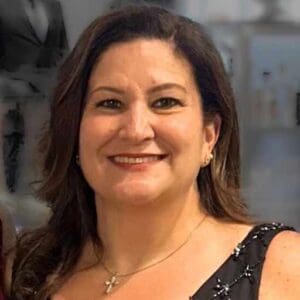
Director Laura Somers Brings Two Worlds to Life in ‘Rise and Shine’
Director Laura Somers brings a mother and daughter’s different experiences of the world to the screen in Rise and Shine.
For Terri, a teenager with cerebral palsy and intellectual disabilities, life holds the promise of new friends, independence, and a date for prom. For her mother Janice, supporting those dreams means learning to let go while finding room for her own life.
Inspired by Janice Steele’s memoir Remembering Terri, the coming-of-age film introduces Ana Sharp as Terri alongside Rachel Bay Jones as Janice with Danny Burstein and The Chosen’s Jordan Walker Ross.
Somers previously directed Rich Kids, her debut feature, which won 16 festival awards and was licensed to Netflix. She also wrote and directed Tough Enough, a short about a girl determined to play football in 1949 Texas, and created, wrote, and directed the dark comedy podcast Cypress Creek, which reached No. 5 on Apple’s Fiction podcast chart.
Somers recently opened up about finding her leading actress, creating the film’s two visual perspectives, and making room for collaboration on the set of Rise and Shine.

What’s Rise and Shine about?
Laura Somers: Inspired by a true story, Rise and Shine follows Terri, a teenager with cerebral palsy who dreams of attending high school, making friends, and finding her place in the world. While Terri and her supportive mother Janice struggle with life’s challenges, they share an eternal optimism.
What themes did you want to highlight in the telling of this story?
Laura Somers: I wanted to highlight kindness, hope, independence, and the desire to be seen for who you truly are. Terri wants what all of us want: to have friends, have new experiences, and make her own choices. I also wanted to highlight the difficult job of motherhood – the complicated loving process of supporting our children while learning to let them go – and regain a little of our own self in the process. And above all else, I wanted to highlight disability representation, showing characters with disabilities who are rich and authentic, living full lives with their own dreams, personalities, and voices.

Tell us about the casting process for the film, including the importance of authentic disability representation.
Laura Somers: Authentic disability representation was essential to telling the story. Our cast includes Ana Sharp and Jordan Walker Ross, who have cerebral palsy, Analesa Fisher, who is autistic, and Jordan Nichole Wall and Hallie Rae Stricker, who have Down syndrome.
We knew that before we could really move forward with the film and convince everyone to get on board, we had to find the perfect Terri first. We thought that search might take a year. With the help of KMR Talent, which represents actors with disabilities, finding Terri took a matter of days. When writer Michael Stagliano, producer Robert Mitas, and I watched Ana’s audition tape, we all laughed out loud at the humor and joy she brought to Terri. We immediately called each other and said, “That’s her.” From that moment, through development and all the way to our first day of shooting, there was never any doubt that Ana was the one. And when I watch the film now, that same joy we saw in her very first audition comes right through the screen. You can’t help but fall in love with her.
Everyone brought in very strong ideas about how to make their character authentic to them, apart from what was on the original page. Analesa came to us in her first audition wearing her noise-canceling headphones and writing everything down in her journal. She said she did that in her own life as a way to help her remember things about people she met. I loved that so much that we decided to make it a part of who Amanda was.
Jordan Walker Ross asked if he could bring his own life experiences to a scene where Mr. Broome is counseling Terri on how to navigate bullying. We let the cameras roll, so all the advice he gives her is coming from his own heart, and honestly, advice I’ve started sharing with my own son as he navigates tough times.
Jordan Nichole Wall is truly a scene stealer, a natural comedienne, and had very strong ideas about how Agnes would play. She would make wonderful goofy expressions and knew how to hit the perfect queen bee attitude. On one shooting day, she was really sick with a cold and super sleepy from her cold medication, and she ended up using that energy to make Agnes act like she was sleeping in class like a slacker. These bold choices make for a unique and vibrant performance – an unforgettable character for sure.

Where did you get the idea for utilizing two distinct visual perspectives and how did you create that?
Laura Somers: Terri’s cerebral palsy manifested itself through a developmental delay. The real-life Terri lived to be 41, and she never developed intellectually past a five-year-old. But everyone who knew her said she never lost her joy in life, was always so sweet, and made a friend everywhere she went. The real Janice (Terri’s mother) and I talked about how Terri loved Disney, would talk to imaginary friends, and always wore a Walkman, kind of like she was living to a soundtrack everywhere she went.
The Terri voiceover that Michael wrote is what really inspired me to take the magical realism perspective to another level. If we could hear Terri’s thoughts through voiceover, why couldn’t we see her world through her eyes?
Since she was seeing the world through the eyes of a five-year-old, to me, that world would be full of imagination, brightly colored hues, and a joyful perspective. One of my favorite examples is when Terri gets off the bus on the first day of school. Her number one priority is to find a date for prom. The script originally had her walking through campus, observing student life, and being scared, but I thought, what if, instead of introducing this world as a harsh reality, we made it feel as if she were a princess entering a ball?
I’d also read that people with cerebral palsy can sometimes have blurred vision. When I talked with Janice, she confirmed that Terri did have those moments, so cinematographer Steve Gainer helped me come up with a way to film Terri’s blurred POV.
But there is another side of the story, and that is the world of Janice when she’s on her own without Terri. Parenting is hard enough, and I can only imagine that parenting a child with special needs brings a whole other level of challenges. Terri can be completely joyful in the moment, but Janice carries the weight of the world – always thinking about what’s coming next, what could go wrong, and how to make it all work. So I wanted to shoot scenes from Janice’s perspective as well, with a more grounded and subdued tone, without the heightened fantasy of Terri’s world. We get to experience the joy of Terri’s world, but also the emotional weight Janice carries.

What was the biggest challenge in bringing this story to the screen?
Laura Somers: The creative vision was very ambitious considering the size of the budget, the cast, the locations, and the schedule. We wanted to create both the grounded reality of Janice’s world and the imagination and magic of Terri’s, and figuring out how to do that with the time and resources we had was probably our biggest challenge.
We had a small but wildly talented art department, with production designer Cory Hinesley at the helm, who worked day and night to transform our locations from bare-bones spaces into magical worlds. So much of what I wanted to bring to the screen depended on those details, and it’s amazing what that team was able to accomplish.
Cinematographer Steve Gainer and I had a challenging and ambitious shot list and set ups every single day that would turn our AD and Producers ghost-white. I think the only day we didn’t make our day was the first day (but hey, we were finding our feet!), and as we continued proving ourselves, we gained the trust of our team. That doesn’t mean it suddenly became easy, but we were figuring out how to make it work together.
Costumer Molly O’Haver had to oversee a gigantic cast as well as over 100 extras. It was just her and set costumer Sarah, and every single actor who stepped on set got the royal treatment from them. Costumes were such a big part of expressing everyone’s personalities and helping create those two visual worlds, so they had a huge job. There was a scene with Rachel and Danny and it seems that Molly had chosen their wardrobe to mirror the trees behind them – how thoughtful and picturesque!
I keep coming back to the people because that’s really how we met the challenge. Every ambitious idea meant someone had to figure out how to make it happen, often with very little time. The film wouldn’t look or feel the way it does without the creativity and care that this crew brought to it.
As the director, what do you hope audiences take away from the film?
Laura Somers: First off, I would like all audiences to simply feel good when they leave the theater, like they’ve just been given a warm hug. And then I want audiences in the disability community and their caretakers to feel like they’ve been seen and accurately represented. Finally, I want audiences to take away examples of how they can move about the world in a kinder, gentler way.
There’s the saying, “If you see it, you can be it.” And we worked really hard to create that opportunity for anyone watching it.

Are there any ‘lessons’ you took away specifically from directing Rise and Shine?
Laura Somers: I think one of the biggest lessons was the power of saying yes to as many ideas as I could from all the professionals on set, whether it was a small detail like a prop or a big script change. Supporting my creative and producing team, while feeling their 100% support for me, allowed for so much creativity and commitment. Letting everyone know that no job was too small helped all 150-plus people working on the film feel like we were making something important together. Everyone was giving their best and putting their hearts into it. The joy you feel on the screen comes from all the people who brought their joy and heart to every day on set.
What types of stories are you interested most in telling next?
Laura Somers: I’m really drawn to stories about teens and young adults trying to figure out who they are and where they belong, especially people who feel unheard or misunderstood. I’m interested in exploring social issues and highlighting dignity through genre, whether that’s a thriller, science fiction, or comedy. I love when a story can take you on a really entertaining ride and also give you a way to connect with someone whose life might be very different from yours.

What inspires you most in your life and career?
Laura Somers: Connecting with people and digging into their lives, experiences, and cultures. A well told story. Art museums. Chance encounters. Travel. I’m endlessly curious about how other people experience the world, and that feeds my life and career.
Is there anything else you’d like to share?
Laura Somers: I have to mention getting to work with Rachel Bay Jones and Danny Burstein – two absolute legends. As someone who has studied acting and loves working with actors, watching them work was a masterclass and such a thrill – even a little intimidating at times. But that’s what I wanted! They were true collaborators, bringing strong ideas not just about their characters, but also the arc of the story that made the film richer and more tender. Even now when I watch the film and see how much they can convey with just a look – I’m in awe.
They also brought so much fun to the set. Everyone loved having them around, and watching them together was so much fun – they were always finding opportunities to make each other laugh in and out of scenes. They were both so generous with Ana, mentoring her with acting tips and helping her feel comfortable moving through the scenes. I’m so grateful for the care, creativity, and humor they brought to the film.
Watch the official trailer for Rise and Shine