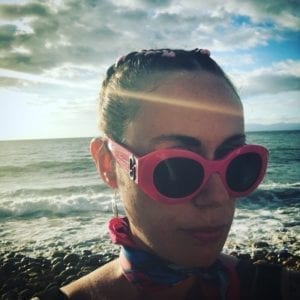
Music, film, and community converge: Ralph Torrefranca’s benefit show and “FIL-AM” inspire
Some moments only make sense in retrospect. Early February became one of those moments for Ralph Torrefranca—a week where music, film, and community aligned with unusual clarity. What unfolded wasn’t just a birthday show or a festival premiere, but a tightly linked statement about identity, responsibility, and showing up when it matters.
On February 4, Torrefranca and his band Cuffed Up transformed El Cid into a benefit space, raising funds for families affected by the Philippine typhoons Fung-Wong and Kalmaegi. The all-ages show doubled as a birthday celebration and a community call-in, featuring The Sibs (Deuce, Emerson, and Ella Jay Basco), Royal Jag, Cape Francis, Mendeleyev, and Ben Grey of Dear Boy. The night felt less like a lineup and more like a constellation—artists connected by shared history, family, and purpose rather than branding.
The show set the emotional tone for what followed days later.

Cuffed Up, live: urgency without dilution
Cuffed Up arrived at that February 4 show with momentum already behind them. Their debut album All You Got had been recognized by Paste Magazine as one of the Best New Albums, while TIDAL named them a Rising Artist. Singles like “Mock Dance” and “Little Wins” had earned nods from NME, Flood Magazine, and KCRW, and the band’s live reputation—sharpened through SXSW showcases, national tours, and sessions for KEXP and Audiotree—was fully intact.
What stood out that night wasn’t résumé weight, but alignment. Cuffed Up’s post-punk tension and emotional directness felt calibrated for a benefit rooted in real loss and resilience. It was music that didn’t posture as activism, but functioned as it—drawing people in, holding attention, and redirecting energy outward.

FIL-AM: a homecoming on screen
Three days later, on February 7, Torrefranca’s coming-of-age short FIL-AM made its World Premiere in the Narrative Shorts section of the Santa Barbara International Film Festival, with an encore screening on February 9 at the Santa Barbara Film Center.
Based on a true story, FIL-AM follows 16-year-old Jonah (played by Deuce Basco) as he’s pulled from inner-city Milpitas in 2003 and relocated to Santa Barbara—a move framed not as rescue, but as rupture. Jonah is a hustler, a brother, a son, and suddenly an outsider, forced to confront class, race, masculinity, and the quieter violence of assimilation. Members of the Basco family appear throughout the film, grounding the story in lived experience rather than abstraction.
For Torrefranca, premiering the film in Santa Barbara carried particular weight. It wasn’t just a festival slot—it was a return to the place that shaped him, now refracted through a story about what it means to be Filipino American and in transition.

A single throughline across disciplines
Seen together, the benefit show and the FIL-AM premiere read as one continuous gesture. Torrefranca’s work—whether musical or cinematic—consistently resists flattening identity for comfort. His characters don’t assimilate cleanly. His songs don’t resolve politely. There’s friction, humor, tenderness, and an insistence on specificity.
That throughline runs through his broader career: CHAMPAGNE SOCIAL earning him Best Director at IFS, his screenplay RIFF placing in the top tier of the Academy Nicholl Fellowship, and FIL-AM emerging not only as a finished short but as a feature proof-of-concept already recognized by TIFF’s Gold Pitch and the Sundance Labs. Music and film aren’t parallel tracks for Torrefranca—they’re two dialects of the same voice.
 Why it resonated
 Why it resonated
In a cultural moment saturated with performative gestures, the first week of February stood out for its coherence. A birthday became disaster relief. A hometown became a premiere site. Art didn’t orbit community—it answered to it.
The El Cid benefit and the Santa Barbara premiere didn’t just mark milestones for Ralph Torrefranca. Together, they demonstrated a model of practice that feels increasingly rare: work that is ambitious without being extractive, personal without being insular, and celebratory without forgetting who’s still hurting.

Encore invites reflection on a homecoming
On February 9, FIL-AM returns to the Santa Barbara Film Center for its encore screening, turning what could be a routine second showing into something closer to a homecoming echo. With festival buzz already circulating from its world premiere, the film plays to an audience primed not just to watch, but to listen—to the silences between lines, to the specificity of Jonah’s displacement, to the uneasy intimacy of a story rooted in lived Filipino-American experience. The encore underscores the film’s staying power: this isn’t a short that burns bright once and disappears, but one that invites reconsideration, conversation, and emotional accumulation. For Ralph Torrefranca, tonight’s screening functions as both affirmation and pivot—closing one chapter of FIL-AM’s Santa Barbara journey while opening the door to its longer life on the festival circuit and beyond.