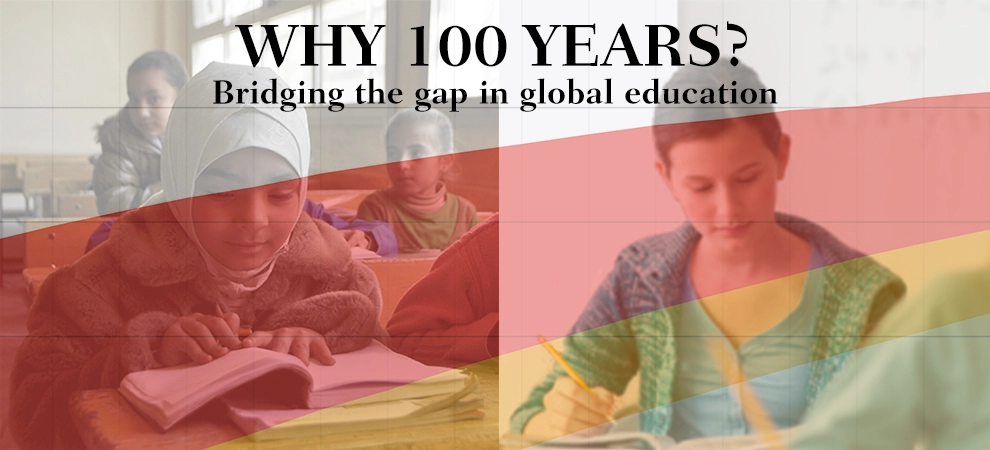
How Can We Bridge the Education Gap on a Global Scale?
Education is a cornerstone of human development, fostering creativity, critical thinking, and socio-economic progress. However, the sad reality is that a significant education gap exists on a global scale. Millions of individuals, particularly in marginalized communities, are deprived of quality education. This article delves into the challenges and potential solutions to bridging the education gap, unlocking opportunities for a brighter future.
Understanding the Education Gap
The education gap represents the disparity in access to quality education among different communities and regions. While some individuals benefit from well-equipped schools, experienced teachers, and modern resources, others lack even the most basic educational infrastructure. This gap perpetuates cycles of poverty, limits social mobility, and hinders sustainable development. Recent UNESCO monitoring shows that equity gains over twenty-five years have been uneven, with location and household wealth still shaping outcomes in many places.
The Role of Socioeconomic Factors
Socioeconomic factors play a pivotal role in perpetuating the education gap. Low-income families often struggle to provide the necessary resources for their children's education, such as textbooks, uniforms, and transportation. Additionally, the need for children to contribute to household income can result in early dropouts. Addressing these factors is vital to creating a more equitable education system. Climate disruptions are adding new pressure on these households, with floods, heat waves, and crop failures forcing temporary school closures in already fragile regions.
Access to Quality Teachers
Quality teachers are the bedrock of a strong education system. However, many regions face a shortage of trained and motivated educators. UNESCO's 2025 Global Report on Teachers estimates that forty-four million additional primary and secondary teachers will be needed by 2030, with Sub-Saharan Africa requiring fifteen million. Bridging the education gap necessitates attracting and retaining skilled teachers, providing them with proper training, competitive salaries, and support to create engaging learning environments. Recommendations now include professional development in artificial intelligence tools so that teachers can integrate adaptive platforms without widening existing divides.
Technology as an Equalizer
In today's digital age, technology can be a powerful tool to bridge the education gap. Online learning platforms, digital textbooks, and educational apps can provide access to quality resources even in remote areas. Khan Academy continues to offer fully free content for learners from ages two through adulthood with no ads or paywalls. Other accessible tools include Google Earth for geography, NASA apps for science exploration, and adaptive platforms that adjust difficulty in real time. Governments and organizations must invest in digital infrastructure and connectivity to ensure equitable access to these resources, especially as 2026 platforms roll out artificial intelligence features that personalize lessons at scale.
Community Engagement and Parental Involvement
Community engagement and parental involvement are crucial components of bridging the education gap. Empowering local communities to take ownership of education initiatives can lead to more relevant and culturally sensitive learning experiences. When parents are actively engaged in their children's education, dropout rates decrease, and academic achievement improves. Programs that train community volunteers to support homework clubs have shown particular success in rural districts where formal staffing remains thin.
Investing in Early Childhood Education
Early childhood education lays the foundation for a lifetime of learning. By investing in preschool programs, children develop essential cognitive and social skills that prepare them for formal schooling. Targeted interventions in the early years can significantly narrow the education gap. The Global Partnership for Education allocated three hundred twenty-four million dollars to early childhood initiatives in fiscal year 2025 alone. Broader coalitions now aim to halve the share of children unable to read a simple text by age ten by 2030, building directly on these preschool investments.
Government Policies and Funding
Government policies and funding play a pivotal role in shaping education systems. Adequate funding for schools, equitable distribution of resources, and the establishment of policies that prioritize education for all can drive meaningful change. Political commitment to education reform is essential to creating a level playing field. Countries that signed the 2025 SDG 4 Scorecard pledged to cut the global out-of-school population by one hundred sixty-five million over the next decade, tying new domestic budgets to measurable enrollment targets.
Global Partnerships for Change
Bridging the education gap requires a collective effort. Global partnerships among governments, non-profit organizations, businesses, and international bodies can pool resources and expertise to address this challenge. The Global Partnership for Education supported three hundred seventy-two million children between 2021 and 2025, fifty-one percent of them girls, and plans to reach nearly seven hundred fifty million learners in ninety-six countries by 2030. The Coalition for Foundational Learning, formed by the World Bank, UNICEF, and UNESCO, now coordinates large-scale literacy drives that combine classroom instruction with digital tools.
Empowering Girls and Women
Empowering girls and women through education is a key strategy to bridge the gap. Educated women are more likely to invest in their families' well-being, contribute to their communities, and break the cycle of poverty. Efforts to ensure equal access to education for girls can lead to transformative social and economic changes. Monitoring frameworks updated in 2026 continue to track gender parity alongside location and household wealth, confirming that girls remain overrepresented among those still out of school in several regions.
Measuring Progress and Accountability
Measuring progress and holding stakeholders accountable is essential in the journey to bridge the education gap. Governments, organizations, and communities must track enrollment rates, literacy levels, and educational outcomes. Transparent reporting and data-driven decision-making can guide effective interventions. The 2026 Global Education Monitoring Report now includes disability alongside sex, location, and wealth in its equity dashboards, giving planners clearer signals on where inclusion still lags.

Impact of Artificial Intelligence on Learning Equity
Artificial intelligence tools are beginning to reshape how students learn, offering real-time feedback and customized lesson paths that were once impossible in under-resourced classrooms. UNESCO's 2025 guidance stresses that teachers need dedicated training to use these systems effectively, or the technology risks reinforcing existing divides. Discovery Education and similar providers report that AI-assisted acceleration programs helped students in pilot districts close skill gaps faster than traditional methods alone. Without parallel investment in devices and connectivity, however, the same tools may leave the most marginalized learners further behind.

Climate Change and Education Resilience
Climate shocks are now a measurable driver of education loss. UNESCO's 2025 GEM series links rising temperatures and extreme weather to increased absenteeism and school infrastructure damage, particularly in low-income districts already facing teacher shortages. Resilient school design, flexible calendars, and community-based learning centers are emerging as practical responses. Countries that integrate climate adaptation into education planning report steadier attendance even after major weather events.
Foundational Learning and Literacy Targets
New global coalitions have set concrete 2030 benchmarks for reading proficiency. The Coalition for Foundational Learning aims to cut in half the number of children unable to read a simple text by age ten. Early results from GPE-funded programs show that combining structured literacy lessons with take-home digital practice produces measurable gains within a single academic year. Sustained funding and teacher coaching remain the decisive factors in whether these targets are met at scale.

Disability-Inclusive Education Advances
Equity tracking has expanded to capture disability status in national data systems. The 2026 GEM Report documents that children with disabilities continue to face the steepest barriers to enrollment and completion. Partnerships between the Global Partnership for Education and UNICEF have supported hearing-impaired learners through sign-language teacher training and accessible digital content in several partner countries. These pilots demonstrate that modest, targeted investments can shift long-standing exclusion patterns when paired with consistent monitoring.
Bridging the education gap is a multifaceted challenge that requires a holistic and collaborative approach. By addressing socioeconomic barriers, leveraging technology, engaging communities, and advocating for policy reforms, stakeholders can create a more inclusive and equitable education system on a global scale. Recent data on teacher needs, partnership results, and new equity metrics show both the scale of remaining work and the concrete steps already underway. Empowering minds through education not only transforms individual lives but also paves the way for a more just and prosperous world.