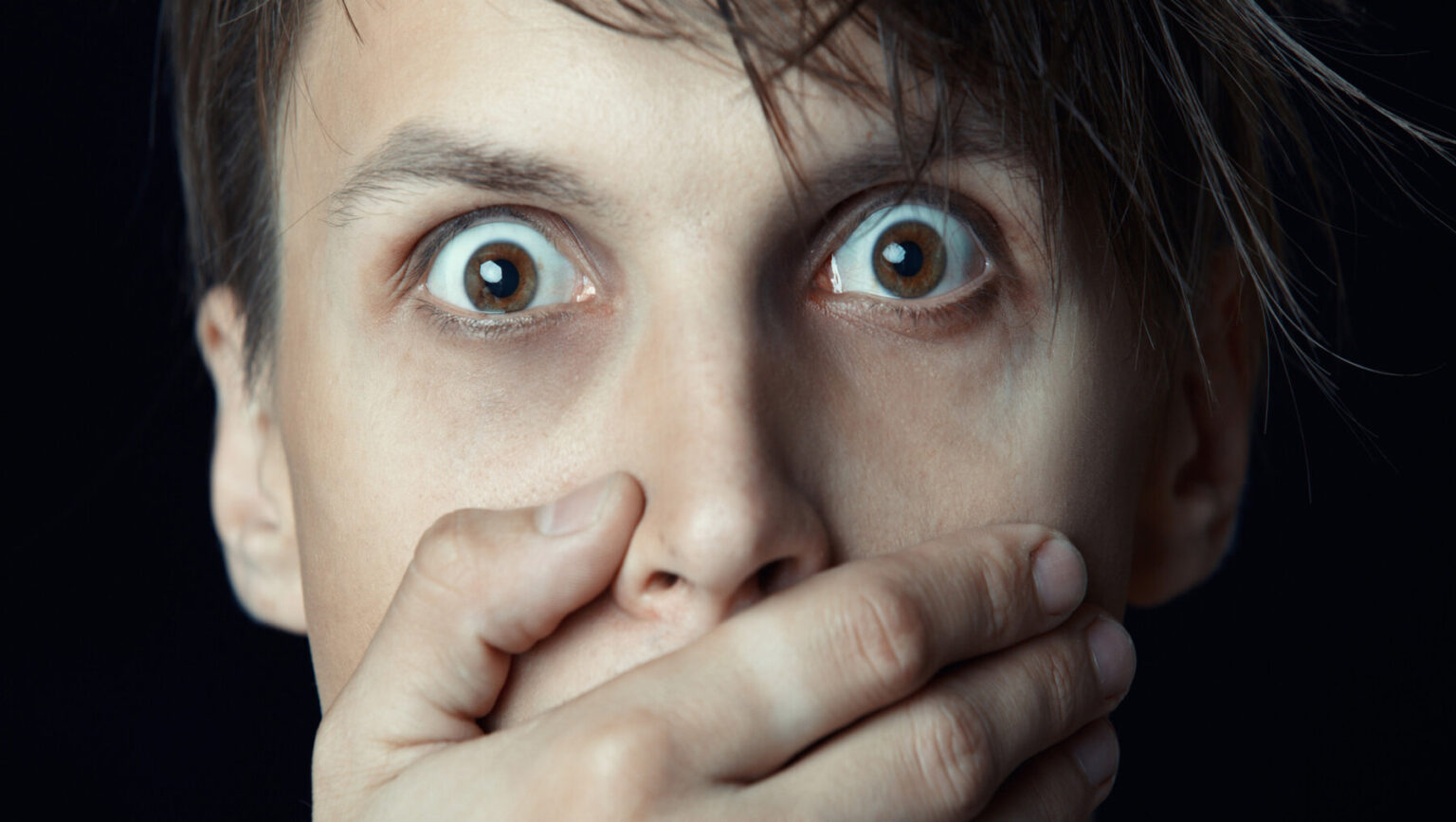
‘Irreversible’: All the movies that leave us sick to our stomachs
Some movies aim to make big bucks off classic or heartwarming tales we itch to see with friends and family. Others entice us with dramatic flair and plots overflowing with action or mystery. Then there are the movies on this list.
The movies on this list combine perfect examples of shock, disgust, and adrenaline. They make us weak at the knees and sweat in our seats. Whether gory to their core or tackling intense subject matter, these are the films that leave us sick to our stomachs.
Irréversible (2003)
Irréversible follows a woman named Alex (Monica Bellucci) who becomes the victim of a violent rape. Alex’s current lover Marcus (Vincent Cassel) and another former lover named Pierre (Albert Dupontel) seek to find the culprit and inflict their own version of justice.
Irréversible director Gaspard Noé tackles heavy subject matter in exploring the phenomenon of extreme sexual violence. Roger Ebert said it best, by admitting the film is “so violent and cruel that most people will find it unwatchable”.
From an extended scene that captures the long, uninterrupted rape and beating of Alex to another that captures the bloody, graphic assault of an innocent man, Irréversible doesn’t stray from a level of wrongdoing that makes us retch. A recut version titled Irreversible: Straight Cut screened at the 2019 Venice Film Festival and received a limited US theatrical release in 2023. Noé described the chronological presentation as a totally different film.
Antichrist (2009)
Director Lars von Trier is no stranger to his movies appearing on lists for their graphic nature. In Antichrist, a psychiatrist (Willem Dafoe) relocates his wife (Charlotte Gainsbourg) to a remote cabin in an attempt to heal her mental condition following the death of their son.
What ensues is a grotesque combination of sounds, hallucinations, and acts of sexual violence perpetuated by the wife’s deteriorating mental state. Through the foggy, unsettling forest, we play voyeurs who watch the couple having aggressive and bloody intercourse on top of tree roots that are erupting with human limbs.
If that can’t be topped, Antichrist features a closeup of Gainsbourg’s character as she hacks away at her own genitals with a pair of scissors, but not before she renders Dafoe unconscious, ties him down, and hacks away at his crotch.
If Lars von Trier intended to make a statement with Antichrist, it was certainly lost on most of us when the explicit scenes had us leaving the room.
Cannibal Holocaust (1980)
Before you ask, yes, Cannibal Holocaust delivers moments as grotesque as you could possibly imagine. It follows a fictionalized mission through the Amazon rainforest as rescuers attempt to locate a film crew studying indigenous cannibalistic tribes.
An early example of the found-footage genre, the rescue team in Cannibal Holocaust finds only the film reels from the documentary crew. The footage is filled with graphic and unspeakable acts of violence including bloody murders, staged executions, and extreme consumption of human flesh.
Adding to the notoriety of the film, publicity stunts included fake media reports about the discovery of the fake footage and director Ruggero Deodato filmed on location with some untrained actors from real tribes in the Amazon. There are also moments of genuine violence inflicted on animals.
What followed were claims from viewers and even magazines that real actors were killed in the making of what many accused of being a snuff film. Deodato was arrested; although the charges were later dropped, they ranged from obscenity to murder. Cannibal Holocaust remains banned in several countries, including a full ban in New Zealand, though Australia lifted its ban with an R18+ rating in 2005.
Monster (2003)
Monster won Charlize Theron the Academy Award for Best Actress thanks to her committed performance portraying Aileen Wuornos, a prostitute in Florida who finds love with the young and shy Selby (Christina Ricci).
Unlike other movies on this list, the explicit violence is limited to only a handful of scenes. But what makes the movie so difficult to watch is the snowball of torment and killing that spawns from the vulgar and realistic rape of Aileen at the hands of one of her johns.
Unbroken moments in Monster’s scene of violent rape are followed by Aileen’s attempt to find a safer means of income to support her life with Selby. Aileen’s mental state unwinds when she returns to prostitution. She relives her trauma every night on the streets and it drives her to seduce and kill the men she meets.
Even worse is that Aileen suffers heartbreak after creating irreparable damage with Selby, the only person who ever accepted Aileen for her true self. Monster is gut-wrenching in more ways than one, and deserves its place on our list.
The Human Centipede (2009)
The Human Centipede has earned its place at the apex of disgusting horror movies. The film simultaneously preys upon many of our fears by telling the story of three tourists travelling through Europe who are abducted by a deranged surgeon.
Adding insult to injury, the surgeon in question hopes to create a human chain by attaching people together, mouth to anus, in an attempt to create one long and shared gastric tract. We aren’t doctors, but even the thought of this operation has us feeling faint in a bad way.
The Human Centipede is graphic, to say the least, including closeups depicting the fear around the eyes of each victim as they suffer their collective fate. Their bodies move sickly in unison, mimicking the movement of a large insect. Their hands and knees rest bloody on the floor, wrists purple from being strapped to white hospital beds.
Beyond any regular attempt at horror, The Human Centipede displays one of the more sick and twisted stories of ill fate. It’s likely you’re already familiar with the movie, but if reading this was your first exposure, we promise even words don’t live up to its hideous, graphic imagery. Sequels Full Sequence (2011) and Final Sequence (2015) further escalated the graphic content.
The Passion of the Christ (2004)
Despite its title, the stomach-turning horror in The Passion of the Christ transcends its overt religious themes to deliver a haunting scene of torture and execution of a single human being in immense physical pain.
Mel Gibson wrote and directed this biblical film about the final days in his body of Jesus of Nazareth. Allegations of historical inaccuracies and antisemitic dialogue were just the tip of this blood-stained iceberg.
The Passion of the Christ features a lengthy enactment of the killing of Jesus, an unbroken scene of relentless bloodshed caused by all manner of torture. Even if you close your eyes, there’s no way to tune out the inescapable screams of pain and torment.
Veteran critic Roger Ebert declared The Passion of the Christ “the most violent film he has ever seen”. And while many gruesome films have been released since, this one still leaves us feeling ill in front of the screen. A nationwide 4K remastered re-release ran September 10-17, 2026, preceding the sequel Resurrection of the Christ: Part One in May 2027.
When Evil Lurks (2023)
When Evil Lurks follows rural brothers who discover a possessed man and attempt to contain the spreading evil before it consumes their community. The film’s hard-hitting surface-level frights match its deeper thematic concerns about contagion and moral collapse.
Critics have placed it among the bleakest entries of the 2020s for its unflinching brutality. Dread Central included the Argentine possession story in its favorites of the decade, noting how the violence feels both physical and existential.
Extended sequences of body horror and sudden, irreversible acts of violence leave viewers queasy long after the credits roll. The film’s commitment to showing consequences without relief makes the experience cumulative rather than episodic.
The Substance (2024)
The Substance centers on an aging celebrity who injects herself with a black-market serum promising youth. The body-horror payoff arrives in the final act with sequences of physical transformation that are both stunning and nauseating.
The film ranked among the top horror releases of the 2020s for its theatrical impact. Discussions of extreme body horror post-2020 frequently cite its willingness to linger on grotesque mutation and identity dissolution.
Viewers have reported leaving screenings unsettled by the film’s clinical attention to flesh tearing, stretching, and reforming. The irreversible nature of the procedure becomes literal as the protagonist’s body rejects every attempt at reversal.
A Serbian Film (2010)
A Serbian Film follows a retired porn star lured back for one final job that spirals into extreme sexual violence and exploitation. The story maintains its status as one of the most controversial releases of the 2010s.
Commonly referenced in lists of the decade’s most disturbing films, it has been banned or restricted in multiple countries for its content. The graphic depictions of sexual violence and the irreversible trauma inflicted on its characters remain central to its notoriety.
Even abstract descriptions of the plot trigger strong reactions. The film’s reputation ensures that many viewers approach it already primed for discomfort, yet the actual imagery exceeds most expectations.
Martyrs (2008)
Martyrs belongs to the new French extremity movement and follows a woman seeking revenge on the family she believes destroyed her childhood. What begins as a revenge narrative shifts into prolonged torture sequences that provoke strong physical and emotional reactions.
The film frequently appears on most-disturbing lists for its unflinching depiction of suffering. Its commitment to showing the irreversible damage done to both body and mind sets it apart from conventional horror.
Viewers often describe the experience as cumulative rather than singular. The absence of easy catharsis leaves the audience carrying the weight of the violence long after the final frame.
These are all, well, most, of the movies that consistently leave us sick to our stomachs. Are there any key films you think we missed? Let us know in the comments, and we’ll be sure to avoid them after a heavy meal.