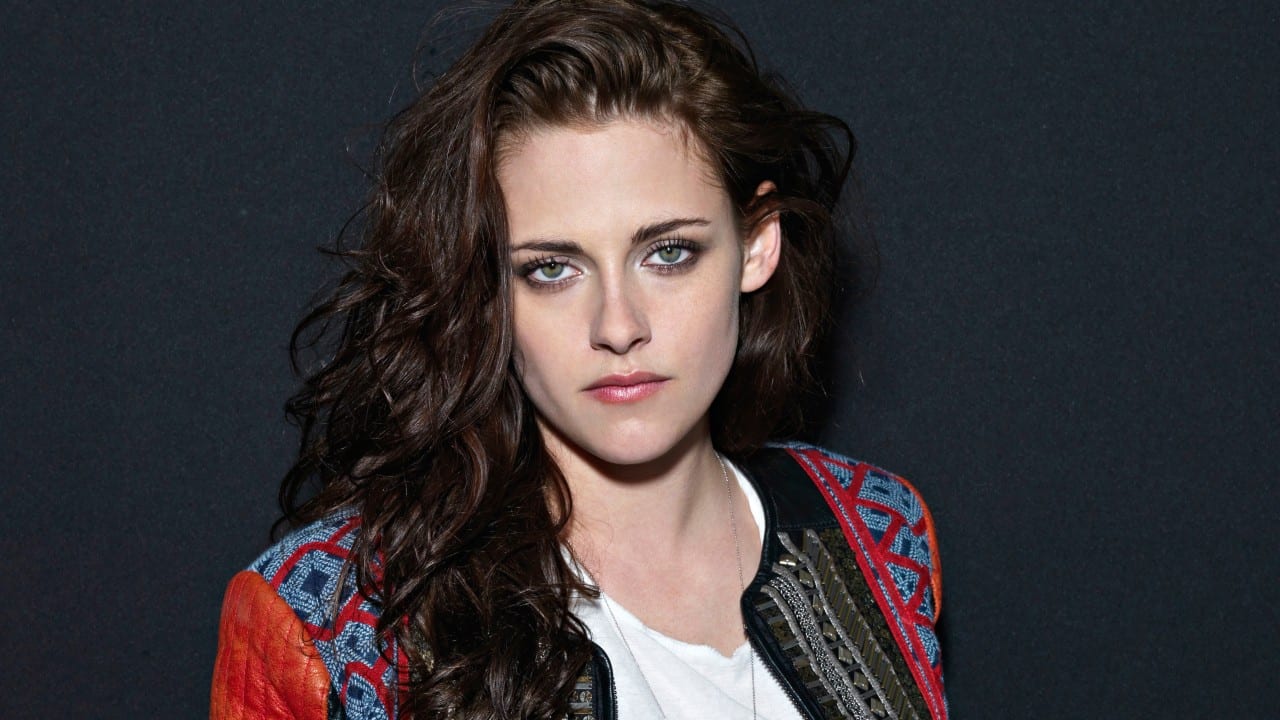
Why Kristen Stewart’s lucid queerness is perfect for ‘Charlie’s Angels’
Kristen Stewart joined the cast of the Elizabeth Banks-directed reboot of Charlie’s Angels in 2018 and brought an unmistakable edge to the project. Stewart appeared alongside Naomi Scott and Ella Balinska, with Banks stepping in as Bosley. The film arrived in theaters on November 15, 2019. The trio offered a diverse reimagining of the crime-fighting lineup first introduced by Farrah Fawcett, Jaclyn Smith, and Kate Jackson on the late-70s series and later by Drew Barrymore, Lucy Liu, and Cameron Diaz in the early-00s movies. Stewart’s casting promised something sharper than standard franchise fare, and the finished picture delivered on that promise.
In the years leading up to the reboot, Stewart had largely stepped away from big-studio productions in favor of independent work. That shift allowed her to move past the lingering chatter around the Twilight franchise and establish herself as one of the most distinctive actors of her generation. She also challenged expectations around how a female star should present herself on screen and off. Openly queer and drawn to androgynous style, Stewart refused to soften her image for mainstream approval. She repeatedly ignored sexist dress codes and called out Hollywood’s entrenched sexism without apology. That same refusal to conform made her an ideal fit for the Angels reboot.
Post-Release Reception and Stewart's Performance
Once the film reached audiences, reviewers singled out Stewart’s portrayal of Sabina Wilson as the project’s standout element. Critics highlighted her wild energy and comedic timing, noting that she supplied much-needed comic relief in a movie that otherwise leaned on standard action beats. Several outlets described her turn as unexpectedly entertaining, crediting her with keeping the tone buoyant even when the plot grew thin. The performance aligned with the subversive qualities the original article had hoped she would bring to the role.
Realized Queer Representation on Screen
The article had wondered whether the reboot would move beyond subtext to present an openly queer Angel. Director Elizabeth Banks confirmed that Sabina is “definitely gay,” and Stewart had requested the character be written that way. The decision placed a canonically queer woman at the center of a mainstream action film without turning the trait into a punchline or afterthought. Stewart’s androgynous presentation and natural chemistry with her co-stars made the representation feel organic rather than grafted on for optics.
Stewart's Evolving Queer Advocacy and Roles Since 2019
Since the reboot, Stewart has continued to seek out projects that foreground queer stories and perspectives. In 2024 she starred in Love Lies Bleeding as a butch gym manager entangled in a lesbian thriller, a role that extended the same gender-fluid presence she brought to Sabina. Off-screen she has described her own identity as fluid and has spoken openly about how Twilight itself reads as a queer text. She has also pushed to direct The Chronology of Water, an adaptation of Lidia Yuknavitch’s queer memoir, and has stated she will not take on new acting work until the project is funded. These choices reinforce the pattern of advocacy the original piece identified in 2019.
Legacy of the 2019 Reboot in the Franchise
The 2019 film received mixed reviews and ultimately underperformed at the box office, grossing roughly seventy-three million dollars worldwide against a budget in the mid-fifties. It earned a 52 percent score on Rotten Tomatoes and landed on several year-end lists of commercial disappointments. Despite those numbers, the movie preserved the franchise’s tradition of centering capable women while adding a layer of explicit queer visibility that earlier entries only hinted at. Stewart’s Sabina remains the clearest example of that shift, and her performance continues to be cited whenever the film is discussed.
The original Charlie’s Angels television series aired during the second wave of feminism and drew immediate criticism for its perceived emphasis on the leads’ physical appeal. A broader cultural panic over mainstream pornography framed the show as a threat to family viewing. Farrah Fawcett later joked that the series succeeded “because none of us wears a bra,” yet co-star Cheryl Ladd pushed back against the reductionist take. Ladd noted that young women wrote letters expressing a desire to become police officers or pursue other careers outside the narrow options of teacher or secretary. The show may have leaned on stylish outfits and action sequences, but it also offered an image of women taking professional risks that felt rare on network television at the time.
The early-00s movie versions took a different approach by letting the Angels own their sexuality rather than apologize for it. Barrymore, Diaz, and Liu moved through a rotating wardrobe of often ridiculous costumes while still controlling the narrative around their bodies. Barrymore’s tomboy character carried a quiet queer charge that stayed in subtext, leaving room for later reinterpretations. The 2019 reboot used that opening to place an explicitly gay character at the center of the action, fulfilling the hope expressed in the original article that Stewart could supply a fresh model for viewers looking for representation beyond coded glances.
Stewart’s career choices after Charlie’s Angels have kept that model visible. She continues to select roles that challenge industry norms around gender and sexuality, and she has turned her attention toward directing work that centers queer narratives. The 2019 film may not have rewritten box-office history, but it gave Stewart a platform to demonstrate exactly the kind of Angel the franchise needed at that moment—an unapologetic, energetic presence who treated queerness as part of the character rather than an accessory. That contribution has outlasted the movie’s commercial run and remains the clearest reason the reboot still registers in conversations about the series.